

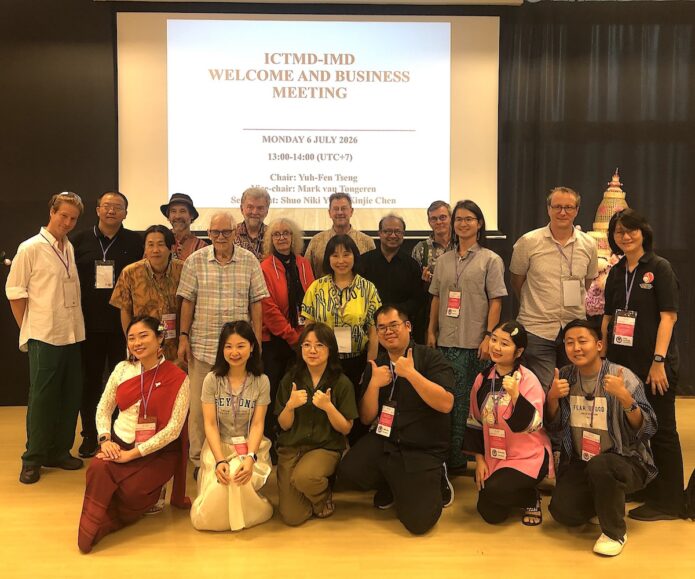
Two weeks ago was the third time I joined a symposium of our Study Group on Indigenous Music and Dance (IMD). This time we joined not just one, but two other Study Groups: Performing Arts of South East Asia (PASEA) and Applied Ethnomusicology (AE). Our Study Group marked its first lustrum this spring: the Study Group’s founding was preceded by a Symposium in 2020 to establish it, just when COVID broke out, in Taiwan – we still had physical sessions and lots of performances here, but no foreign guests (remember, Taiwan was COVID-free when most of you suffered lockdowns). After that initial Symposium, called Music and Dance in Indigenous and Postcolonial Contexts, we formally launched as the Study Group on Indigenous Music and Dance in spring 2021. Another Symposium followed in Melbourne (the first official one), then two symposia where we joined one day with our sister Study Group on Music and Minorities, in Sri Lanka (2023) and again Taiwan (2024).
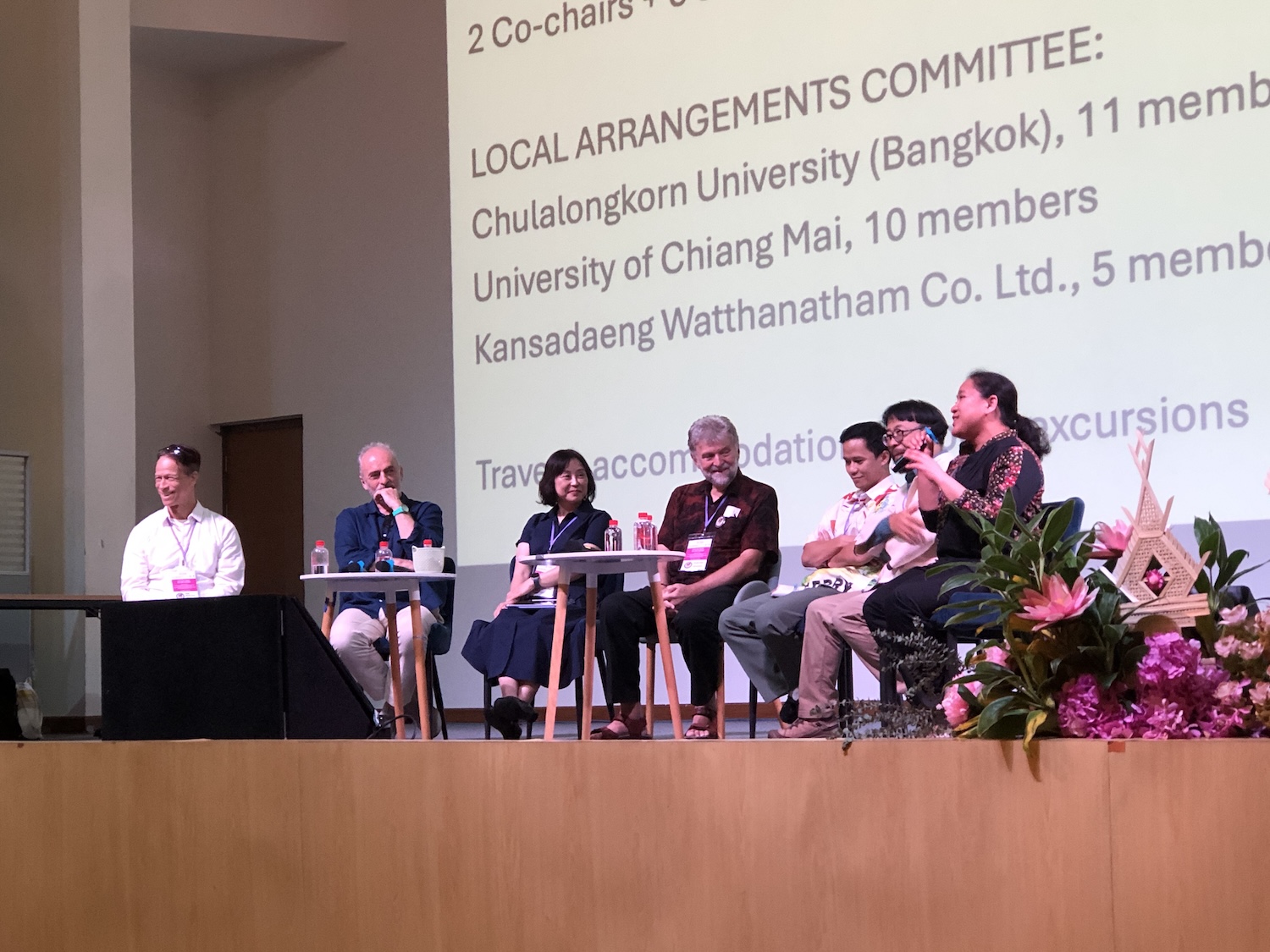
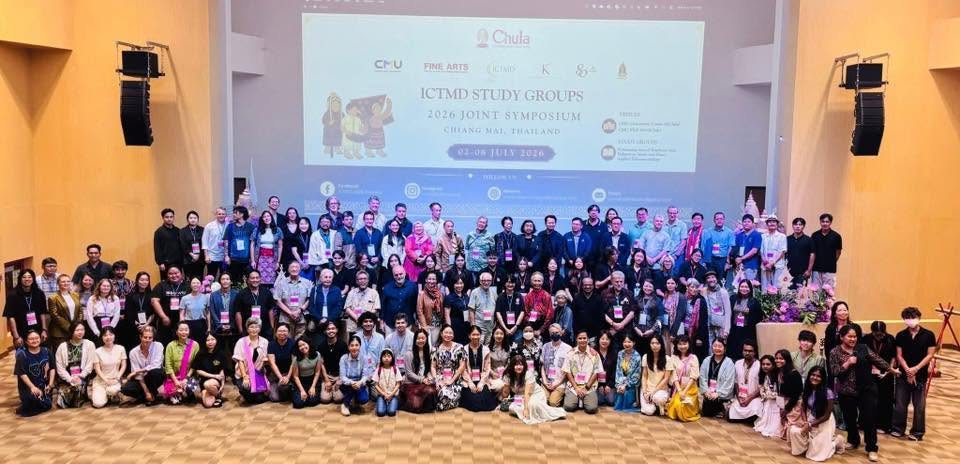
With three Study Groups, the size of the symposium was huge, with hundreds of papers proposed, of which many were presented. Chulalongkorn University, Chiang Mai University and other parties from Bangkok and Chiang Mai were joined by our Study Group co-organisers to make the whole thing happen. Here are some impressions:
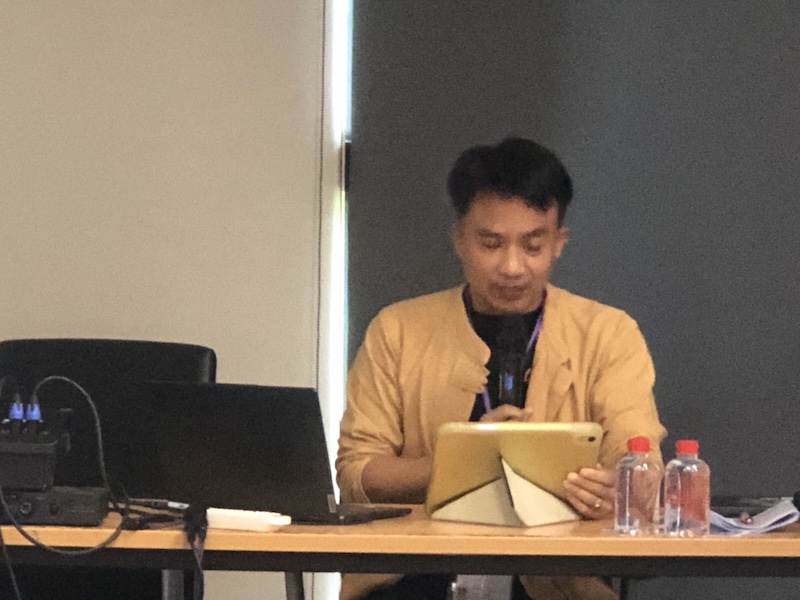
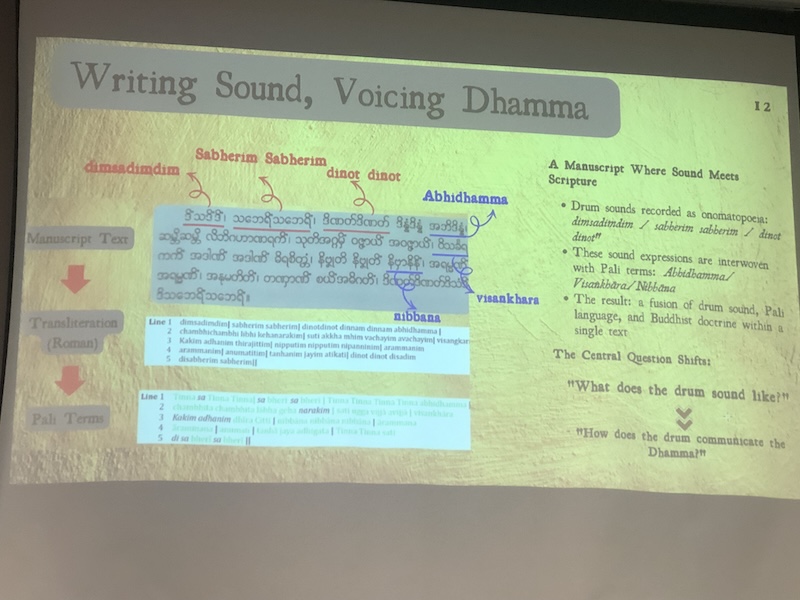
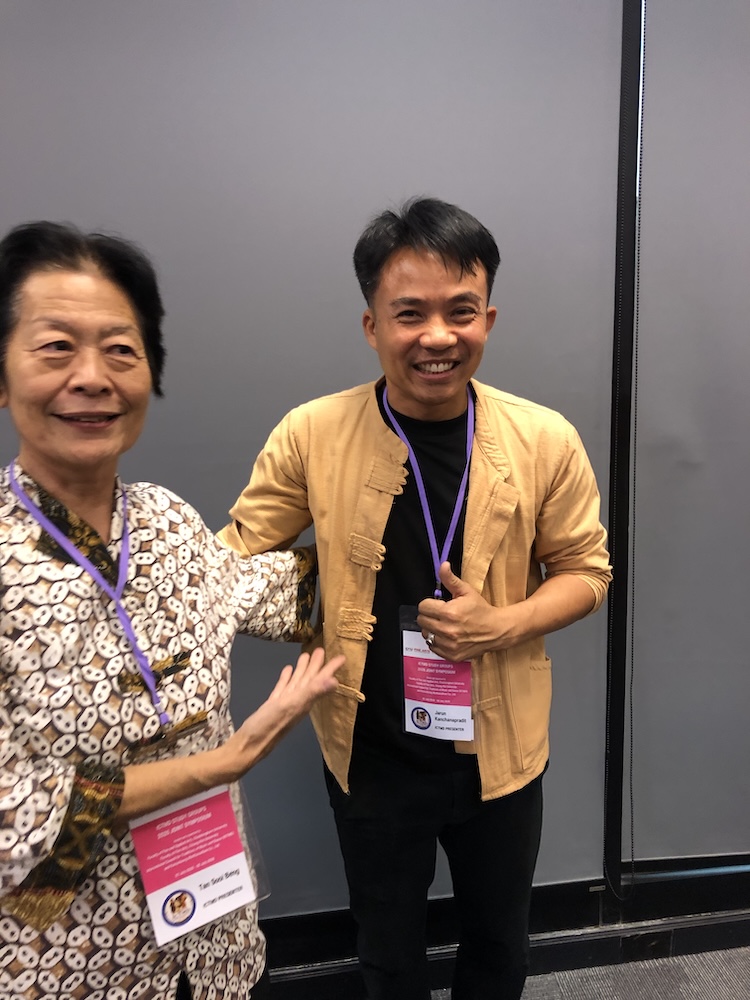
There were many parallel sessions and I arrived only on Day 3, so I missed several things I had wanted to see and hear. Some of the talks that struck me: a paper on Buddhist palm leaf recitation by Jarun Kanchanapradit (Khon Kaen University), with intriguing findings about drum sounds which are rendered or inserted in Buddhist texts, not as onomatopoeia, but as containers of dharma teachings.
There was a very moving commemoration of Dutch ethnomusicologist Wim van Zanten, with singing and flute playing and an overview of his work in numerous capacities with the ICTM and UNESCO, by Svanibor Pettan, Tan Sooi Beng, Made Hood and a vocalist with a wonderful voice reciting traditional poetry of respect.
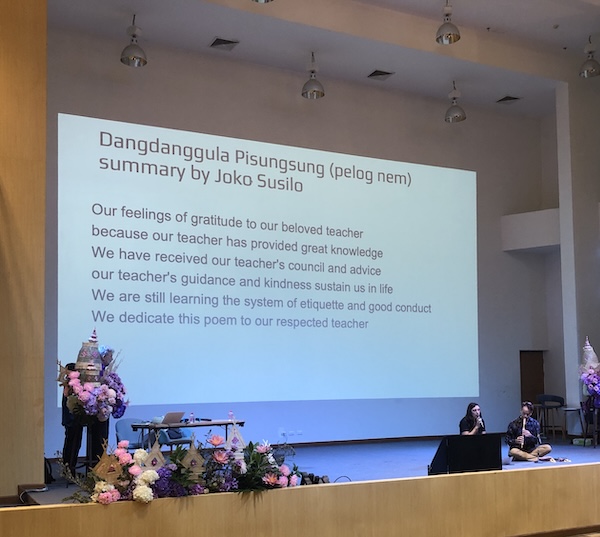
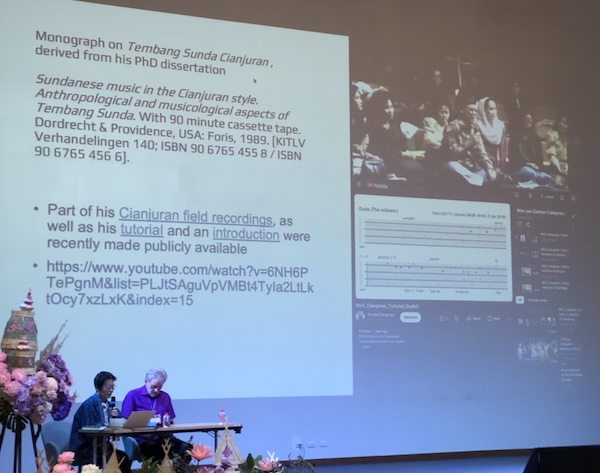
Made Hood who was playing flute in fact has one of the best voices I know. Not only that, he also manages to calmly steer you through his powerpoint with a whole set of ideas that would quickly become overwhelming. Interesting subject and well-spoken (thought I still had questions too, of course, as this theme is close to my heart). (by the way, both Made and the above-mentioned Jarun agreed to record a nokyo for me, to be released on a future album – so nice!)
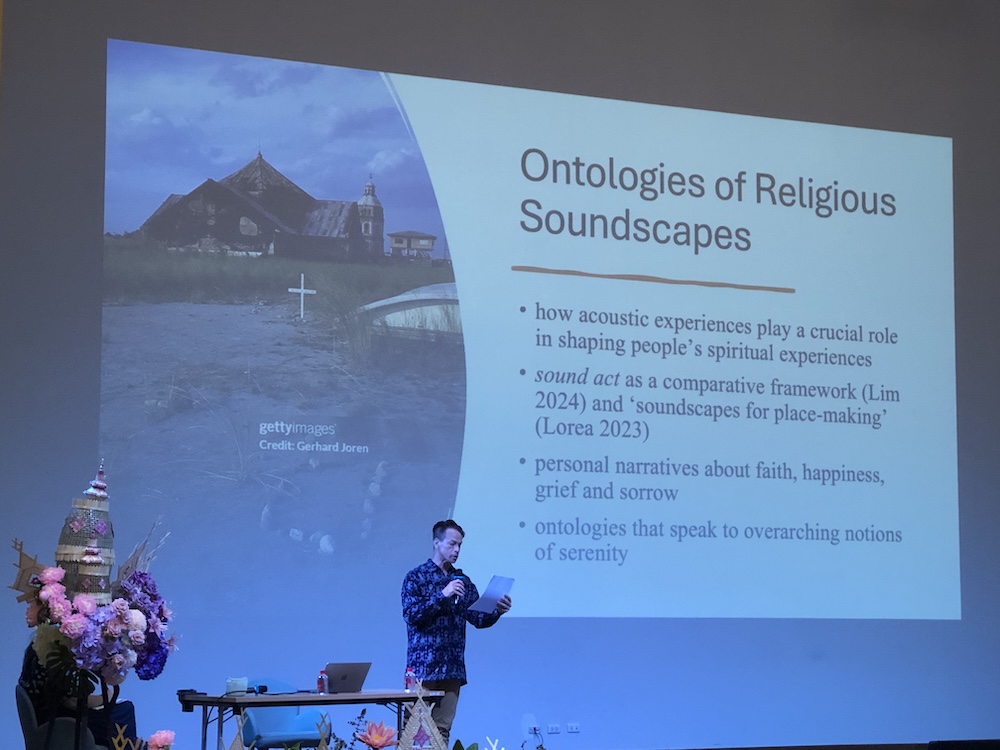
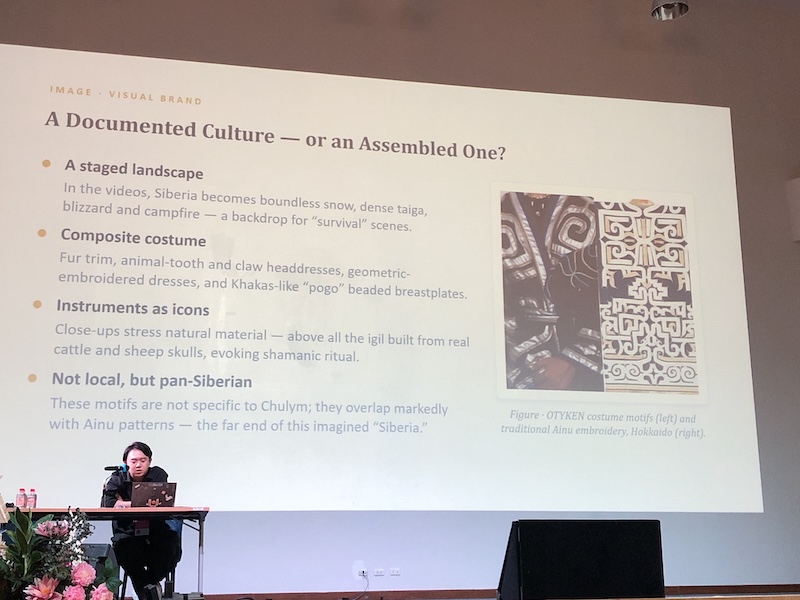
Presenter Haozhe Zhang (Central Conservatory of Music, China) seemed to struggle a bit with finding the right tone of voice. He talked about an entertainment act from Russia called Otyken that presents touristy-showy music and faux indigenous Siberian ritual on national and international stages. He did ask some of the right questions, and also began answering them. But he did not manage to push through with a clear conclusion about the problematic nature of such acts.
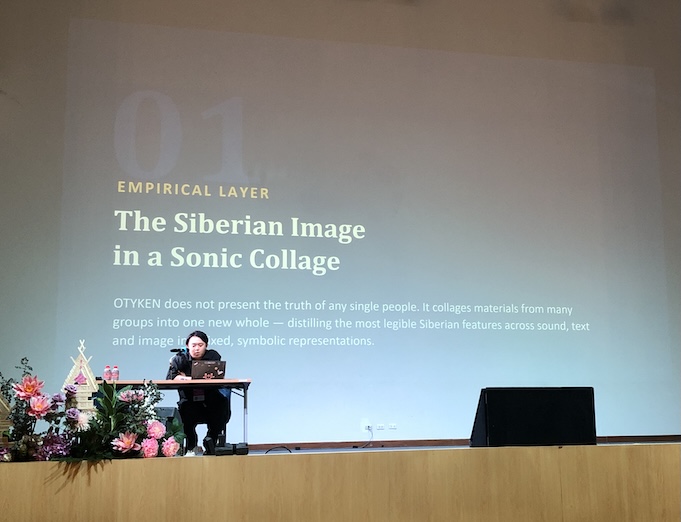
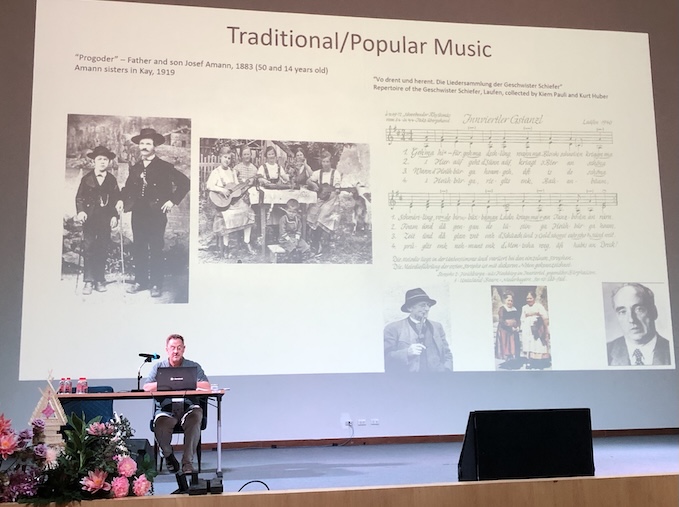
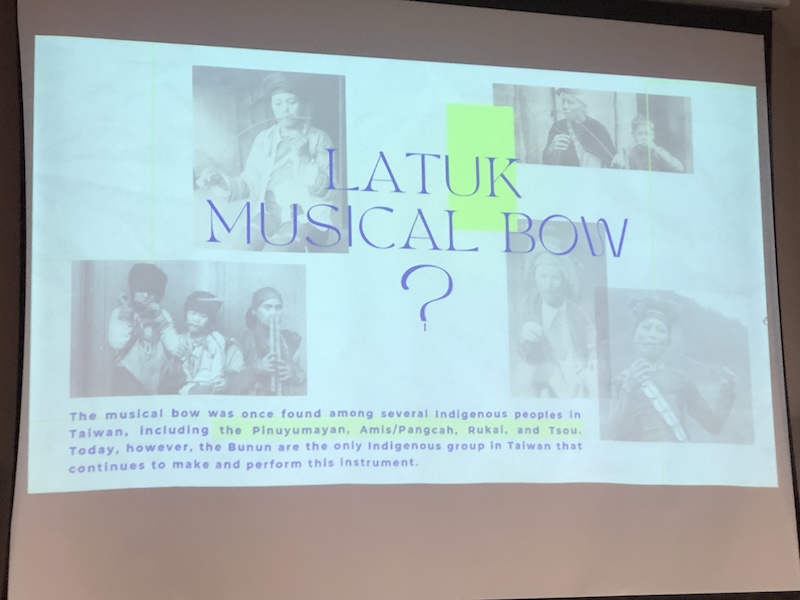
After years of correspondence I finally met Bernhard Bleibinger (we were supposed to have our own panel about mouth bows at the 2024 Taiwan symposium, but he could not make it). What a lovely chap and challenging story: why not put Bavaria at the center of your research, instead of the usual South African musics? His story was convincing as an applied ethnomusicological research case and even – according to a member from the audience, as a case of ‘indigenous music and dance’!
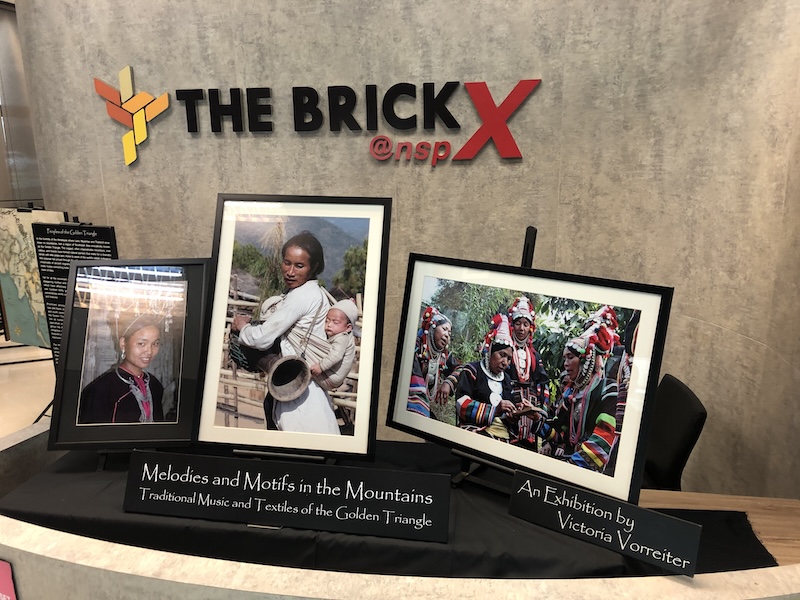
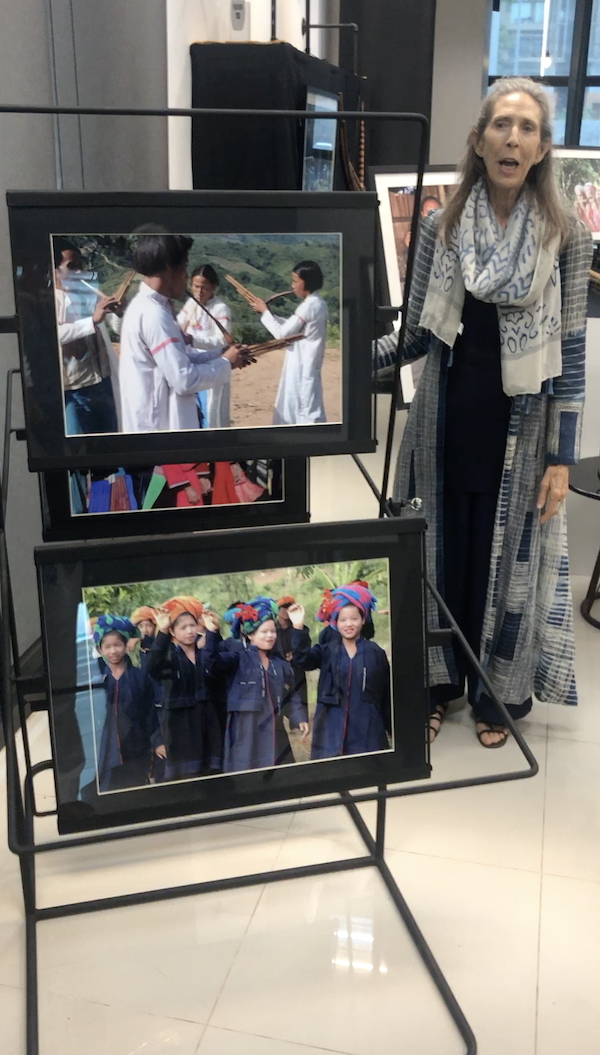
Victoria Vorreiter’s photographs, exhibition of instruments, textiles and weaving, and her books – absolutely splendid. Amazing one person can do all of that, though of course with the help of many. Her “turning photorack” will be a hit in exhibition centers around the world, I bet (see the video above)!
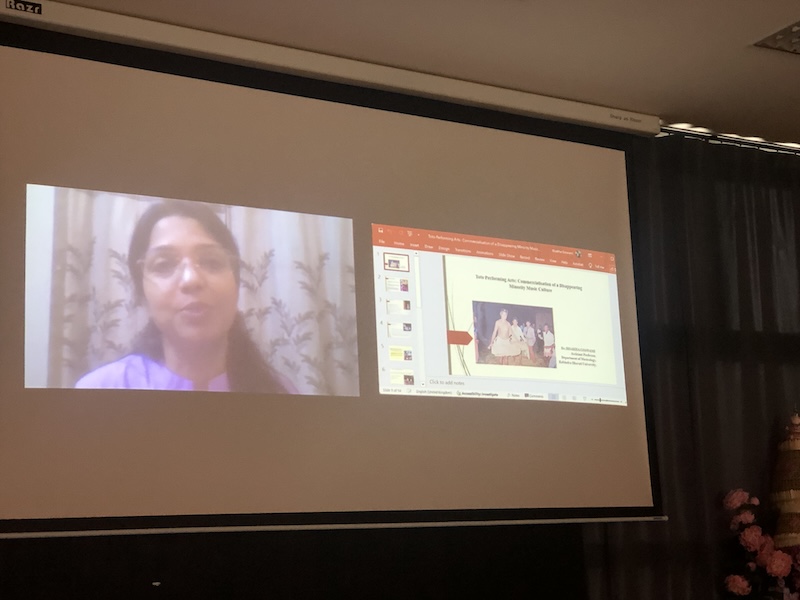
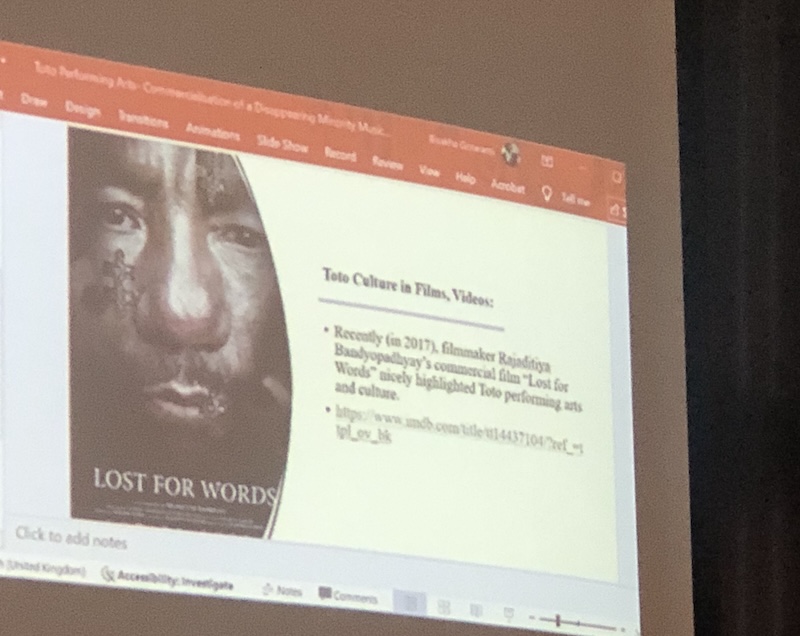
For the very time I learnt about India’s smallest minority, the Toto from West Bengal, in the only online presentation I saw, by Bisakha Goswami (Rabindra Bharati University). Though under pressure and counting only about 1400 people, the group still retains several traditions of music and ritual.
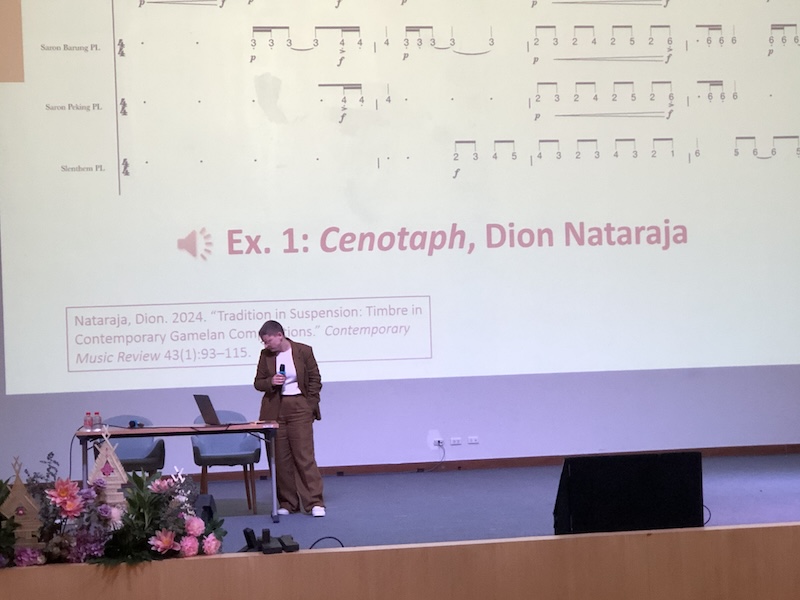
There were too many good papers, and certainly some mediocre ones, but these were also among those to remember.





We are truly thankful to the chairs of the three Study Groups (Made Hood, Huib Schippers, Yuh-Fen Tseng) and the Thai hosts who put together such a great program (esp. Nattapol Wisuttipat, Kumkom Pornprasit and Paphutson Koong Wongratapitak) and others assisting the Program Committee and Local Arrangements Commitee, as well as the previous and current president of the ICTMD (Svanibor Pettan and Tan Sooi Beng).
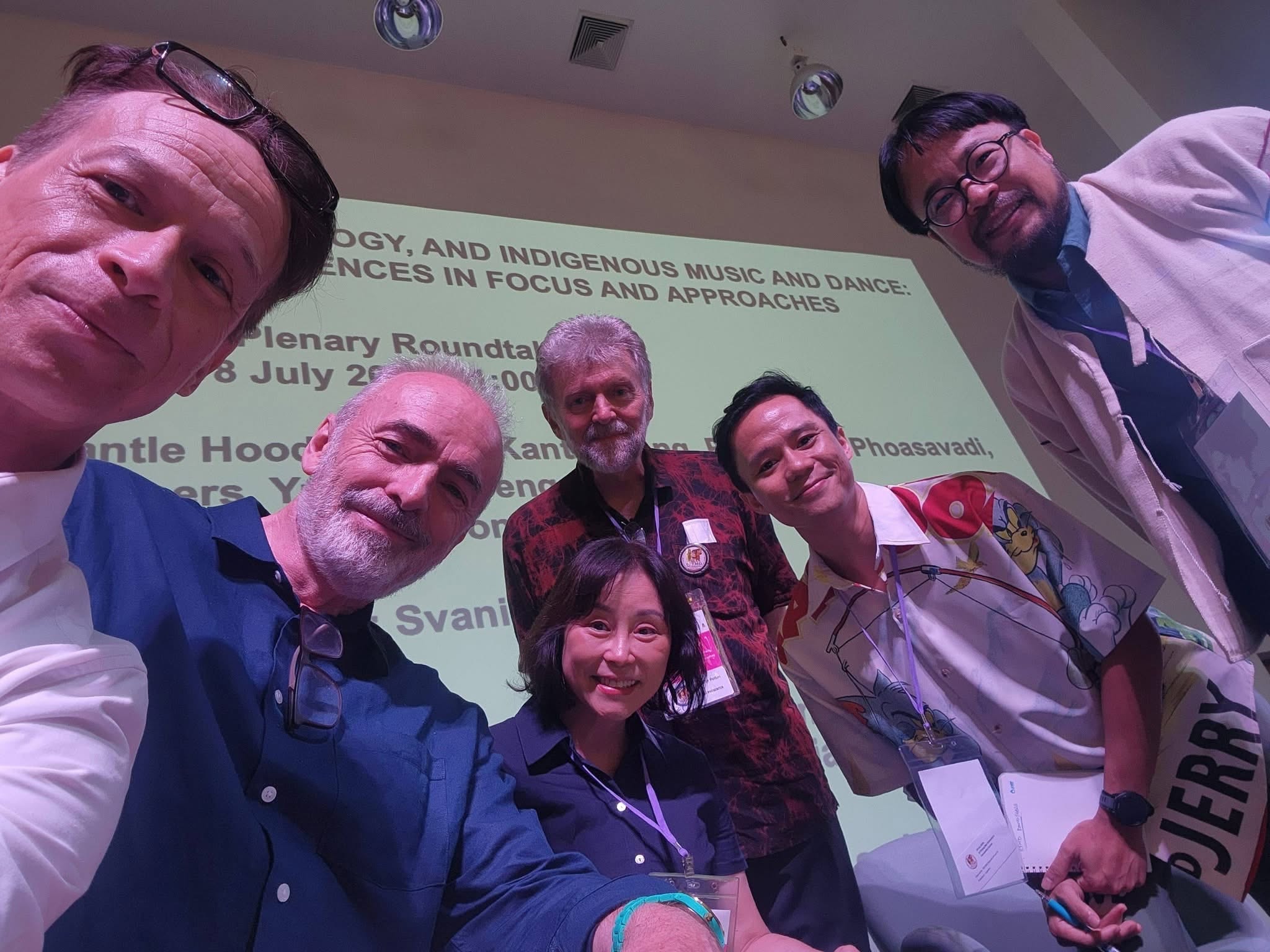
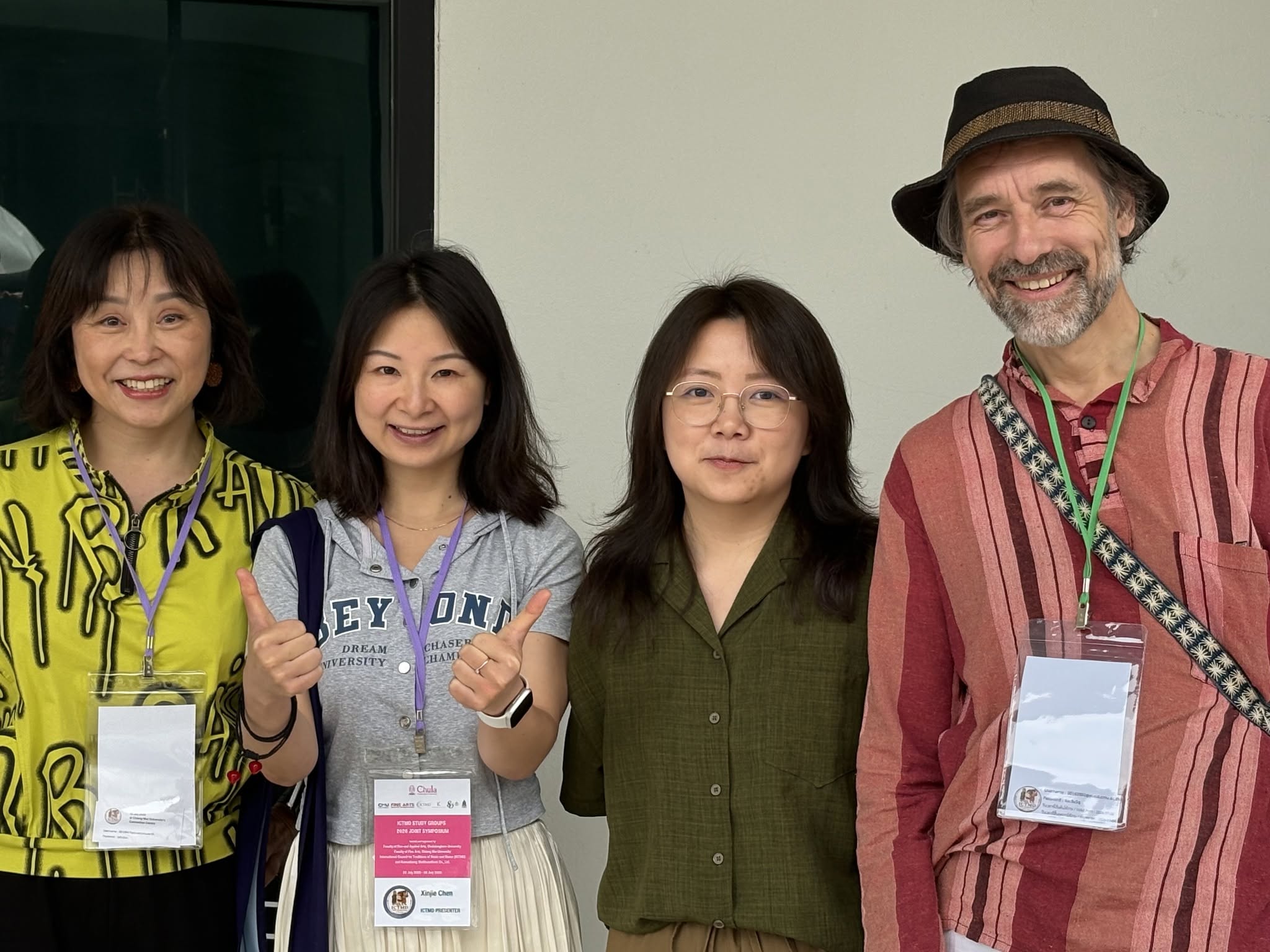
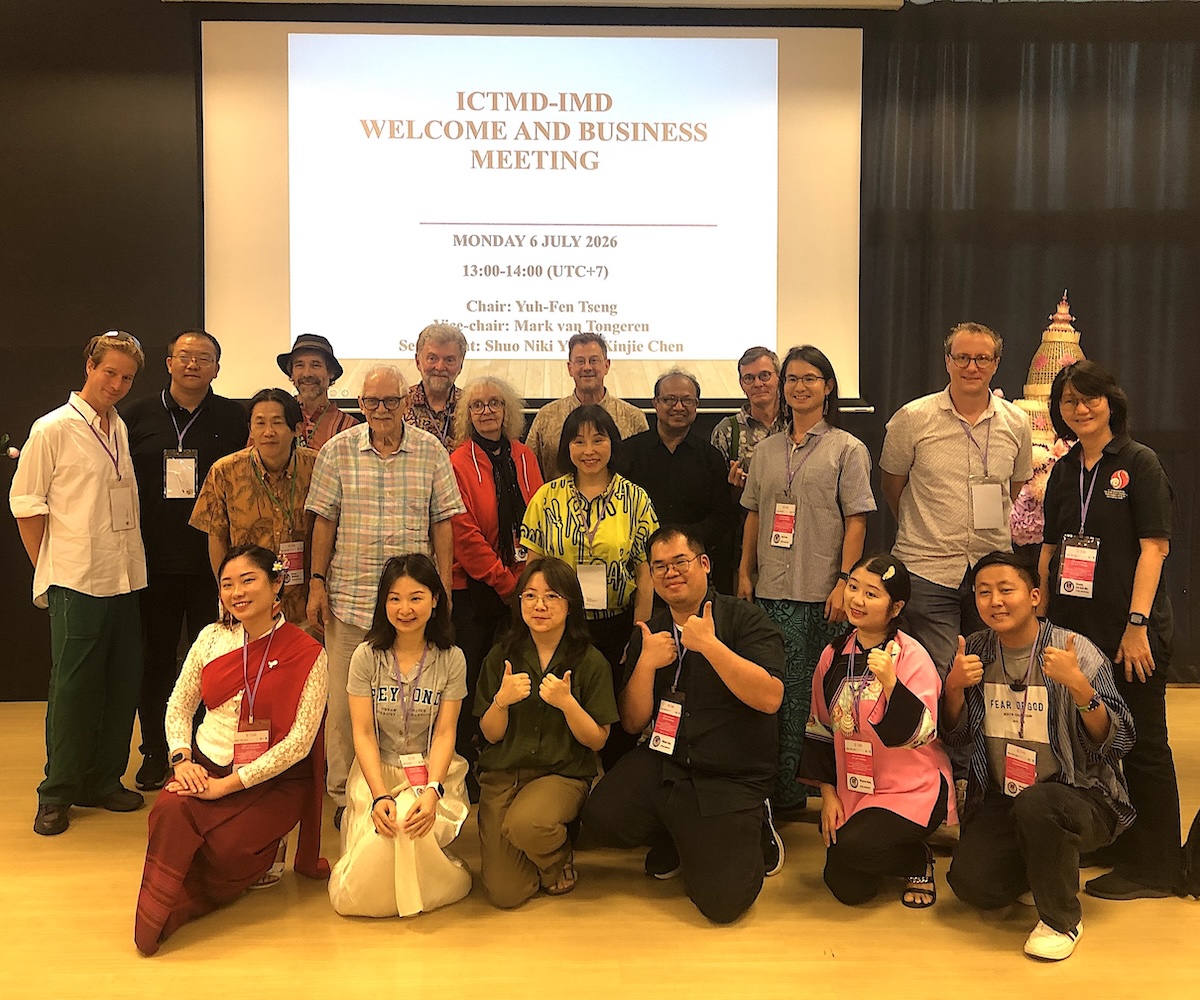
This event was in fact the first time the current Committee of our IMD Study Group got together in person: (photo below, from left to right) chair Yuh-Fen Tseng 曾毓芬, secretaries Xinjie Chen 陳心傑 and Shuo Niki Yang 楊爍, and me as vice-chair. Thanks Svanibor Pettan for capturing this moment.
Our ICTMD-IMD website with lots of presentations of previous Symposia, an interactive map with performances etc. etc.
https://ictmindsg.openmuseum.tw/
Do check out the video with some of the musical moments in Chiang Mai.
