

My first meeting with A Cumpagnia and Nando Acquaviva
Earlier this year a remarkable and innovative singer of traditional Corsican songs passed away: Nando Acquaviva. I vividly remember many of our meetings and the things he showed and taught me. Nando was a passionate promotor of Corsican music, eager to share his poetic vision of music, nature and Corsican life.
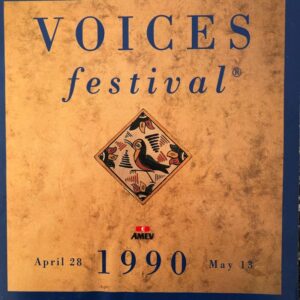
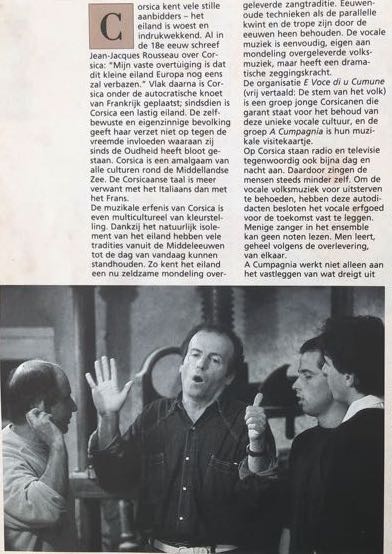
The story began a long time ago and more or less by accident. In 1989 I was a student volunteer for the Voices Festival in The Netherlands and Belgium. First I was assigned to assist the King’s Singers on their tour, as a representative of the festival organisation. One of the top choirs in classical music at that moment. Then the festival changed my assignment. They learnt about my interest in world music and decided I was more suitable for a traditional music program. The largest of two groups I guided was Le Mystère des Voix Bulgares, which was quickly becoming a public favorite, with ongoing concert tours around the world for years to come. The other ensemble was much less known: A Cumpagnia from the isle of Corsica. The ensemble was built around the artistic community of Pigna and had just launched an album of traditional Corsican songs on the Harmonia Mundi label.
It was a life-changing experience to witness these musicians rehearse and perform their music day by day, and to assist them with their needs. The best part was yet to come though. At the end of their succesful double-bill tour in the Netherlands and Belgium, they told me one of them would not fly back to Corsica: sensing that this young student was very eager to absorb as much as he could from musical traditions, they wondered: would I be interested to use the ticket and come to Corsica? It was an offer you can’t refuse. But I refused. I had musicology exams coming up and declined the kind offer with pain in my heart. However, the invitation was made, and I would come at a more convenient time.
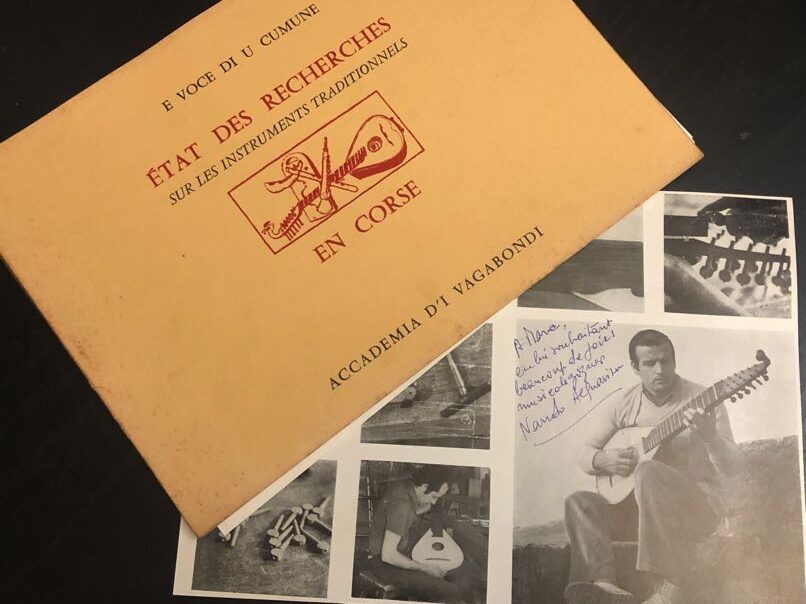
First visit to Corsica
That moment came Summer next year. With a friend I hitchhiked to South France, got on the ferry and arrived on the stunningly beautiful island of Corsica. There I looked for Mr. Acquaviva in a supermarket he managed in a little town. He kindly invited us to join the rehearsal a few days later, and so I came to make my first visit to the little village of Pigna, the residency of the artistic community of ‘vagabonds’ established over a decade earlier by Toni and Nicole Casalonga. It was (still is) a typical, gorgeous mediterranean hillside village: compact, with small winding cobblestone roads (mostly too narrow for cars), and solid houses built from natural rocks, ages ago. The weekly rehearsal took place at the Casa Musicale, a restaurant and pension at the edge of the village, with a grand view over the Bay of Calvi. It is too long ago to remember all the details; I think they played more instruments than they did in the concert tour, but they surely sang a lot as well. What has really stayed with me, however, is Nando’s invitation to join their singing. I never sang with musicians, only privately, and occasionally. The thought of joining musicians who had just toured in Dutch and Belgium theaters was utterly surprising. Singing? Me? With you?? Nando reassured me, explaining I could simply tag along and try: no big deal! On that spot some of my reservations about my voice, perhaps an instinctive shyness, as if it is something better kept private, vanished. I sang along and thoroughly enjoyed being part of the roaring harmonies these men produced.
We came back later to the Casa Musicale to stay overnight in the pension. I particularly remember eating in the restaurant, on the terrace, and tasting locally grown tomatoes unlike any tomato I ever ate before, as well as a dish with local basil. Al the senses were stimulated enough to make me long to go back. But I had to wait a few decades before that came to pass. The memory of the musicians remained, and in particular of Nando’s unexpected invitation to come to Pigna and join the singing. The seeds were planted and were nourished by the albums of Corsican music I found. Far away from the island itself, I immersed myself time and again in their rich polyphonies and often sang along.

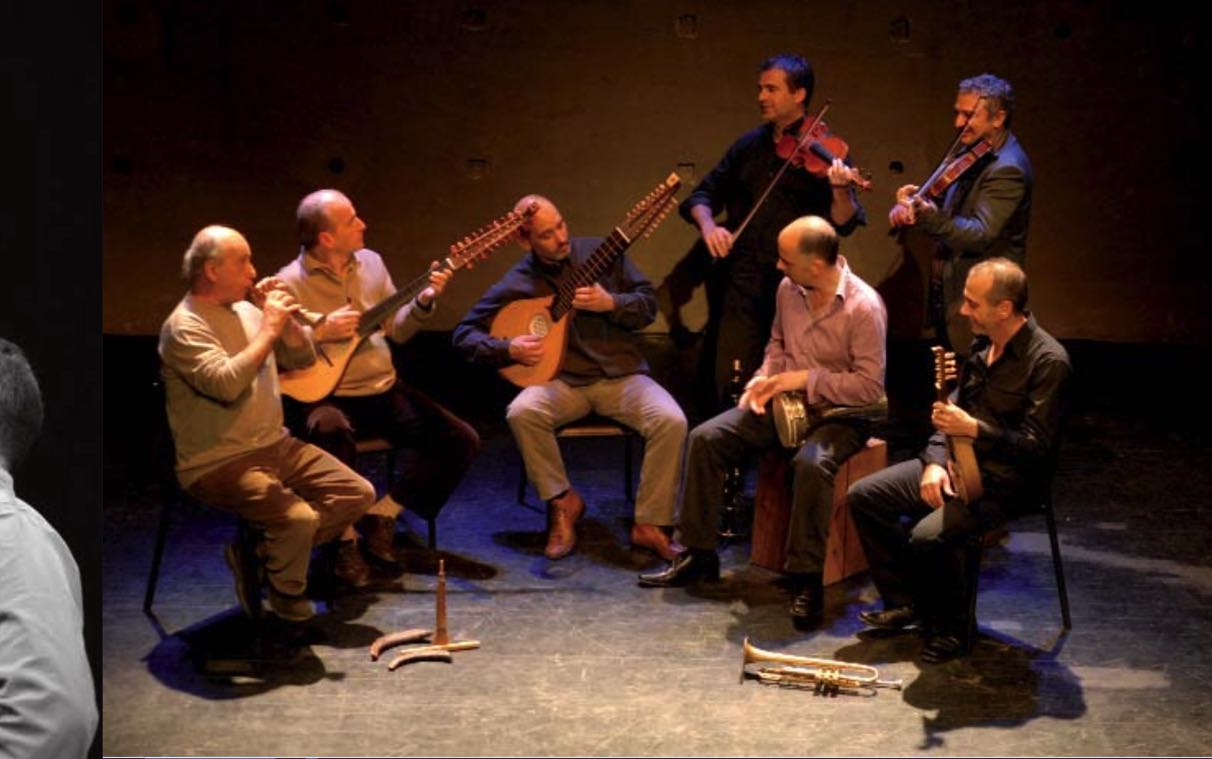
The open-throated voice in traditional polyphonic singing
The singers of A Cumpagnia are all masters of the various forms of Corsican polyphony, the art of weaving several melodic lines together in ever-changing ways. Many Corsican villages have their own distinct repertoire of singing, which are either religious (and based on Latin texts) or secular (and based on poetry in the Corsican language). When singing a paghjella, three male singers produce their own vocal line with a powerful, open-throated chest voice. All vowels are produced with a minimum of obstruction in the vocal tract, in contrast with (European) classical singing, for which the open sound is modified by posturing the back and root of the tongue in different ways, and lowering the jaw. The sound flow is not as direct as it could be, and makes the tone darker. It adds a certain amount of artifice – and quite a lot of it in the case of some singers and styles. Add to it the typical vibrato that is produced deeper down in the throat and you are already far, far away from the natural open-throated sound of traditional Corsican singing.
As a young student, growing up hearing plenty of classical music at home, as well as jazz and pop (with many techniques to add colouring), this natural voice struck me as different. I was mesmerized by the qualities of the voices. There was a rawness and … honesty, as if the inner quality of a man comes through unveiled. When the second and third voice joined the main singer, they supercharged it, their lines joining in full force, making themselves stand out just as clear as the main voice. Usually the Corsican three-part polyphony would proceed as follows: shortly after the main singer begins the opening phrase, the others step in to add a note of their choice. Together they produce a three-tone chord, but the main melody and the chords keep changing. The two other singers follow the lead singer, adding a bass note and another note in between the lead voice and the bass. Each song type has well-established procedures for the development of the main voice. This gives each voice some room to play with their part. The bass wil generally start mid-range and in the course of several phrases descend to the lowest tone. Every time I hear it, this gives me the feeling there is something centering about Corsican polyphony: during a song you experience a gravitational force that is guaranteed to put you firmly on the ground when the phrase or song ends. Another feature is that many songs are in a minor key, but end on a major key.
Nando’s Mimofonia
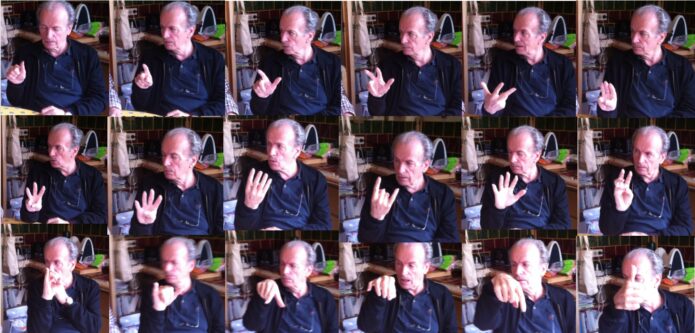
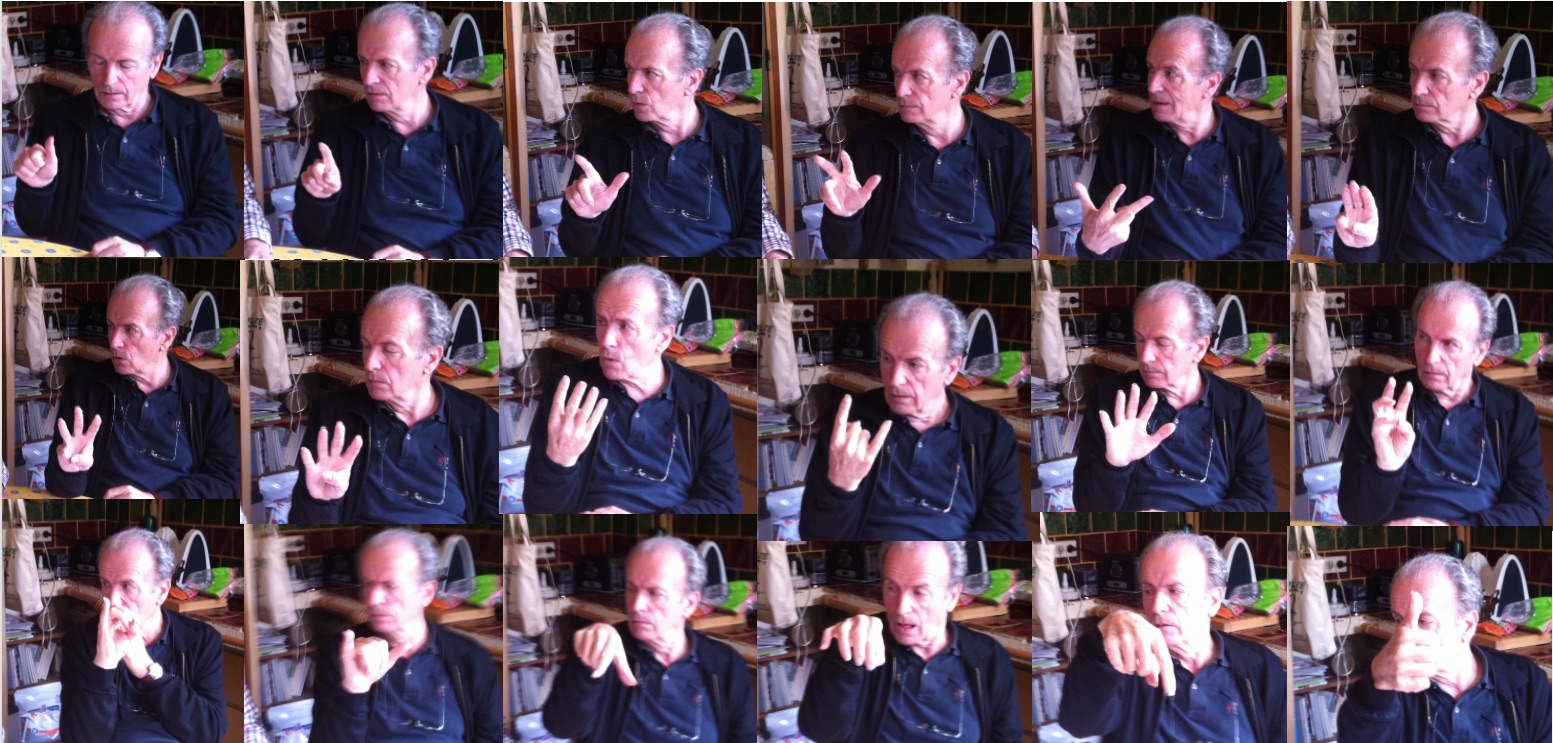
One of the things that impressed me during A Cumpagnia’s first visit was the use of a sign language to create vocal polyphony. Nando would sing with two other men, and use his hands and fingers to indicate the harmony that they would sing. In this way the trio could remain in a natural flow of singing, while Nando could communicate possibilities and direction for the harmony in real time without talking. He could indicate how fast or slow they would change the chord, moving down or up, holding back certain progressions, make a bigger leap than usuaul etc. I found it amazing that a single person could hear the chords he wished to hear in his head and had a way to tell the others to follow the progressions he was foreseeing.
Another reason why it struck me, was that as a newcomer, the three voices were so resonant, and my ears were so attuned to overtones, that the richness overwhelmed and intoxicated me. Later, when listening to album recordings of Corsican polyphony, I sometimes could not tell how many parts there were. I might believe I was hearing 5 singers when in fact there were only three. And even I saw there were just three singers, I had a hard time catching everything that was happening. In the live sitation, onstage or during practise in Pigna, there was someone for whom all these parts were so transparent, that he had the mental space to create his own line on the spot as well as the two others, and use hand gestures to direct them. Nando did that without visible effort: he had a certain softness in his facial expressions, and a fluency in the way his hands and arms moved. During one visit, I asked him to show me how he used it, and we made photographs of each hand sign. (Unfortunately, I cannot find any video where we see the mimofonia live in action).
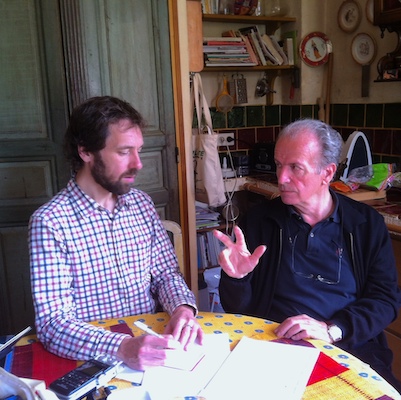
20+ years later
Decades later, I had a chance to get to know Nando better during various visits to Corsica, and occasional long-distance phone calls. My wife organised aromatherapy tours in the Meditterranean, and I insisted we should all go to this island, because I had vivid memories not only of the music, but also of the powerful aromas. After I had taken our family of four around the island for a two-week exploration, she felt that this was something to share with her students, lovers of fragrance, flowers, essential oils and botanical and cultural explorations in general. And so I became a tourguide for Chinese-speaking visitors. The itinerary always included a visit to Pigna and a concert or workshop with Nando and other musicians.
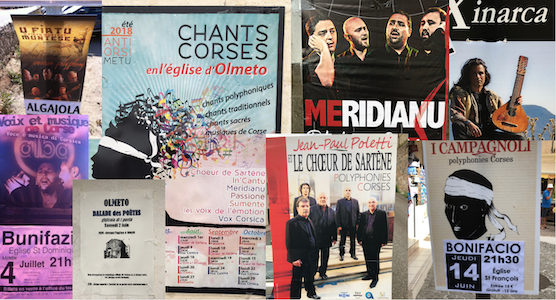
When we first arrived as a family, we visited the splendid botanical garden Parc Sallecia before heading for Pigna. In the park’s shop, we bought an album by a singer with the same name as Nando: Battista Acquaviva. That evening we went to the opening of the Festivoce (a great festival that is still happening every year). I saw Nando and introduced myself, 20+ years after we last met. He was standing next to a beautiful, tall lady: the one from the album we had just bought! It was his daughter. And so began a re-acquaintance and deeper understanding of Corsican music.
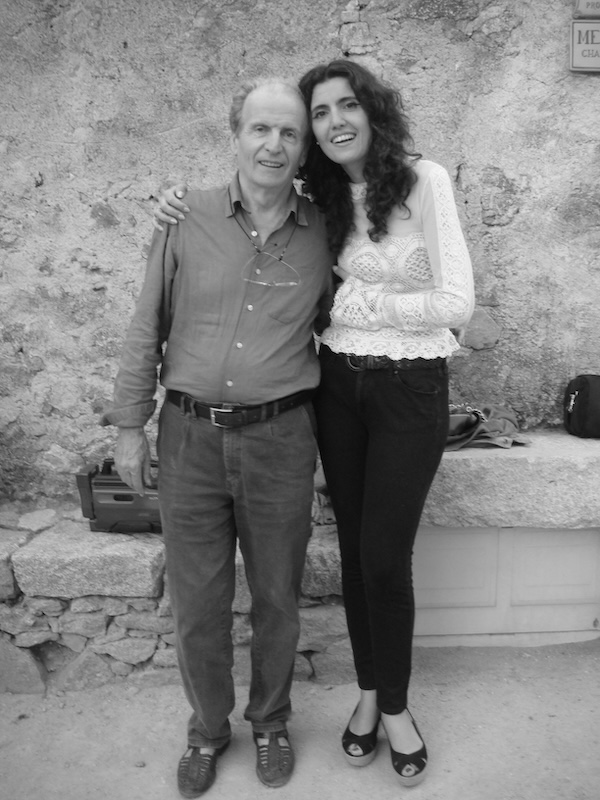
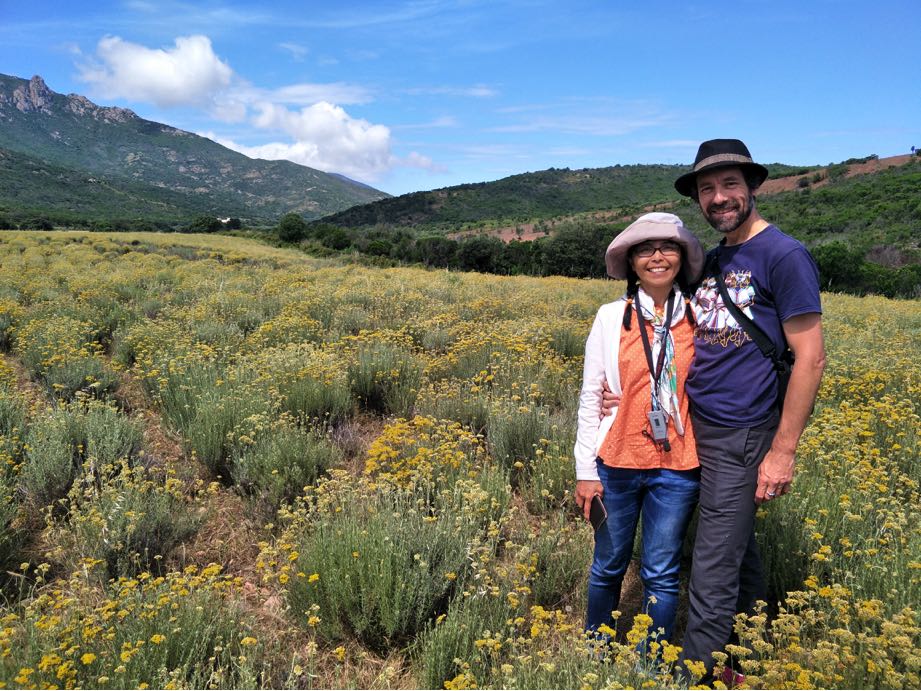
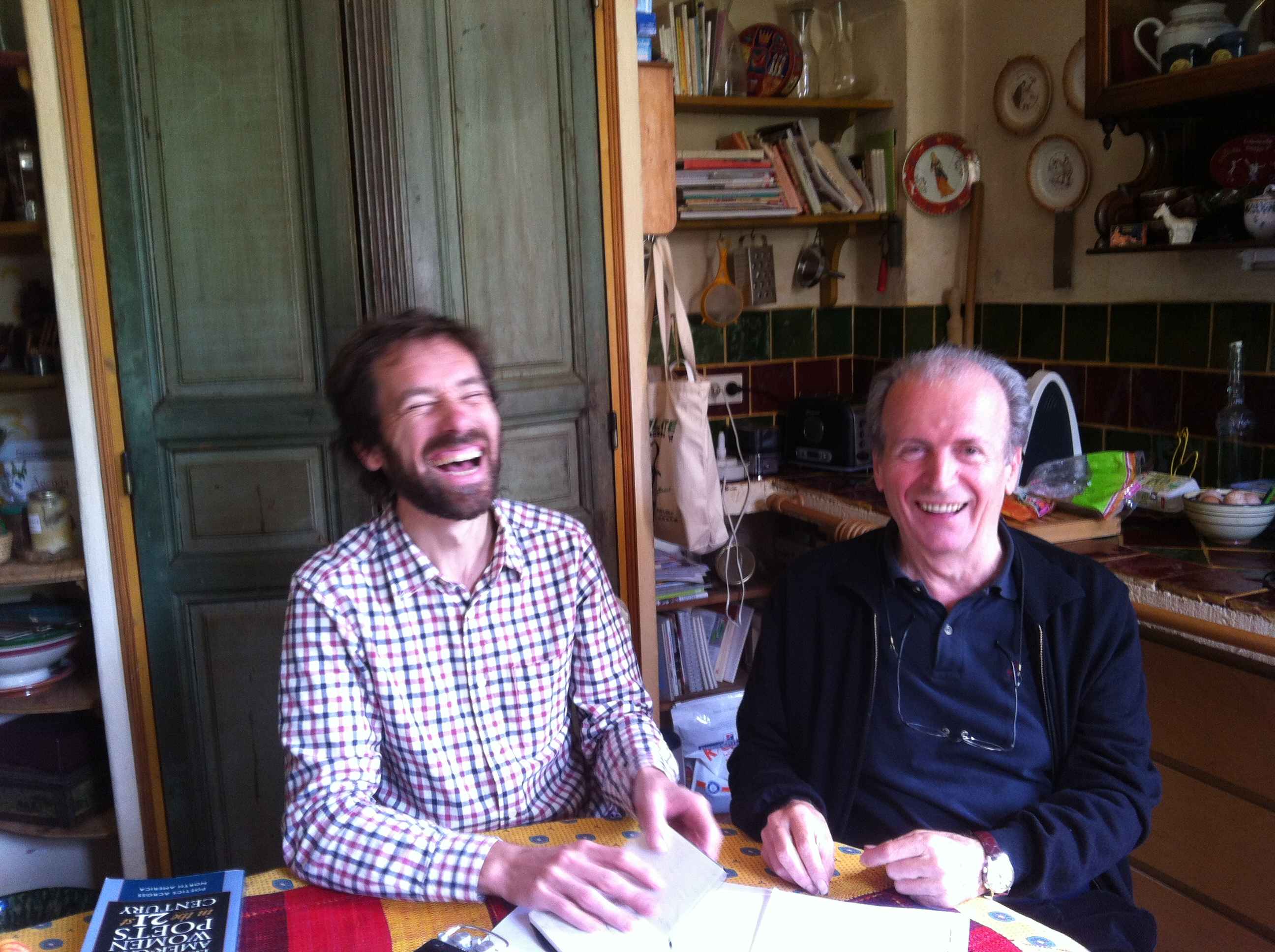
When the first group of aromatherapists arrived in Pigna next year, Nando performed together with Battista (a privilege that did not last long since she soon became a sensation (12 million views and counting!) in the French version of the popular TV-show The Voice.) Nando shared his passion for Corsican music, and welcomed me at home together with his family each time I visited. It was usually a day, or maybe two, that I was in the region. We had lots to talk about: I was hungry to learn more about his musical life and that of Pigna and the island as a whole. And Nando was very interested in musicology. I learnt that mimofonia was Nando’s own way to understand and create the polyphonic forms of his native region. It was he who had invented this system, which was not in general use – though one other active singer and teacher, Nicole Casalonga, also uses it to this day. Alongside the gestures, Nando wished to codify and indicate the finer variations in tuning, for which Corsican singers posses such a skilled ear.
Last but not least, Nando was a poet, a fanastic storyteller, philosopher: he could talk in the most captivating way about music and connect it with plants, fragrances, history, literature. Above all, he would speak from an unparallelled poetic imagination, weaving words and ideas like no one else. Here is his description of polyphony, from the album A Cumpagnia – in Paghjella:


Besides Casa Musicale, I would sometimes visit Claude Bellagamba, who runs a bar/restaurant in Pigna. His voice rings like a bell and makes the most extraordinary flourishes: you can hear him on many tracks of the seminal album Corsica – Chants Polyphoniques. On one occasion, it was time for a next step in my attempts to understand Corsican polyphony, and give my understanding of mimofonia a try without the aid of other singers singing my part. One of my favorite songs is Ecco Bella, and that’s what we tried to sing together. Click below to hear our version: the lead voice is by Claude Bellagamba, I was trying my best with the bass, and Nando usually comes in later to provide the highest voice.

The pandemic put an end to our yearly travels and I have not returned to Corsica again, yet. I treasure the memories and the generous sharing of his skill and knowledge. He passed on his skills to many others, and especially to Battista, who gives her own unique colour and expression to old and new music from the Balagne and elsewhere. I still take to heart that precious first session in Pigna. I recall this episode in my own Ocean of Voices workshops about musical traditions, encouraging students to start trying out new things with their voices.
Thank you, Nando and family, and thank you, members of A Cumpagnia!
More Sources
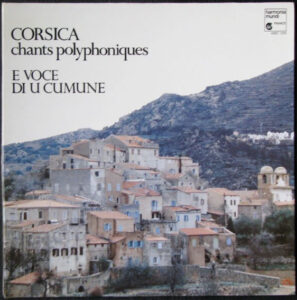
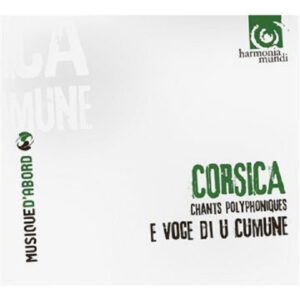
The breakthrough album that also led to their tour to the Benelux was E Voce Di U Cumune, Marcel Pérès – Corsica : Chants Polyphoniques from 1987.
Reissued and also on the streaming platforms in its ugly new ‘budget series’ cover. Make sure to check it out, the musicians were all in their prime, around 30 years young.
The album A Cumpagnia In Paghjella is also a great starting point (https://www.casa-editions.com/boutique/p/in-paghjella-a-cumpagnia).
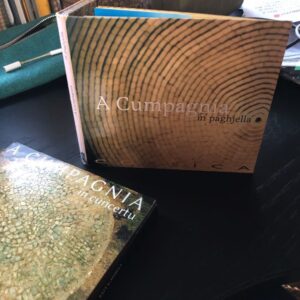
Many more albums can be found on the label Casa Editions, run in Pigna.
If you want to read more:
The definitive work about Nando’s investigations into Corsican polyphony, including his mimofonia, is: Ignazio Macchiarella, ‘Il Restauratore di Polifonie’, in his book Ignazio Macchiarella (editor) – Tre Voce per Pensare il Mondo. Pratiche polifoniche confraternali in Corsica, Il Campo, 2011: pp. 142-.173.
A thorough English introduction to Corsican music is Caroline Bithel’s Transported by Song:
Corsican Voices from Oral Tradition to World Stage. Maryland: The Scarecrow Press, 2007.
Hear another example of an open-throated voice? Listen to each voice in this video I recorded of a Miserere from Castelsardo, Sardinia.
Sardinia and Corsica are also discussed in my book Overtone Singing, with a recording from Sardinia where a very clear overtone melody can be heard above the four singers (on the Anthology of Overtone Singing). Go to the page of The Overtone Singing Book.
Hear Nando and his daughter Battista perform together, at 17m 45s in this video: