artistic research

Corsican Polyphony and Nando Aquaviva’s Mimofonia

My first meeting with A Cumpagnia and Nando Acquaviva
Earlier this year a remarkable and innovative singer of traditional Corsican songs passed away: Nando Acquaviva. I vividly remember many of our meetings and the things he showed and taught me. Nando was a passionate promotor of Corsican music, eager to share his poetic vision of music, nature and Corsican life.

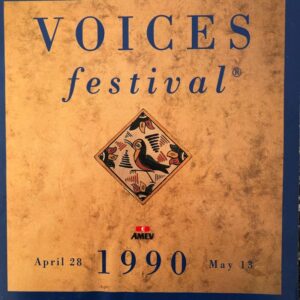
The story began a long time ago and more or less by accident. In 1989 I was a student volunteer for the Voices Festival in The Netherlands and Belgium. First I was assigned to assist the King’s Singers on their tour, as a representative of the festival organisation. One of the top choirs in classical music at that moment. Then the festival changed my assignment. They learnt about my interest in world music and decided I was more suitable for a traditional music program. The largest of two groups I guided was Le Mystère des Voix Bulgares, which was quickly becoming a public favorite, with ongoing concert tours around the world for years to come. The other ensemble was much less known: A Cumpagnia from the isle of Corsica. The ensemble was built around the artistic community of Pigna and had just launched an album of traditional Corsican songs on the Harmonia Mundi label.
It was a life-changing experience to witness these musicians rehearse and perform their music day by day, and to assist them with their needs. The best part was yet to come though. At the end of their succesful double-bill tour in the Netherlands and Belgium, they told me one of them would not fly back to Corsica: sensing that this young student was very eager to absorb as much as he could from musical traditions, they wondered: would I be interested to use the ticket and come to Corsica? It was an offer you can’t refuse. But I refused. I had musicology exams coming up and declined the kind offer with pain in my heart. However, the invitation was made, and I would come at a more convenient time.
First visit to Corsica
That moment came Summer next year. With a friend I hitchhiked to South France, got on the ferry and arrived on the stunningly beautiful island of Corsica. There I looked for Mr. Acquaviva in a supermarket he managed in a little town. He kindly invited us to join the rehearsal a few days later, and so I came to make my first visit to the little village of Pigna, the residency of the artistic community of ‘vagabonds’ established over a decade earlier by Toni and Nicole Casalonga. It was (still is) a typical, gorgeous mediterranean hillside village: compact, with small winding cobblestone roads (mostly too narrow for cars), and solid houses built from natural rocks, ages ago. The weekly rehearsal took place at the Casa Musicale, a restaurant and pension at the edge of the village, with a grand view over the Bay of Calvi. It is too long ago to remember all the details; I think they played more instruments than they did in the concert tour, but they surely sang a lot as well. What has really stayed with me, however, is Nando’s invitation to join their singing. I never sang with musicians, only privately, and occasionally. The thought of joining musicians who had just toured in Dutch and Belgium theaters was utterly surprising. Singing? Me? With you?? Nando reassured me, explaining I could simply tag along and try: no big deal! On that spot some of my reservations about my voice, perhaps an instinctive shyness, as if it is something better kept private, vanished. I sang along and thoroughly enjoyed being part of the roaring harmonies these men produced.

We came back later to the Casa Musicale to stay overnight in the pension. I particularly remember eating in the restaurant, on the terrace, and tasting locally grown tomatoes unlike any tomato I ever ate before, as well as a dish with local basil. Al the senses were stimulated enough to make me long to go back. But I had to wait a few decades before that came to pass. The memory of the musicians remained, and in particular of Nando’s unexpected invitation to come to Pigna and join the singing. The seeds were planted and were nourished by the albums of Corsican music I found. Far away from the island itself, I immersed myself time and again in their rich polyphonies and often sang along.

The open-throated voice in traditional polyphonic singing
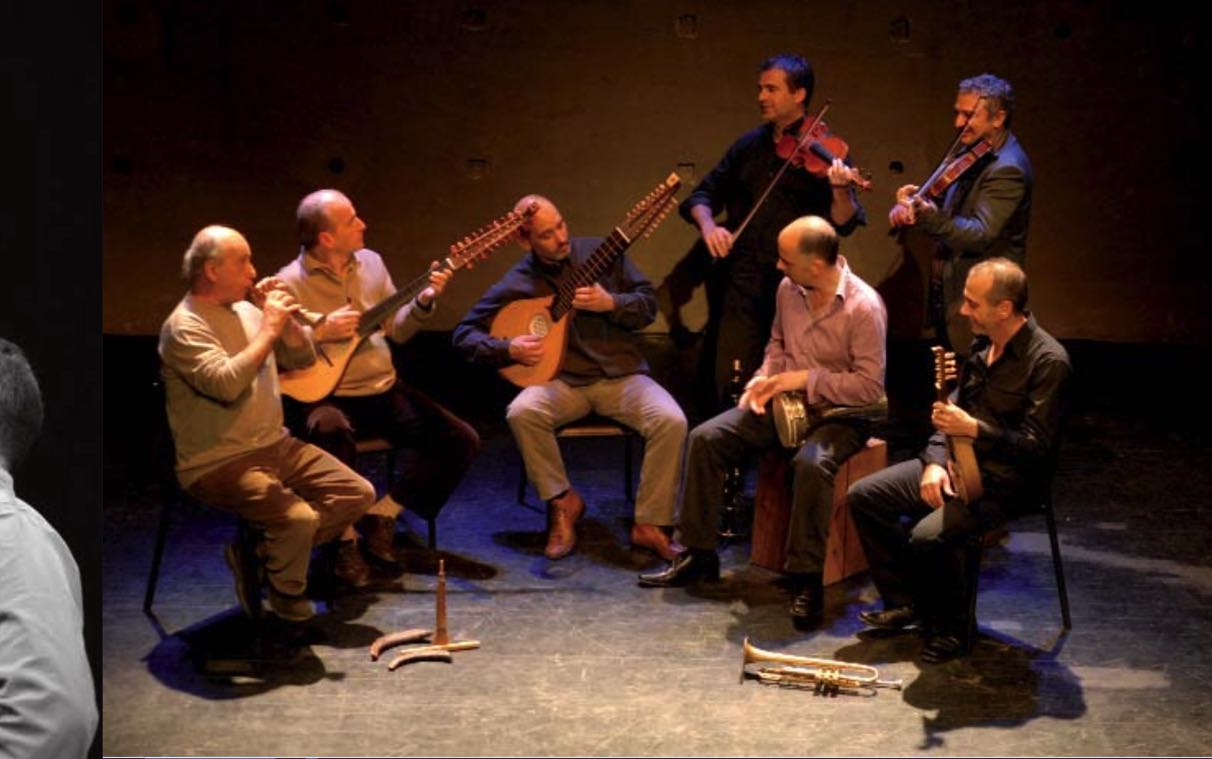
The singers of A Cumpagnia are all masters of the various forms of Corsican polyphony, the art of weaving several melodic lines together in ever-changing ways. Many Corsican villages have their own distinct repertoire of singing, which are either religious (and based on Latin texts) or secular (and based on poetry in the Corsican language). When singing a paghjella, three male singers produce their own vocal line with a powerful, open-throated chest voice. All vowels are produced with a minimum of obstruction in the vocal tract, in contrast with (European) classical singing, for which the open sound is modified by posturing the back and root of the tongue in different ways, and lowering the jaw. The sound flow is not as direct as it could be, and makes the tone darker. It adds a certain amount of artifice – and quite a lot of it in the case of some singers and styles. Add to it the typical vibrato that is produced deeper down in the throat and you are already far, far away from the natural open-throated sound of traditional Corsican singing.

As a young student, growing up hearing plenty of classical music at home, as well as jazz and pop (with many techniques to add colouring), this natural voice struck me as different. I was mesmerized by the qualities of the voices. There was a rawness and … honesty, as if the inner quality of a man comes through unveiled. When the second and third voice joined the main singer, they supercharged it, their lines joining in full force, making themselves stand out just as clear as the main voice. Usually the Corsican three-part polyphony would proceed as follows: shortly after the main singer begins the opening phrase, the others step in to add a note of their choice. Together they produce a three-tone chord, but the main melody and the chords keep changing. The two other singers follow the lead singer, adding a bass note and another note in between the lead voice and the bass. Each song type has well-established procedures for the development of the main voice. This gives each voice some room to play with their part. The bass wil generally start mid-range and in the course of several phrases descend to the lowest tone. Every time I hear it, this gives me the feeling there is something centering about Corsican polyphony: during a song you experience a gravitational force that is guaranteed to put you firmly on the ground when the phrase or song ends. Another feature is that many songs are in a minor key, but end on a major key.

Nando’s Mimofonia

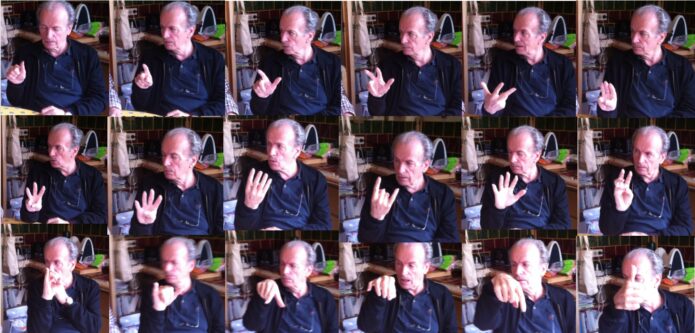
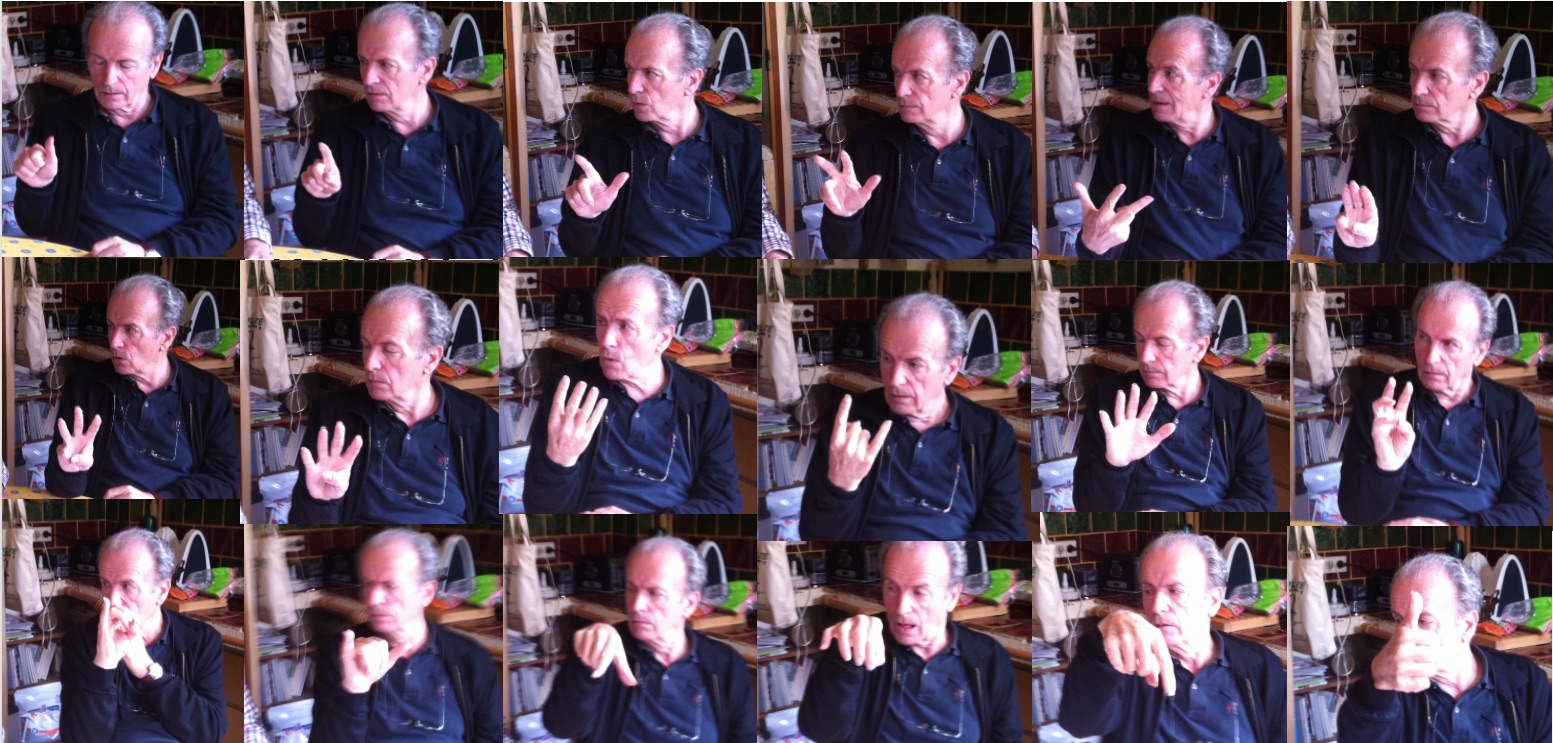
One of the things that impressed me during A Cumpagnia’s first visit was the use of a sign language to create vocal polyphony. Nando would sing with two other men, and use his hands and fingers to indicate the harmony that they would sing. In this way the trio could remain in a natural flow of singing, while Nando could communicate possibilities and direction for the harmony in real time without talking. He could indicate how fast or slow they would change the chord, moving down or up, holding back certain progressions, make a bigger leap than usuaul etc. I found it amazing that a single person could hear the chords he wished to hear in his head and had a way to tell the others to follow the progressions he was foreseeing.

Another reason why it struck me, was that as a newcomer, the three voices were so resonant, and my ears were so attuned to overtones, that the richness overwhelmed and intoxicated me. Later, when listening to album recordings of Corsican polyphony, I sometimes could not tell how many parts there were. I might believe I was hearing 5 singers when in fact there were only three. And even I saw there were just three singers, I had a hard time catching everything that was happening. In the live sitation, onstage or during practise in Pigna, there was someone for whom all these parts were so transparent, that he had the mental space to create his own line on the spot as well as the two others, and use hand gestures to direct them. Nando did that without visible effort: he had a certain softness in his facial expressions, and a fluency in the way his hands and arms moved. During one visit, I asked him to show me how he used it, and we made photographs of each hand sign. (Unfortunately, I cannot find any video where we see the mimofonia live in action).
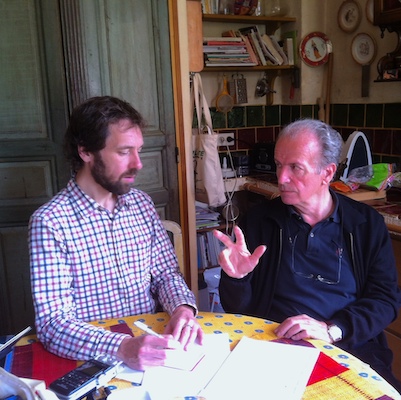
 

20+ years later

Decades later, I had a chance to get to know Nando better during various visits to Corsica, and occasional long-distance phone calls. My wife organised aromatherapy tours in the Meditterranean, and I insisted we should all go to this island, because I had vivid memories not only of the music, but also of the powerful aromas. After I had taken our family of four around the island for a two-week exploration, she felt that this was something to share with her students, lovers of fragrance, flowers, essential oils and botanical and cultural explorations in general. And so I became a tourguide for Chinese-speaking visitors. The itinerary always included a visit to Pigna and a concert or workshop with Nando and other musicians.

When we first arrived as a family, we visited the splendid botanical garden Parc Sallecia before heading for Pigna. In the park’s shop, we bought an album by a singer with the same name as Nando: Battista Acquaviva. That evening we went to the opening of the Festivoce (a great festival that is still happening every year). I saw Nando and introduced myself, 20+ years after we last met. He was standing next to a beautiful, tall lady: the one from the album we had just bought! It was his daughter. And so began a re-acquaintance and deeper understanding of Corsican music.
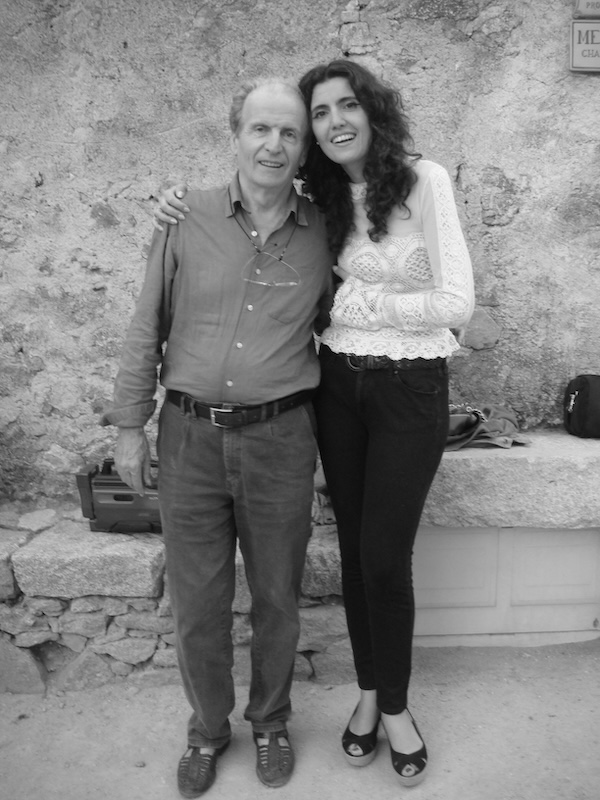
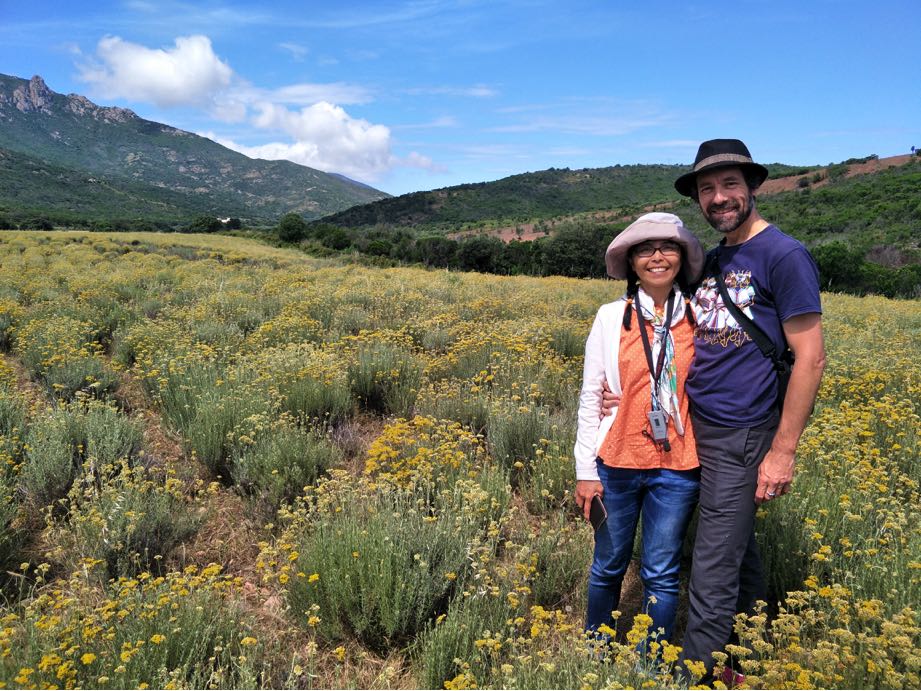
When the first group of aromatherapists arrived in Pigna next year, Nando performed together with Battista (a privilege that did not last long since she soon became a sensation (12 million views and counting!) in the French version of the popular TV-show The Voice.) Nando shared his passion for Corsican music, and welcomed me at home together with his family each time I visited. It was usually a day, or maybe two, that I was in the region. We had lots to talk about: I was hungry to learn more about his musical life and that of Pigna and the island as a whole. And Nando was very interested in musicology. I learnt that mimofonia was Nando’s own way to understand and create the polyphonic forms of his native region. It was he who had invented this system, which was not in general use – though one other active singer and teacher, Nicole Casalonga, also uses it to this day. Alongside the gestures, Nando wished to codify and indicate the finer variations in tuning, for which Corsican singers posses such a skilled ear.

Last but not least, Nando was a poet, a fanastic storyteller, philosopher: he could talk in the most captivating way about music and connect it with plants, fragrances, history, literature. Above all, he would speak from an unparallelled poetic imagination, weaving words and ideas like no one else. Here is his description of polyphony, from the album A Cumpagnia – in Paghjella:


Besides Casa Musicale, I would sometimes visit Claude Bellagamba, who runs a bar/restaurant in Pigna. His voice rings like a bell and makes the most extraordinary flourishes: you can hear him on many tracks of the seminal album Corsica – Chants Polyphoniques. On one occasion, it was time for a next step in my attempts to understand Corsican polyphony, and give my understanding of mimofonia a try without the aid of other singers singing my part. One of my favorite songs is Ecco Bella, and that’s what we tried to sing together. Click below to hear our version: the lead voice is by Claude Bellagamba, I was trying my best with the bass, and Nando usually comes in later to provide the highest voice.


The pandemic put an end to our yearly travels and I have not returned to Corsica again, yet. I treasure the memories and the generous sharing of his skill and knowledge. He passed on his skills to many others, and especially to Battista, who gives her own unique colour and expression to old and new music from the Balagne and elsewhere. I still take to heart that precious first session in Pigna. I recall this episode in my own Ocean of Voices workshops about musical traditions, encouraging students to start trying out new things with their voices.


Thank you, Nando and family, and thank you, members of A Cumpagnia!


More Sources

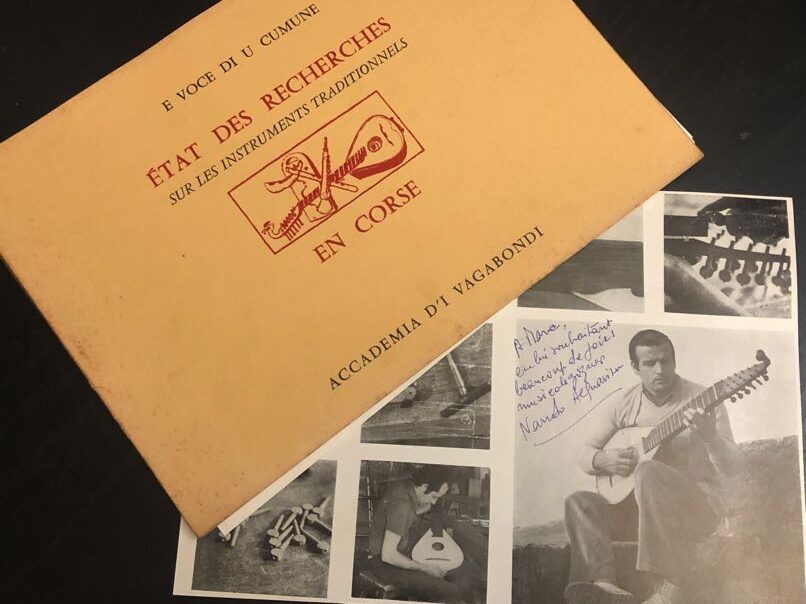
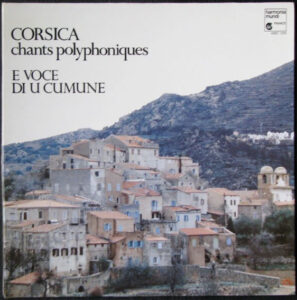
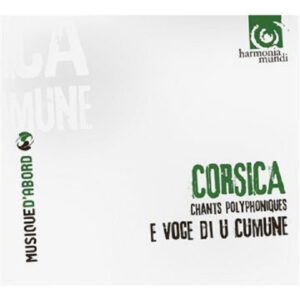
The breakthrough album that also led to their tour to the Benelux was E Voce Di U Cumune, Marcel Pérès – Corsica : Chants Polyphoniques from 1987.


Reissued and also on the streaming platforms in its ugly new ‘budget series’ cover. Make sure to check it out, the musicians were all in their prime, around 30 years young.

The album A Cumpagnia In Paghjella is also a great starting point (https://www.casa-editions.com/boutique/p/in-paghjella-a-cumpagnia).
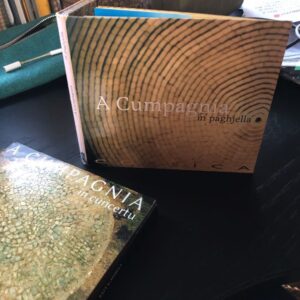
Many more albums can be found on the label Casa Editions, run in Pigna.


If you want to read more:
The definitive work about Nando’s investigations into Corsican polyphony, including his mimofonia, is: Ignazio Macchiarella, ‘Il Restauratore di Polifonie’, in his book Ignazio Macchiarella (editor) – Tre Voce per Pensare il Mondo. Pratiche polifoniche confraternali in Corsica, Il Campo, 2011: pp. 142-.173.
A thorough English introduction to Corsican music is Caroline Bithel’s Transported by Song:
Corsican Voices from Oral Tradition to World Stage. Maryland: The Scarecrow Press, 2007.

Hear another example of an open-throated voice? Listen to each voice in this video I recorded of a Miserere from Castelsardo, Sardinia.

Sardinia and Corsica are also discussed in my book Overtone Singing, with a recording from Sardinia where a very clear overtone melody can be heard above the four singers (on the Anthology of Overtone Singing). Go to the page of The Overtone Singing Book.

Hear Nando and his daughter Battista perform together, at 17m 45s in this video:

World première In|nbalance at Designing Voices

Since the beginning of this year I am preparing a new solo performance. I haven’t conceived of a big solo work for many years; most of my work in the last two decades was about collaborations. I am delighted to announce that I was invited by Alex Nowitz: friend, composer, performer and mastermind behind the Designing Voices Festival, to present my new work there. I was already planning a longer stay in Europe, from early September to early December, so this festival, running from 9 to 12 October 2025, was a perfect match. In the first half of 2025 I have been making design sketches, collecting all kinds of notes, and created several new pieces for the larger work.
But more about that solo piece later. First, I will give an exciting 3-day workshop Overtone Singing and Resonance at Designing Voices, which can better be booked early. So here is the info, in English and German – we will see which language we will use, both can do. The English pdf is here, and then I let Alex introduce my workshop in German.


(Start of) workshop announcement in German

Im Rahmen dessen findet ein dreitägiger Workshop von Mark van Tongeren statt:
OBERTONGESANG UND RESONANZ.
Alle weiterführenden Informationen siehe PDF im Anhang!
Mark van Tongeren kenne ich seit Ende der 1990er Jahre. Er lebt derzeit mit seiner Familie in Taipeh und reist wegen der DESIGNING VOICES 2025 nach Potsdam an! Mark ist ein Spezialist auf dem Gebiet des Obertongesangs. Ich kenne niemanden, der die unterschiedlichen Ansätze beim Obertonsingen so exzellent beherrscht wie er und sie darüber hinaus auch vermitteln kann! Mark hat alle fernasiatischen Kulturkreise besucht und die jeweiligen Gesangarten in Tuva, Tibet, Mongolei, Kasachstan, usw. studiert. Er berherrscht die meiste Kehlsangtechniken aus dem turko-mongolischen Kulturkreis: Sygyt, Kagyraa, Khöömei, usw. Aber auch, was europäische Traditionen des Obertongesangs angeht, kann er getrost als Experte bezeichnet werden. Er weiss, die Unterschiede zwischen diesen und fernasiatischen Ansätzen hör- und erfahrbar zu machen.
Mark hat einen PhD an der Uni Leiden erworben und ein Buch zum Thema veröffentlicht: “Overtone Singing – Harmonic Dimensions of the Human Voice“ (hrg. Terra Nova ). Zudem ist Mark ein wunderbarer Pädagoge und äusserst liebenswerter Mensch.
Der dreitägige Workshop gelangt zusätzlich zu einer Aschlußpräsentation in der Französischen Kirche Potsdam am 12. Okt. Dies findet ab einer Teilnehmeranzahl von mind. 5 Personen statt.
Natürlich würde es mich sehr freuen, wenn sich viele Begeisterte für den Workshop finden. Ich kann das nur jedem/er empfehlen, der/die Interesse an der Erweiterung der eigenen Stimmmöglichkeiten sowohl alleine als auch im Verbund des chorischen Klangerlebinsses hat. Spread the word!

(End of workshop announcement in German)


About my new work In|nbalance

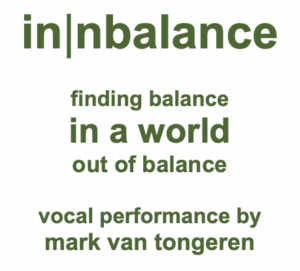
The title of my new work is In|nbalance. It aims to bring together a wide range of vocal and instrumental techniques with questions such as: what can my voice still express when the world seems to be seriously out of balance (hence ‘imbalance‘)? What, if any, are the sounds I can make with my voice and its extensions (instrumental and electronic) that bring balance (hence ‘in balance‘)? How to find my own ‘balance’ as a performer? What new or old sounds do I want to use? And what are their effects, in a time when listening to one another in the world at large reaches a lowpoint I never experienced in my lifetime? How do I give a voice to the news about wars, climate change and other disruptions that we hear about every day? Should I – who never was good at using words in my musical language anyway – look for words to express this struggle, or keep on avoiding verbal, discursive messages altogether?
So far, many tests have been done and they go in either direction: no text <<>> lots of text. It is a new process for me because I never (except a few times, like that TED-x talk) felt an urge to ‘speak’ or to ‘sing about’ something. Now I can no longer pretend I have nothing on my mind or nothing to say: I do. I am experimenting with various methods to incorporate words and meaning – this is my biggest challenge, really. There is also plenty of new-sound-making going on: I look for ways to consolidate overtone singing skills and ideas into more rigorous pieces. Also something I have never really paid enough attention to. So even though I build on skills I posses since a long time, I am pushing myself into new directions.
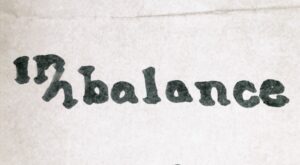
As for the title itself: it must be handwritten to express the ambiguity in/im balance. I made some sketches only, and I am still searching for other ways. I am also not sure yet whether I want to go for an extreme colour scheme
or keep it more subdued.
The Festival Designing Voices
Alex Nowitz’s Designing Voices Festival is running for the fourth time now. It is a unique festival in that it puts the voice centre stage, in confrontation/extension/collaboration with old and new electronic and digital tools and instruments. A fantastic recurring tool is Alex’s Strophonion, which he developed over many years. I remember him spending weeks at the famous Amsterdam institute STEIM, at a time when its downfall began. Just in time to connect with one of the places that has been instrumental in developing and promoting musical sound generated by hand/arm gestures, since the 1970s. There is the first time I heard Alex’ perform with an earlier prototype of the Strophonion.
Designing Voices does what it says: it pushes for the voice to stretch into new directions, and it does so in a wonderful context of instrumental and electronic support, often including video works. I really can’t emphasise how happy I am with Alex’ invitation, just at a point where I had decided to come up with a full, through-developed work. Designing Voices is a fantastic platform with top performers and a critical audience. Watch this trailer of Designing Voices 2021 to see how wide the scope is (and to see the Church where I will also present my piece):


Klangsinn is the theme of this year. There are 6 concerts and 8 performances taking place. This is the full program for this year (2025) with 20 artists from around the world. Or check the link.
DESIGNING VOICES: Klangsinne
Potsdam, 09.-12. Okt. 2025
Die menschliche Stimme als Kunstobjekt, in all ihrer Breite und Vielfältigkeit live dargeboten, steht im Zentrum des Internationalen Festivals für vokale Performancekunst, Klang & Musik DESIGNING VOICES. Die Kunststimmen erweitern sich durch den Einsatz von Live-Elektronik oder sie treten in Dialog mit akustischen und elektronischen Instrumenten sowie mit Objekten. Das Festival findet als Biennale zum dritten Mal in Potsdam statt. Unter dem diesjährigen Motto „Klangsinne“ beleuchtet das Festival die sinnlichen Aspekte von Stimmklängen und erkundet gleichzeitig den Sinn von Klang im Spiel mit und ohne Sprache.
Es stellen sich 20 Performer:innen in 8 Performances (6 Konzerte) aus dem In- und Ausland vor.
==========
W O R K S H O P — INFOS + ANMELDUNG
==========
Das gesamte Festival DESIGNING VOICES: „Klangsinne“ (Potsdam 09.–12. Okt.)
Eröffnung (Tag 1)
Vom Sinn zum Klang (Tag 2)
Die lange Nacht der kuriosen Stimmen (Tag 3)
Vom Klang zum Sinn (Tag 4)
WORKSHOP Obertongesang (3 Tage)
==========
P R O G R A M M
_____
ERÖFFNUNG
museum FLUXUS+ | 09. Okt. (19:00)
=> Infoveranstaltung mit Gesprächen und Videos
(freier Eintritt!)
• Casey Moir (AU/SE)
• Meinrad Kneer (DE)
• Natalia Pschenitschnikova (RU/DE)
• Mark van Tongeren (NL/TW)
• Alex Nowitz (DE)
_____
VOM SINN ZUM KLANG
fabrik Potsdam | 10. Okt.
=> Konzert 1 (19:00)
Ensemble KLANGPAKT (DE/FR)
• Matthias Badczong (DE, Klarinetten)
• Christine Paté (FR/DE, Vierteltonakkordeon)
• Matthias Bauer (DE, Kontrabass, Komposition)
• Alex Nowitz (DE, Stimme, Strophonion, Komposition)
=> Konzert 2 (21:00)
Meinrad Kneers PHOSPHOROS Ensemble (DE)
• Angela Postweiler (DE, Sopran)
• Uli Pleßmann (DE, Sprecher)
• Frank Gratkowski (DE, Holzblasinstrumente)
• Ulrike Brand (DE, Violoncello)
• Meinrad Kneer (DE, Kontrabass, Leitung, Komposition)
_____
DIE LANGE NACHT DER KURIOSEN STIMMEN
fabrik Potsdam | 11. Okt.
=> Konzert 3 (19:00)
VIVA VOCAL Ensemble (SE/AU)
• Klara Ahlersten (SE, Stimme und Objekte)
• Maria Palmqvist (SE, Stimme und Objekte)
• Amanda Törngren (SE, Stimme und Objekte)
• Hannah Tolf (SE, Stimme und Objekte)
• Casey Moir (AU/SE, Stimme und Objekte, Leitung, Komposition)
=> Konzert 4, Teil 1 (20:30)
• Natalia Pschenitschnikova (RU/DE, Stimme, Elektronik, Objekte)
=> Konzert 4, Teil 2 (21:15)
IN MY WATER (FR/DE)
• Guylaine Cosseron (FR, Stimme)
• Diemo Schwarz (DE/FR, Computer, Live-Elektronik)
=> Konzert 5 (22:30)
SONIC ALCHEMY meets Alex Nowitz (PT, IT, DE)
• Sofia Borges (PT, Perkussion, Elektronik)
• Klaus Janek (IT, Kontrabass, Elektronik)
• Alex Nowitz (DE, Stimme, Live-Elektronik [Strophonion])
_____
VOM KLANG ZUM SINN
Französische Kirche Potsdam | 12. Okt.
=> Konzert 6, Teil 1 (19:00)
Mark van Tongeren (NL/TW, Stimme, Effektpedal, Kaosspad, Maultrommel, Objekte)
=> Konzert 6, Teil 2 (20:00)
Casey Moir (AU/SE, Stimme, Effektpedal)
==========
Alle Konstellationen von Solo, Duo, Trio, Quartett bis hin zum Quintett werden in 6 Konzerten mit insgesamt 8 Performances präsentiert. Das Festival vergibt zwei Kompositionsaufträge, die mit Meinrad Kneer’s PHOSPHOROS Ensemble (DE) und Casey Moir’s VIVA VOCAL Ensemble (SE) zur Uraufführung gelangen.
An zwei Tagen ist DESIGNING VOICES Gast in der fabrik Potsdam. Die Themen lauten:
• Vom Sinn zum Klang (Fr., 10. Okt., 19:00)
• Die lange Nacht der kuriosen Stimmen (Sa., 11. Okt., 19:00)
Zwei Soloperformances beschließen das Festival in der Französischen Kirche Potsdam und sehen sich folgender Thematik verpflichtet:
• Vom Klang zum Sinn (So., 12. Okt., 19:00)
Die Eröffnungsveranstaltung mit einer Auswahl der am Festival beteiligten Künstler:innen findet im Potsdamer museum FLUXUS+ statt:
• Eröffnung– Infoveranstaltung mit Gesprächen und Videos (Do., 9.Okt., 19:00)
Der Eintritt hierfür ist frei.
Gefördert vom Musikfonds e.V. und Ministerium für Wissenschaft, Forschung und Kultur des Landes Brandenburg
==========
TICKETS (Abendkasse)
1 Einzelkonzert
15.- € (regulär) / 10.- € (ermäßigt)
Tagespass (alle Konzerte pro Tag)
25.- € / 15.- €
Festivalpass (alle Konzerte an den drei Tagen)
60.- € / 40.- €
Freier Eintritt zur Eröffnung (Infoveranstaltung) am 9. Okt. im museum FLUXUS+.
_____
Workshop
60.- € / 40.- €
ANMELDUNG ZUM WORKSHOP
designing-voices@nowitz.de
• Workshopteilnehmende erhalten vergünstigten Zugang zu den Performances für 5.- € pro Konzert.
==========
TEAM
• Künstlerische Leitung: Alex Nowitz
• Produktionsleitung: Frauke Niemann
• Technische Leitung: Tamás Blénessy (museum FLUSXUS+), Ralf Grüneberg (fabrik Potsdam) & Michael Zillmann (Französische Kirche Potsdam)
• Mitarbeit: Brenda Alamilla (Grafik)
• Dokumentation: Sirko Knüpfer (Video), Leon Fiedler (Audio) & Sebastian Rausch (Foto)
==========
[ENGLISH]
The festival DESIGNING VOICES 2025 features 6 concerts and a workshop by Mark Van Tongeren on Overtone Singing and Resonance!
The third edition of the international festival for vocal performance art, sound & music explores the theme of “Klangsinne” [Senses for Sound].
20 artists perform in 6 concerts with 8 performance acts over 4 days, with two newly commissioned works.
09 Oct · Opening/info event @ museum FLUXUS+
10 Oct · 2 concerts @ fabrik Potsdam
11 Oct · 3 concerts @ fabrik Potsdam
12 Oct · 1 concert @ Französische Kirche
All involved artists
(in alphabetical order)
• Sara Abazari (IR, composition)
• Klara Ahlersten (SE, voice and objects)
• Matthias Badczong (DE, clarinets)
• Matthias Bauer (DE, double bass, voice composition)
• Sofia Borges (PT, percussion, electronics)
• Ulrike Brand (DE, violoncello)
• Guylaine Cosseron (FR, voice)
• Frank Gratkowski (DE, reeds)
• Klaus Janek (IT, double bass, electronics)
• Meinrad Kneer (DE, double bass, direction, composition)
• Casey Moir (AU/SE, voice and objects, direction, composition),
• Alex Nowitz (DE, voice, strophonion, composition)
• Maria Palmqvist (SE, voice and objects)
• Christine Paté (FR/DE, quarter tone accordion)
• Uli Pleßmann (DE, speaker)
• Angela Postweiler (DE, soprano)
• Natalia Pschenitschnikova (RU/DE, voice, electronics, objects)
• Diemo Schwarz (DE/FR, computer, live-electronics)
• Amanda Törngren (SE, voice and objects)
• Hannah Tolf (SE, voice and objects)
• Mark van Tongeren (NL/TW, voice, kaosspad, objects)
==========
Overtone singer and ethnomusicologist Mark Van Tongeren gives a three-day workshop on Overtone Singing and Resonance.
09–11 Oct · Workshop (opt. performance on 12 Oct)
Potsdam (DE), 9–12 Oct. 2025.
Venues: fabrik Potsdam, Französische Kirche Potsdam, museum FLUXUS+ & Treffpunkt Freizeit – Familienzentrum und Mehrgenerationenhaus
Supported by the Musikfonds e.V. funded by the Federal Government Commissioner for Culture and Media and by the Ministry for Science, Research and Culture of the Land Brandenburg [Ministerium für Wissenschaft, Forschung und Kultur].
==========
PHOTO CREDITS
Casey Moir • PHOTO Dawid Laskowski
Mark van Tongeren • PHOTO Yi-Jin Xie
Ensemble KLANGPAKT • PHOTO_COLLAGE
• Matthias Bauer • PHOTO Peter Gannushkin
• Matthias Badczong & Christine Paté • PHOTO T. Tarczynski
• Alex Nowitz • PHOTO Oscar Loeser
Meinrad Kneers PHOSPHOROS Ensemble • PHOTO Tito Knapp
VIVA VOCAL Ensemble • PHOTO Ingeborg Zachariassen
Natalia Pschenitschnikova • Foto German Vinogradov
IN THE WATER (Guylaine Cosseron. Diemo Schwarz) • PHOTO Ivan Mrsic
SONIC ALCHEMY meets Alex Nowitz • PHOTO Denise Ripplefinger
#klaraahlersten (SE, Stimme und Objekte)
#matthiasbadczong (DE, Klarinetten)
#MatthiasBauer (DE, Kontrabass, Stimme, Komposition)
#sofiaborges (PT, Perkussion, Elektronik)
#ulrikebrand (DE, Violoncello)
#guylainecosseron (FR, Stimme)
#frankgratkowski (DE, Holzblasinstrumente)
#klausjanek (IT, Kontrabass, Elektronik)
#meinradkneer (DE, Kontrabass, Leitung, Komposition)
#caseymoir (AU/SE, Stimme und Objekte, Leitung, Komposition),
#alexnowitz (DE, Stimme, Strophonion, Komposition)
#mariapalmqvist (SE, Stimme und Objekte)
#ChristinePaté (FR/DE, Vierteltonakkordeon)
#ulipleßmann (DE, Sprecher)
#angelapostweiler (DE, Sopran)
#nataliapschenitschnikova (RU/DE, Stimme, Elektronik, Objekte)
#diemoschwarz (DE/FR, Computer, Live-Elektronik)
#AmandaTörngren (SE, Stimme und Objekte)
#hannahtolf (SE, Stimme und Objekte)
#markvantongeren (NL/TW, Stimme, Effektpedal, Objekte)
Afterthought: this is the third time in a few years that I present new work in Germany: 2 years ago I performed at the Ancient Trance festival in Leipzig, also in a church, and before that the German-Chinese-Mongolian composer Yang Song invited me to contribute pre-recorded throat singing and other Mongolian-related vocal styles for her new multichannel electro-acoustic work In Einem Moment, broadcast live on German radio.

Presentation about artistic research in Taipei

中文請往下>>

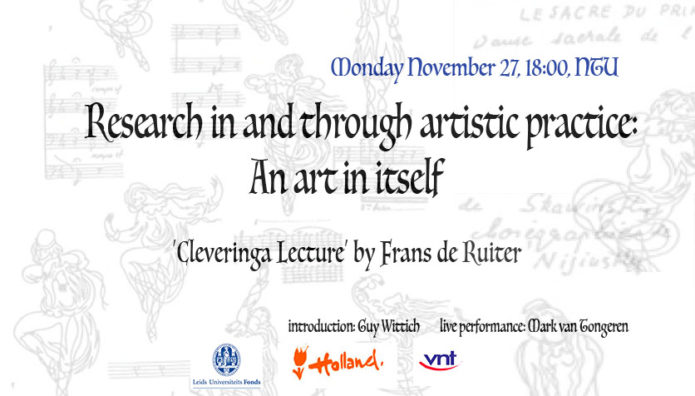
You are cordially invited to the first Taipei Cleveringa Lecture. Professor emeritus Frans de Ruiter, founder and former director of Leiden University’s Academy of Creative and Performing Arts (ACPA), will speak about a new and hotly debated field of academic inquiry: artistic research. In his talk he will draw upon the work of many artists who were recently awarded the title of PhD, and give examples of their creative, artistic and scholarly endeavours. Included is a live vocal performance of one of Leiden’s ACPA PhDs, Mark van Tongeren, who will demonstrate the process of his research project Thresholds of the Audible.

This Cleveringa Lecture will be introduced by Leiden University alumnus Guy Wittich, who is representative for the Netherlands Trade and Investment Office in Taipei (NTIO).

Please join us for this unique global event!

We’ll receive you with complimentary drinks and snacks from 18:00 onward.

Entrance is free, but we appreciate if you could register through the link below or the registration tab above.

Synopsis

How do  ‘artistic researchers’ articulate what cannot be written? How do they oscillate from style to style, from rule to exception and from exception to rule again? What qualifies as a PhD, when it is partly based on a composition or an exhibition? What if the text itself is a website, instead of a printed thesis? These and other questions surround the emerging field of artistic research in Europe. Frans de Ruiter has supervised many artistic PhDs to successful completion. In his talk he will draw on examples ranging from Early Music to living composers and from typography to design, to highlight theoretical challenges of practise-based research. Video, audio and a short live performance will be part of the presentation.

About the Cleveringa Lectures

The Cleveringa Lecture in Taipei is part of a series of lectures presented annually in major cities around the world. Dealing with a wide range of current topics and delivered by prominent Leiden researchers, the Cleveringa Lectures commemorate the lecture that Prof. Mr. R.P. Cleveringa held at Leiden University on 26 November 1940. They are organised around that same date by the Leiden University Fund since 1946 in collaboration with local partners.

The Taipei Clevering Lecture and reception are made possible through the generous support of the NTIO (Netherlands Trade and Investment Office) in Taipei and the VNT (Vereniging Nederlanders in Taiwan/Dutch Society of Taiwan).

Date:

Monday 27 November 2017

Program:

18:00-18:30        Drinks and bites

18:30-19:15        Lecture

19:15-19:30        Q&A

Venue:

Astronomy-Mathematics Building, NTU campus, No. 1, Sec. 4, Roosevelt Road, Daan District, Taipei. A map can be found under the “Venue” tab in the navigation toolbar.

Registration

Entrance is free but please register before Monday 20 November through this link or the “Registration” tab in the navigation toolbar.

More information

If you have any question do not hesitate to contact one of the local organisers:

  • Mark van Tongeren: mark @ fusica.nl  /  0910382749
  • Ciska Kemper: ciska @ asiaa.sinica.edu.tw / 0932944428

Learn more about the organising institutions and sponsors:

LUF / Leiden University Fund: http://www.luf.nl/cleveringa

VNT / Vereniging Nederlandstaligen Taiwan: http://dutchclubtaiwan.com/

NTIO / Netherlands Trade and Investment Office: http://www.ntio.org.tw/

敬邀

謹代表在台荷蘭聯誼會,誠摯地邀請您蒞臨2017年11月27日(一)假台灣大學天文數學館舉行之首場臺北克維林和紀念講座(Cleveringa Lecture)。本講座每年由全球荷蘭萊登大學校友籌辦,紀念萊登大學法學院克林維和教授在二次世界大戰間荷蘭受納粹德國占領時所發表的抗議演說。本講座由在台荷蘭聯誼會(Vereniging Nederlandstaligen Taiwan, VNT)代表萊登大學基金(Leids Universiteits Fonds, LUF)籌辦,並由荷蘭貿易暨投資辦事處(Netherlands Trade and Investment Office in Taipei, NTIO)協辦。

本場次講座由萊登大學名譽教授Frans de Ruiter主講,De Ruiter教授為萊登大學創意與表驗藝術學院(Academy of Creative and Performing Arts, ACPA)創辦人暨前主任,將以新興且廣受熱議的藝術研究學門為講題。其中將介紹數位最近獲得博士學位的藝術家作品,並以他們在創意、藝術及學術上的嘗試為例演講。萊登大學創意與表演藝術學院Mark van Tongeren博士將現場以聲樂演出,並暢談他的研究計畫”聽力的臨界”(Thresholds of the Audible)。本講座將由萊登大學校友、荷蘭駐台北貿易投資辦事處紀維德代表擔任介紹人。

誠摯地邀請您蒞臨這場獨特的全球性活動。

講座當日晚間18:00時起敬備茶點,歡迎各位貴賓、先進蒞臨。

講座請於2017年11月20日前由網站報名,或直接在此填寫報名表。

耑此 敬頌

時祺

Ciska Kemper 康逸雲(Academia Sinica, LUF, VNT)

Mark van Tongeren 溫馬克 (Fusica, LUF)

Guy Wittich紀維德 (NTIO, LUF, VNT)

André Verkade范安治 (NTIO)

林宜亭Christine Lin (Taiwan Thinktank, LUF)     敬邀