David Rothenberg

Book and Audio Anthology published

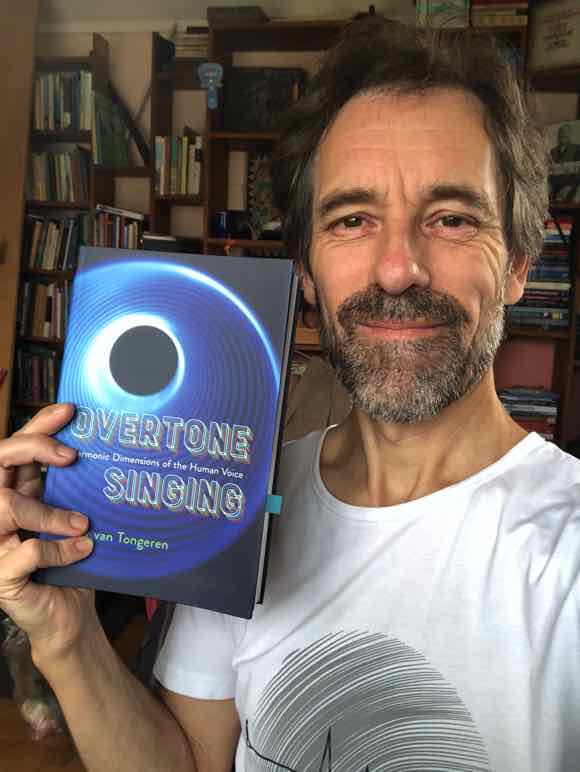
A few days ago, Overtone Singing – Hidden Dimensions of the Human Voice has arrived at its distribution centers in the US (NY), Europe (Haarlem) and Taiwan (Longtan). Publisher David Rothenberg produced a beautiful midway solution between paperback and hardcover book, called ‘flexibound.’

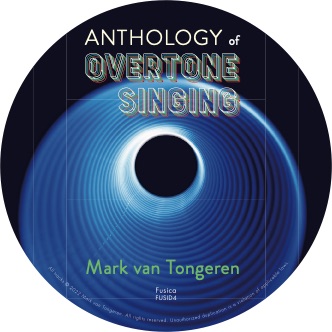
That was the signal to also let the Anthology of Overtone Singing go public. First of all on Bandcamp, where the audio is now available for streaming or purchasing. I also submitted all tracks to Apple Music, Spotify etc. etc. 25 Artists that are not featured on Apple Music and Spotify yet now will be represented there. It took me about a year of preparations and it meant not a small thing to press that ‘SUBMIT’ button to me.


So book and music are available now from Terra Nova Press, from me and next week also from a European address. We are still working out the best solution to offer the music and the book in one go. For the moment, the book is available through Terra Nova Press and by writing to me directly, while the Anthology is available in Bandcamp. Possibly we offer both in one package very soon.

There is a limited number of books available with a CD that is nearly identical with the streaming version from Bandcamp: just two tracks have been shortened a bit to fit onto the CD format. Details will soon be published on Bandcamp; you can also write to me if that is what you need.

The major platforms will  start selling and shipping the book in December or January.

For now, get it directly from one of us!

Book on Terra Nova Press:

https://www.terranovapress.com/books/overtonesinging

Book and/or Anthology Album on Bandcamp:

https://markvantongeren.bandcamp.com/album/anthology-of-overtone-singing


You will find more details about the book on this page.


Insects surprise me at start of new course

Last Friday different professors gave an introduction to their course to the new students of the X-College of National Cheng Chi University, after a talk by the ever-inspiring College-director Chen Wenling. The X-College is the creative department where students from all faculties can apply for a number of courses in several discplines. This year is the second year I am invited to teach a course about sound and music.
I presented the idea of my course, which is entitled ‘Making sense in the world of sound’ and inspired by the idea to focus on the Taipei Zoo, which is near the university’s campus. My students and me will do a good deal of listening to different sonic environments and create new ones with our voices, bodies and also through recordings. We’ll look closely at how animals listen and communicate and take inspiration from that for improvisations of our own.

To exemplify my idea, I sang a very simple pattern, which I asked them to imitate. Then I let one group make a small time-shift, so that the patterns bounce off against each other and give a more complex rhythm. I explained this is what often happens in nature, where insects may make just two tones, but when their starting point is different or the pattern caries only slightly, very interesting results may emerge. I was wondering where I could find a live example of what I talked about: i had heard such things but could not remember I had ever  recorded them.

Then, the next day, I walk our dog. I hear an intriguing sound, stop and listen. I hear exactly what I had been talking about! Two insects, I guess about a meter apart, each repeating a single note several times, the one higher, the other lower. It’s a stunningly clear, bell-like sound, and in fact quite loud.

Sometimes the patterns alternate, sometimes they coincide. So I stand, listen and observe all the variations they are able to make, despite their limited sound repertory. I wonder if they are enjoying the interplay of two/three-group notes as much as I do. I know that many of the established biologists studying animal sounds disagree with that idea. But David Rothenberg, a philosopher, musician and friend, whose fascinating book ‘Survival of the beautiful’ I am currently reading, likes to think that animals indeed may have a kind of esthetic sense ‘yes!’