Chapeau, Philip Vermeulen, this is the best sound & vision installation dealing with specific vibration phenomena I have ever seen (or wanted to see when I was too late, like a famous Dokumenta exhibition in the 1980s). His piece is a 7-minute condensation of all the interesting effects we can hear and see. Blending visual illusion, wave effects, phase differences, moiré, etc.
I have seen and heard quite a few installations centred on vibrational phenomena, and have sometimes worked with them myself. Visually, we are familiar with well-known patterns such as those created by Chladni and Lissajous, as well as moiré effects, and in music, polyrhythms such as those found in African music, phase differences as in Steve Reich’s music, and of course the more subtle work with overtones (or sine waves in electronic music). But what I have now seen surpasses them all. This installation by Philip Vermeulen is based on 2 x 2 rotating elastic bands, each about 10 metres long. It brings a great deal of stuff together:
first, the combination of image and sound: the visualisation of simple and somewhat more complex wave phenomena and the audible dimension of these same vibrating sources
second, the actual, direct connection between visual moiré and auditory interference effects and phase differences
third, the gradual changes in smaller increments, and the abrupt transition to new phases
fourth, quite delightfully, the deliberate intertwining of the two moving bands, making it seem as though things are going wrong
fifth, and perhaps most importantly, the dramatic, almost terrifying tangibility of the swaying ribbons when they gain speed; for they whistle and whoosh like the wind and sometimes howl like a violent storm
added to that is the consideration of what would happen if the whole thing were to snap, for there is clearly enormous pressure on the process and you can feel the wind blowing in the small room
then there are the beautiful more-than-stereo effects of the whooshing sounds, which you can perceive at different distances from the ribbons when sitting in the centre (sometimes in several places at once)
moreover (and then I’ll stop), the duration of the piece and the fact that it is an actual composition makes that your eyes and ears keep wanting to shift between picking out details and zooming out again; you want to experience the whole development of those 7+ minutes all over again.
Photographs really cannot render what you experience, so here are some of those moments. If you have a chance, I urge you to go and see and hear it! More about Vermeulen:
▪︎馬克‧范‧湯可鄰 Mark Van Tongeren 充滿熱情的聲音探索者,結合藝術、科技以及網路技巧在他的作品裡。透過他靈巧的耳朵,多變的聲音以及原創的洞見,他領導著人們探索自己聲音的不同面向。作為一個受過訓練的民族音樂家,Mark持續的結合瑜珈動作,帶領學生去感受,理解泛音以及喉嚨發聲背後的理論。Mark在荷蘭的萊登大學獲得博士學位。曾經和知名的大提琴家馬友友共同表演重奏。他和臺灣的編舞家葉名樺,驫舞劇場以及光環舞集皆有合作。
2002年,創立 POW Ensemble,由一群擁有爵士、搖滾、電子和當代音樂背景的音樂家組成,風格靈活多變。霍特坎普還為 Amstel Quartet、David Kweksilber Big Band、木笛演奏家 Erik Bosgraaf 創作作品。2005年榮獲 Boy Edgar Prize(為荷蘭爵士樂和即興音樂最負盛名的獎項)。2014年移居馬耳他,曾任馬耳他電子音樂協會 (EMM) 的藝術總監。
個人網站: https://luchoutkamp.nl ————— Pablo Liebhaber 來自德國的鼓手、打擊樂手、表演者和教育者,2024年移居台灣。德國維爾茨堡音樂大學爵士鼓學士,埃森福克旺藝術大學即興音樂藝術家碩士,主要師從 Bill Elgart、Bastian Jütte、Nadia Kevan、Thomas Rückert,也曾參與 Gerald Cleaver、Bob Moses、Gerry Hemingway、Rudresh Mahanthappa、Joe Lovano、Billy Drummond、Leon Parker 等大師班,以提升音樂視野。 經常與舞蹈、劇場和視覺藝術進行跨領域合作。其音樂和藝術探索,深受動作和聲音之間的緊密關聯、亞歷山大技巧的意識自我運用、以及對於萬物皆為振動的直覺感知所影響。 作品包括《Tales》(Leo Records 2021)、《Patchlight》、《Movement》、《Intermission》等專輯。音樂呈現其靈活多樣的個人打擊風格,除了實驗即興與爵士樂,也延展至世界音樂與放克音樂語言。 ————– ▪︎李世揚 Shih-Yang Lee 長年致力於即興演奏的臺灣鋼琴家。2010年成立「卡到音即興樂團」,其個人及樂團多次榮獲金音創作獎、傳藝金曲獎項,受邀至世界各國演出。現場影音專輯《冬至Galactic Alignment》獲美國 New York City Jazz Record 年度新發行榮譽提名。其它作品:《樂無歇》獲第六屆金音獎「最佳樂手」,《兩男關係》獲第七屆金音獎「最佳爵士單曲」。 2015年偕同尼可樂表演藝術創辦「臺灣國際即興音樂節」(兩年一度,迄今完成四屆)。2016年與驫舞劇場藝術總監陳武康共同策畫「混沌身響」。2021年獲選為第六屆臺南藝術大學傑出校友。2022年亞洲文化協會受獎人(紐約獎助計畫)。2025年獲首屆臺北戲劇獎—最佳劇場設計(聲音設計)。 ================================
訂位請撥0225819874 週二至週六晚上7:30後。 For reservation please call 02-25819874 after 7:30pm Tues ~Sat. ▪︎Business Hour 營業時間 : 8pm~2am(二~六/ Tue~Sat) 週日&一店休
Break the wall with sounds. The world is much wider than you thought.
26 February – 2 March, 2026
Shuili, Nantou, Taiwan
PROGRAM OUTLINE
In five days we dive deep into the Ocean of Sound, we uncover unknown traditions from around the globe, listen to examples and try out our own versions. You also learn how to create a traditional song (A lullaby? An invocation? A cheerful greeting song?) by yourself, or together, on the go. You already love to sing and already know your voice has so many shades. But only some of these shades find expression in everyday life, and now we expand this creative, sonic potential.
Join us for a celebration of the power of the human voice and of creative imagination lurking underneath the surface. Surely your ancestors knew folk songs, religious hymns, ceremonial chants: let them come back to the surface again, in a new guise. At the start and highlight of our exploration, the Bunun from XinYi are so kind to welcome us during their weekly singing session. You will have a chance to sing with them, up-close, and in this way you learn how they create their polyphonic songs and can try to join in with them. A first-hand immersion in one of the many living traditions of this beautiful island and a unique chance very few people have ever had!
DATES AND TIMES
Thursday 26 February
16-18 arrival time, check-in
18-19:30 dinner
19:30-21:00 introduction session Ocean of Voices.
Friday 27 February
9-12:30 Body and Sound exercise, global traditional song practice, improvising circle
12:30-14:30 lunchbreak
14:30-16:30 practice some traditional song and free-style singing
16:30-17:00 coffee and snack time.
17:00-18:00 practice some traditional song and free-style singing
18:00-19:30 dinner
20:00 Free interaction & break
Saturday 28 February
9-12:30 Body and sound exercise, traditional Taiwan Bunun tribe songs
12:30-14:30 lunch break
14:30-18:00 practice: exploring different vocal (maybe instrumental) traditions, and creating our own song in group and solo song.
16:30-17:00 coffee and snack time.
17:00-18:00 group sharing & solo sharing
18:00-19:30 dinner
20:00 Special Evening Jam: non-stop music making
Sunday 1 March
9 -12:30 session: go through Bunun and other practices, rounding up
12:30-14:30 lunch
14:30-16:30 exploring sound in the nature.
16:30-17:00 prepare for the road to Bunun
17:00-18:00 dinner
18:00-18:30 the road to Bunun
18:30-21:00 session with Bunun tribe
21:00 Return to our BNB and aftertalk
Monday 2 March
10-12:30 Presentation time to see what we harvested from this trip.
12:30-13:30 Lunch
13:30-15:00 Farewell & free interaction
We reserve the right to change the program times and themes.
PLACE
Old Five B&B
Shuili, Nantou
https://maps.app.goo.gl/FeUNj6WuwCAsEueSA
All meals are delicious, creative vegetarian cooking by our Local chef
FOR WHOM?
Anyone who is curious and confident enough to sing with others.
(Minimum: 10, maximum:14 people)
LANGUAGES
English + Chinese
HOW TO PREPARE?
Requirement: you will receive a download album by the Bunun (included) to prepare for the session with them. Sign up early and reserve some time to familiarize yourself with the repertoire!
OUR TEAM
This workshop is brought to you by Mark van Tongeren, Jackal Mei, Hong Hong, and Hsi-Yin Chang.
Mark van Tongeren
Mark is a sound explorer with a deep interest in the synergy of arts, sciences and contemplative traditions. Mark has over 30 years of experience in theatre, music and dance productions and holds a PhD from Leiden University’s Academy of Creative of Performing Arts. In his work he combines all kinds of voice/music/performance, sometimes overlapping with contemplative practices (meditation, pranayama, yoga).
Watch this teaser from the online module showing the 7 basic techniques of overtone singing.
To get an idea of what this workshop is about, listen to Mark’s TEDx talk about listening and singing overtones.
Jackal Mei
An overtone singing / jaw harp enthusiast since 2019, Jackal is deeply involved with the Taiwan Overtone Singing Association and the Taiwan World Jaw Harp Culture Association. He is a member of IUooUI and Inner Galactic Wanderers. Jackal is also a passionate lover of dessert baking and coffee.
Hong Hong
Taiwan’s pioneering advocate for the jaw harp, founder of two editions of the World Jaw Harp Music Festival, and selected as the Community Work Coordinator for the International Jew’s Harp Society in 2025. Currently serving as President of the World Jaw Harp Music and Culture Association. Since 2020, has been the dedicated interpreter for Mark van Tongeren’s Ocean of voices workshops.
Hsi-Yin Chang
An intuitive singer and sound healing practitioner now living in Germany. She was trained in sound therapy since 2021 and is now dedicating her work to healing music and sound journeys.
CONTACT INFO
For any questions about the contents in English ask Mark, in Chinese, ask Jackal Mei.
For registration ask Hsi-Yin, for lodging and food details ask Jackal.
Jackal Mei (Organizer)
Phone: 0936-596-910
Mail: jackallala@gmail.com
Line ID: jackallala
Mark van Tongeren (Course facilitator)
mark@fusica.nl
Phone: 0910382749
LINE: 091038274
Hsi-Yin Chang (administration assistant)
hsiyin724@gmail.com
PAYMENT
Payment upon registration by bank or Paypal.
Bank code: 822.
Name of bank: China Trust
Beneficiary: Mark Christiaan van Tongeren
Account number: 163540306745
Make sure to send an email after your payment with the last few digits of your bank account.
CANCELLATION
We try to keep prices reasonable. We will return 90% of the fee if you cancel 60+ days prior to the workshop.
We will return 80% of the fee if you cancel 45 – 59 days prior to the workshop.
We will return 50% of the fee if you cancel 30 – 44 days prior to the workshop.
We will return 30% of the fee if you cancel 15 – 29 days prior to the workshop.
We will return 10% of the fee if you cancel 1 – 14 days prior to the workshop.
If you find a substitute for your spot, we will only keep 10% of the administration fee.
Photos by Jackal Mei
【Course Fees & Contact Information】
The newly upgraded Ocean of voices workshop maintains its intimate quality with a 14-person limit, while upgrading both venue and accommodation. Located next to the Bunun Mingde Village, we’ve eliminated the exhausting commute, giving you more time to explore and play with sound. This is your best choice for a 2026 spring journey into sound.
Regular Price: NT$26,000
Before January 15, 2026: Early Bird Discount: NT$21,000
Returning Student Discount: NT$20,800
[Returning students are those who have completed at least 5 full days of workshops]
Fee Includes:
Workshop tuition
Lunch, snacks and coffee during the workshop
Full event insurance
Fee Does Not Include:
Transportation to Shuili
Accommodation during the workshop [Please contact Jackal for room reservations]
Accommodation: 5 days/4 nights from Thursday evening Feb 26 until Sunday March 2 at 1:30pm
Room Options:
△ Double Room (2 guests)
▲ 2 single beds NT$8,000 (per person)
△ Triple Room (3 guests)
▲ 2 single beds + 1 double bed NT$8,000 (per person for single bed) / NT$10,800 (per person for double bed)
Note: Lao Wu Guesthouse provides breakfast and dinner for guests. If participants choose to stay at other nearby guesthouses, breakfast and dinner arrangements must be made rearrangement .
REGISTRATION
Opening: 1st Jan
Early bird period 1: until 15th Jan
Early bird period 2: until 31th Jan
Closing date: 12th Feb.
DISCLAIMER
By signing up you automatically acknowledge your understanding that this retreat sometimes involves strenuous physical exercise, potentially disrupting body-work and emotionally charged sessions with a deep impact on your well-being. It is understood that you yourself best know of any risks (physical, emotional, psychological) and that there is no pressure or obligation to do each and every exercise. By joining this retreat you accept the consequences and state your intention to complete it till the end. You waive all rights to seek or receive compensation in case of injury, loss or damage that is not directly caused by us.
My first meeting with A Cumpagnia and Nando Acquaviva
Earlier this year a remarkable and innovative singer of traditional Corsican songs passed away: Nando Acquaviva. I vividly remember many of our meetings and the things he showed and taught me. Nando was a passionate promotor of Corsican music, eager to share his poetic vision of music, nature and Corsican life.
The story began a long time ago and more or less by accident. In 1989 I was a student volunteer for the Voices Festival in The Netherlands and Belgium. First I was assigned to assist the King’s Singers on their tour, as a representative of the festival organisation. One of the top choirs in classical music at that moment. Then the festival changed my assignment. They learnt about my interest in world music and decided I was more suitable for a traditional music program. The largest of two groups I guided was Le Mystère des Voix Bulgares, which was quickly becoming a public favorite, with ongoing concert tours around the world for years to come. The other ensemble was much less known: A Cumpagnia from the isle of Corsica. The ensemble was built around the artistic community of Pigna and had just launched an album of traditional Corsican songs on the Harmonia Mundi label.
It was a life-changing experience to witness these musicians rehearse and perform their music day by day, and to assist them with their needs. The best part was yet to come though. At the end of their succesful double-bill tour in the Netherlands and Belgium, they told me one of them would not fly back to Corsica: sensing that this young student was very eager to absorb as much as he could from musical traditions, they wondered: would I be interested to use the ticket and come to Corsica? It was an offer you can’t refuse. But I refused. I had musicology exams coming up and declined the kind offer with pain in my heart. However, the invitation was made, and I would come at a more convenient time.
First visit to Corsica
That moment came Summer next year. With a friend I hitchhiked to South France, got on the ferry and arrived on the stunningly beautiful island of Corsica. There I looked for Mr. Acquaviva in a supermarket he managed in a little town. He kindly invited us to join the rehearsal a few days later, and so I came to make my first visit to the little village of Pigna, the residency of the artistic community of ‘vagabonds’ established over a decade earlier by Toni and Nicole Casalonga. It was (still is) a typical, gorgeous mediterranean hillside village: compact, with small winding cobblestone roads (mostly too narrow for cars), and solid houses built from natural rocks, ages ago. The weekly rehearsal took place at the Casa Musicale, a restaurant and pension at the edge of the village, with a grand view over the Bay of Calvi. It is too long ago to remember all the details; I think they played more instruments than they did in the concert tour, but they surely sang a lot as well. What has really stayed with me, however, is Nando’s invitation to join their singing. I never sang with musicians, only privately, and occasionally. The thought of joining musicians who had just toured in Dutch and Belgium theaters was utterly surprising. Singing? Me? With you?? Nando reassured me, explaining I could simply tag along and try: no big deal! On that spot some of my reservations about my voice, perhaps an instinctive shyness, as if it is something better kept private, vanished. I sang along and thoroughly enjoyed being part of the roaring harmonies these men produced.
We came back later to the Casa Musicale to stay overnight in the pension. I particularly remember eating in the restaurant, on the terrace, and tasting locally grown tomatoes unlike any tomato I ever ate before, as well as a dish with local basil. Al the senses were stimulated enough to make me long to go back. But I had to wait a few decades before that came to pass. The memory of the musicians remained, and in particular of Nando’s unexpected invitation to come to Pigna and join the singing. The seeds were planted and were nourished by the albums of Corsican music I found. Far away from the island itself, I immersed myself time and again in their rich polyphonies and often sang along.
The open-throated voice in traditional polyphonic singing
The singers of A Cumpagnia are all masters of the various forms of Corsican polyphony, the art of weaving several melodic lines together in ever-changing ways. Many Corsican villages have their own distinct repertoire of singing, which are either religious (and based on Latin texts) or secular (and based on poetry in the Corsican language). When singing a paghjella, three male singers produce their own vocal line with a powerful, open-throated chest voice. All vowels are produced with a minimum of obstruction in the vocal tract, in contrast with (European) classical singing, for which the open sound is modified by posturing the back and root of the tongue in different ways, and lowering the jaw. The sound flow is not as direct as it could be, and makes the tone darker. It adds a certain amount of artifice – and quite a lot of it in the case of some singers and styles. Add to it the typical vibrato that is produced deeper down in the throat and you are already far, far away from the natural open-throated sound of traditional Corsican singing.
As a young student, growing up hearing plenty of classical music at home, as well as jazz and pop (with many techniques to add colouring), this natural voice struck me as different. I was mesmerized by the qualities of the voices. There was a rawness and … honesty, as if the inner quality of a man comes through unveiled. When the second and third voice joined the main singer, they supercharged it, their lines joining in full force, making themselves stand out just as clear as the main voice. Usually the Corsican three-part polyphony would proceed as follows: shortly after the main singer begins the opening phrase, the others step in to add a note of their choice. Together they produce a three-tone chord, but the main melody and the chords keep changing. The two other singers follow the lead singer, adding a bass note and another note in between the lead voice and the bass. Each song type has well-established procedures for the development of the main voice. This gives each voice some room to play with their part. The bass wil generally start mid-range and in the course of several phrases descend to the lowest tone. Every time I hear it, this gives me the feeling there is something centering about Corsican polyphony: during a song you experience a gravitational force that is guaranteed to put you firmly on the ground when the phrase or song ends. Another feature is that many songs are in a minor key, but end on a major key.
Nando’s Mimofonia
One of the things that impressed me during A Cumpagnia’s first visit was the use of a sign language to create vocal polyphony. Nando would sing with two other men, and use his hands and fingers to indicate the harmony that they would sing. In this way the trio could remain in a natural flow of singing, while Nando could communicate possibilities and direction for the harmony in real time without talking. He could indicate how fast or slow they would change the chord, moving down or up, holding back certain progressions, make a bigger leap than usuaul etc. I found it amazing that a single person could hear the chords he wished to hear in his head and had a way to tell the others to follow the progressions he was foreseeing.
Another reason why it struck me, was that as a newcomer, the three voices were so resonant, and my ears were so attuned to overtones, that the richness overwhelmed and intoxicated me. Later, when listening to album recordings of Corsican polyphony, I sometimes could not tell how many parts there were. I might believe I was hearing 5 singers when in fact there were only three. And even I saw there were just three singers, I had a hard time catching everything that was happening. In the live sitation, onstage or during practise in Pigna, there was someone for whom all these parts were so transparent, that he had the mental space to create his own line on the spot as well as the two others, and use hand gestures to direct them. Nando did that without visible effort: he had a certain softness in his facial expressions, and a fluency in the way his hands and arms moved. During one visit, I asked him to show me how he used it, and we made photographs of each hand sign. (Unfortunately, I cannot find any video where we see the mimofonia live in action).
20+ years later
Decades later, I had a chance to get to know Nando better during various visits to Corsica, and occasional long-distance phone calls. My wife organised aromatherapy tours in the Meditterranean, and I insisted we should all go to this island, because I had vivid memories not only of the music, but also of the powerful aromas. After I had taken our family of four around the island for a two-week exploration, she felt that this was something to share with her students, lovers of fragrance, flowers, essential oils and botanical and cultural explorations in general. And so I became a tourguide for Chinese-speaking visitors. The itinerary always included a visit to Pigna and a concert or workshop with Nando and other musicians.
When we first arrived as a family, we visited the splendid botanical garden Parc Sallecia before heading for Pigna. In the park’s shop, we bought an album by a singer with the same name as Nando: Battista Acquaviva. That evening we went to the opening of the Festivoce (a great festival that is still happening every year). I saw Nando and introduced myself, 20+ years after we last met. He was standing next to a beautiful, tall lady: the one from the album we had just bought! It was his daughter. And so began a re-acquaintance and deeper understanding of Corsican music.
When the first group of aromatherapists arrived in Pigna next year, Nando performed together with Battista (a privilege that did not last long since she soon became a sensation (12 million views and counting!) in the French version of the popular TV-show The Voice.) Nando shared his passion for Corsican music, and welcomed me at home together with his family each time I visited. It was usually a day, or maybe two, that I was in the region. We had lots to talk about: I was hungry to learn more about his musical life and that of Pigna and the island as a whole. And Nando was very interested in musicology. I learnt that mimofonia was Nando’s own way to understand and create the polyphonic forms of his native region. It was he who had invented this system, which was not in general use – though one other active singer and teacher, Nicole Casalonga, also uses it to this day. Alongside the gestures, Nando wished to codify and indicate the finer variations in tuning, for which Corsican singers posses such a skilled ear.
Last but not least, Nando was a poet, a fanastic storyteller, philosopher: he could talk in the most captivating way about music and connect it with plants, fragrances, history, literature. Above all, he would speak from an unparallelled poetic imagination, weaving words and ideas like no one else. Here is his description of polyphony, from the album A Cumpagnia – in Paghjella:
Besides Casa Musicale, I would sometimes visit Claude Bellagamba, who runs a bar/restaurant in Pigna. His voice rings like a bell and makes the most extraordinary flourishes: you can hear him on many tracks of the seminal album Corsica – Chants Polyphoniques. On one occasion, it was time for a next step in my attempts to understand Corsican polyphony, and give my understanding of mimofonia a try without the aid of other singers singing my part. One of my favorite songs is Ecco Bella, and that’s what we tried to sing together. Click below to hear our version: the lead voice is by Claude Bellagamba, I was trying my best with the bass, and Nando usually comes in later to provide the highest voice.
The pandemic put an end to our yearly travels and I have not returned to Corsica again, yet. I treasure the memories and the generous sharing of his skill and knowledge. He passed on his skills to many others, and especially to Battista, who gives her own unique colour and expression to old and new music from the Balagne and elsewhere. I still take to heart that precious first session in Pigna. I recall this episode in my own Ocean of Voices workshops about musical traditions, encouraging students to start trying out new things with their voices.
Thank you, Nando and family, and thank you, members of A Cumpagnia!
More Sources
The breakthrough album that also led to their tour to the Benelux was E Voce Di U Cumune, Marcel Pérès – Corsica : Chants Polyphoniques from 1987.
Reissued and also on the streaming platforms in its ugly new ‘budget series’ cover. Make sure to check it out, the musicians were all in their prime, around 30 years young.
The album A Cumpagnia In Paghjella is also a great starting point (https://www.casa-editions.com/boutique/p/in-paghjella-a-cumpagnia).
Many more albums can be found on the label Casa Editions, run in Pigna.
If you want to read more:
The definitive work about Nando’s investigations into Corsican polyphony, including his mimofonia, is: Ignazio Macchiarella, ‘Il Restauratore di Polifonie’, in his book Ignazio Macchiarella (editor) – Tre Voce per Pensare il Mondo. Pratiche polifoniche confraternali in Corsica, Il Campo, 2011: pp. 142-.173.
A thorough English introduction to Corsican music is Caroline Bithel’s Transported by Song: Corsican Voices from Oral Tradition to World Stage. Maryland: The Scarecrow Press, 2007.
Hear another example of an open-throated voice? Listen to each voice in this video I recorded of a Miserere from Castelsardo, Sardinia.
Sardinia and Corsica are also discussed in my book Overtone Singing, with a recording from Sardinia where a very clear overtone melody can be heard above the four singers (on the Anthology of Overtone Singing). Go to the page of The Overtone Singing Book.
Hear Nando and his daughter Battista perform together, at 17m 45s in this video:
This very complete workshop teaches you the principles of resonance by learning the basics of overtone singing: a special way of listening to and making vocal sounds that has many useful applications for singers and non-singers alike. It requires no previous musical training.
BRIEF OUTLINE
RESONANCE is Mark’s most complete course giving you a thorough basis in practices based around overtone singing and the resonant voice in general. This year we introduce a new format that allows you to learn the basics at your own pace at home. The subsequent stages are:
– an easy-paced, one month online course that introduces many of the basic concepts and practices.
– a four-day in-person workshop to further explore your personal voice and ways to harmonise, resonate and sing overtones together.
– 6 weeks self-study on what you learnt
– a four-day session with a one-on-one class for each student and group pieces and improvisations guided by two Teaching Assistants
– another 9 months access to the online modules
Are you not living in or near Taiwan and not able to join the retreat? Or are you not a beginner anymore? Then you can consider to take one or several 1-on-1 online classes with Mark.
TIMELINE RESONANCE 2026
Part I: The Seed Awakens: February 19 – March 11: every week one new online module Overtone Singing – Basics
Part II: Emerging from the Soil: March 19 – 22: Guangfu Workshop
Part III: Blossoming into Light: April 30– May 3: Guangfu Workshop 2
DETAILED PROGRAM
Online February 19 – Mar 11, 2026 (3 weeks) 2026
We start the learning journey online. The online video course contains 3 modules with 35 videos (2 hours total). You will receive one module per week. You can go through the videos at your own pace, and start to practice with the video instructions.
Module A (February 19 – 25): Introduction to resonance
Module B (February 26 – March 4): The basic techniques of overtone singing
Module C (March 5 – 11): Polishing your listening and vocal skills
3 Online Live Q&A session: February 25/ March 4/ March 11 (19:30-20:00)
SAPIENTIA (Guangfu) March 19-22 (4 days fulltime) 2026
We come together in the tranquil, focused setting of Sapientia in Guangfu, Hualien, where we will sing, listen, sense and resonate together for four days. We immerse ourselves in the resonances of each other’s voices, building on the power that emerges from close-listening. We fine-tune our voices in harmonies – both conventional ‘outer’ harmonies and the ‘inner’ harmonies of overtones. These practices are interspersed with insightful stories from the world’s most iconic traditions of overtone singing, documented by Mark himself in the course of more than three decades of research and artistic exploration.
Day 1
Finding inner and outer harmony from embodied breath and natural resonance
Day 2
Traditional practise and wisdom explored and utilised for new forms of resonant singing
Day 3
Harmonics as/in healing and therapy: confronting fear, developing self-confidence.
Day 4
Boosting your Resonance and creative applications.
SESSION TIMES SAPIENTIA
Breakfast 8:00-9:00
Morning sessions: 9:30-12:30
Lunch break: 12:30-14:30
Afternoon sessions: 14:30-16:30 + 17:00-18:00.
Dinner break: 18:00-19:00
Evenings are for resting, self practice, jamming…til 22:00
The last session finishes in the afternoon of Sunday at 4 PM.
THEMES FOR THESE FOUR-DAYS
° learn to sing the basic techniques of overtone singing: NG (gong), RR (bird), LL (sygyt), vowel (ee-uu)
° enrich your vocal resonance
° meditative and therapeutic practices
° embodied listening, embodied vocalising
° musical wisdom from Christian, Buddhist, and indigenous spiritualities
° Mongolian, Siberian and Tibetan forms of throat singing
Like no other, Mark has single-handedly undertaken enduring, in-depth investigations into all the major traditions of overtone singing: Tuva and the Siberian and Mongolian Altai, Tibet, Sardinia, South-Africa.
LISTENING
° break through your habitual patterns of hearing and making sound
° hearing overtones in the colours and timbres of a voice
° ‘ear cleaning’: make a new start listening to all sound instead of familiar patterns
RESONANT ENCOUNTERS
° guided resonating with one or more voices
° giving feedback to each other’s voices
VOCAL STYLE and INSTRUMENTS
The main emphasis is on using / applying / hearing resonance with a relaxed, more occidental voice. Short introductions to the pressed, guttural voices of throat singing, for example Tuvan khöömei and sygyt are also given for comparison. We will learn some pieces and guided improvisations by by Mark and also create our own. In addition we will use instruments such as singing bowls, bells, lutes and fiddles. You are encouraged to bring your own – the greater the resonant spectrum, the better!
6-WEEK SELF-STUDY
As you continue your journey with your own voice, we provide you with a curated selection of some of the most interesting and important videos on the internet. These will guarantee to keep you inspired in your own practise and deepen your understanding.
English only – Mandarin may not be available.
Optional: organise your own online or in-person gatherings to learn with/from each other, discuss videos, etc..
SAPIENTIA (Guangfu) April 30 – May 3 (4 days fulltime) 2026
During this second get-together, Mark and his teaching assistants will build upon the results from the previous 4-day immersive workshop and your personal journey over the past 6 weeks. Much time is spent on technical work, which will be diversified to cater for different types of students and their needs.
The basis of resonance is concentrated voice/body work, balance of body-mind exercise and good overtone singing skills. During these four days, each student will have a one-on-one private sessions with Mark to erase stumbleblocks. We also work in small groups, and collectively on pieces that we learn or to create new work. After this weekend, you will know your strengths and which direction to go. On the second afternoon students collaborate to create final pieces to round off their R E S O N A N C E retreat..
SESSION TIMES SAPIENTIA
same as the part 1 workshop, please see above
ABOUT SAPIENTIA RESORT | GUANGFU, HUALIEN
For the fifth year, stylish Sapientia is the ‘home’ of the R E S O N A N C E retreat. We are happy to return to this wonderful place, which remained unaffected by the disastrous floods earlier this year. The two-story building with Japanese garden-style architecture features a classroom with floor-to-ceiling windows, offering views on an expansive forest garden. The chorus of frogs, insects and birds are an exquisite setting to awaken your auditory senses. Host Peter brews different flavours of specialty coffee in his cosy coffee corner every day; hostess Ping serves delicious home-made breakfast for every guest. The guesthouse offers 7 uniquely designed rooms with comfortable large beds and Japanese-style tatami floors.
Unwind at Sapientia while enjoying our Sound Resonance Workshop experience!
LANGUAGE
The course will be conducted in English. Our interpreter Yvonne Chichen Lee will be present to summarise or translate entire parts of the course into Mandarin, depending on the needs.
FOR WHOM?
No previous musical experience is required. All levels welcome.
We’ve had office workers, people with speech problems, poets, singing bowl players, linguists, sanyassins, professional singers, dancers, academics and more in previous R E S O N A N C E courses. Anyone who is curious about developing her or his voice potential, whether professional or amateur or non-singer, will benefit from these lessons.
PRICES
FULL PRICE
69.000 NT$
Up to 24 December 2025
Super Early Bird 25% off NT$ 51.750
Poor struggling artists (with proof of income) NT$ 51.750
25 December 2025 – 7 January 2026:
Early Bird / 15% off NT$ 58.650
Old Students / 30% off NT$ 48.300
After 7 January – 5 February 2026
Full price NT$ 69.000
TOSA members / 10% off NT$ 62.100
Bring a friend : – NT$ 2.500
Included:
Tuition
Guangfu lodging in shared rooms (a private room if available).
Guangfu Breakfast, Lunch & Dinner
Coffee and snacks
Not included:
Transport to the retreat in Hualien.
If possible, bring an instrument of your own. It is also possible to pre-order a shruti box from Mark to help your own practice during and after the workshop. For pre-orders, discounts apply: inquire for the details (depending on availability).
REGISTER
We remain the right to change program time and contents.
This workshop is brought to you by Mark van Tongeren, Jackal Mei, Yvonne Chichen Lee, Haopin Wu and Hsi-Yin Chang.
Mark van Tongeren
Mark is a sound explorer with a deep interest in the synergy of arts, sciences and contemplative traditions. Mark has over 30 years of experience in theatre, music and dance productions and holds a PhD from Leiden University’s Academy of Creative of Performing Arts. In his work he combines all kinds of voice/music/performance, sometimes overlapping with contemplative practices (meditation, pranayama, yoga).
To get an idea of what this workshop is about, listen to Mark’s TEDx talk about listening and singing overtones.
Watch this teaser from the online module showing the 7 basic techniques of overtone singing.
Jackal Mei
An overtone singing / jaw harp enthusiast since 2019, Jackal is deeply involved with the Taiwan Overtone Singing Association and the Taiwan World Jaw Harp Culture Association. He is a member of IUooUI and Inner Galactic Wanderers. Jackal is also a passionate lover of dessert baking and coffee.
Hsi-Yin Chang
An intuitive singer and sound healing practitioner now living in Germany. She was trained in sound therapy since 2021 and is now dedicating her work to healing music and sound journeys.
Yvonne Chichen Lee
Passionate for all ways of singing with instruments across traditions. Interpreter for Mark’s first R E S O N A N C E course in 2014. Now a performer at times, singing, playing, or moving.
Haopin Wu
Haopin has been studying resonance and overtone singing for more than four years. He quickly comprehends what beginners need when learning overtone singing from various viewpoints. He holds a Ph.D. in mathematical sciences.
CONTACT INFO
For any questions about the contents in English ask Mark, in Chinese, ask Jackal Mei.
For registration ask Hsi-Yin, for lodging and food details ask Jackal.
Jackal Mei (Organizer)
Phone: 0936-596-910
Mail: jackallala@gmail.com
Line ID: jackallala
Mark van Tongeren (Course facilitator)
mark@fusica.nl
Phone: 0910382749
LINE: 091038274
Hsi-Yin Chang (administration assistant)
hsiyin724@gmail.com
PAYMENT
Payment upon registration by bank or Paypal.
Bank code: 822.
Name of bank: China Trust
Beneficiary: Mark Christiaan van Tongeren
Account number: 163540306745
Make sure to send an email after your payment with the last few digits of your bank account.
CANCELLATION
We try to keep prices reasonable. We will return 90% of the fee if you cancel 60+ days prior to the workshop.
We will return 80% of the fee if you cancel 45 – 59 days prior to the workshop.
We will return 50% of the fee if you cancel 30 – 44 days prior to the workshop.
We will return 30% of the fee if you cancel 15 – 29 days prior to the workshop.
We will return 10% of the fee if you cancel 1 – 14 days prior to the workshop.
If you find a substitute for your spot, we will only keep 10% of the administration fee.
我們將在花蓮光復寧靜而專注的夏比安民宿相聚,在這裡我們將共同歌唱、聆聽、感知和共鳴四天。我們沉浸在彼此聲音的共鳴中,建立在深度聆聽所產生的力量之上。我們在和聲中微調我們的聲音——包括傳統的「外在」和聲以及泛音的「內在」和聲。這些練習穿插著來自世界上最具代表性的泛音詠唱傳統的深刻故事,這些都是 Mark 在超過三十年的研究和藝術探索過程中親自記錄的。
Three and a half days of intense explorations of voice and movement
for body-mind balance
and creative, vibrant well-being.
Scroll down for the Mandarin version
中文見下方
∂þ
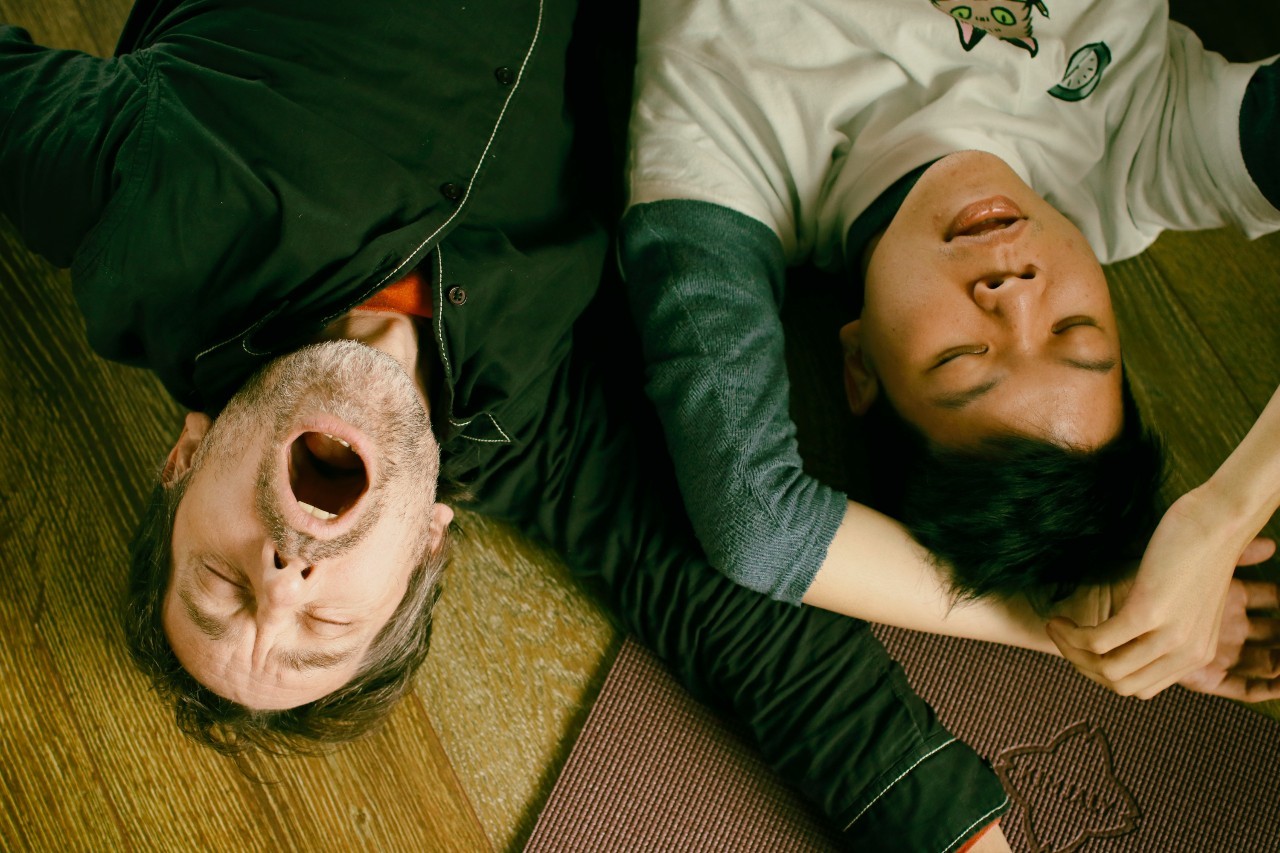
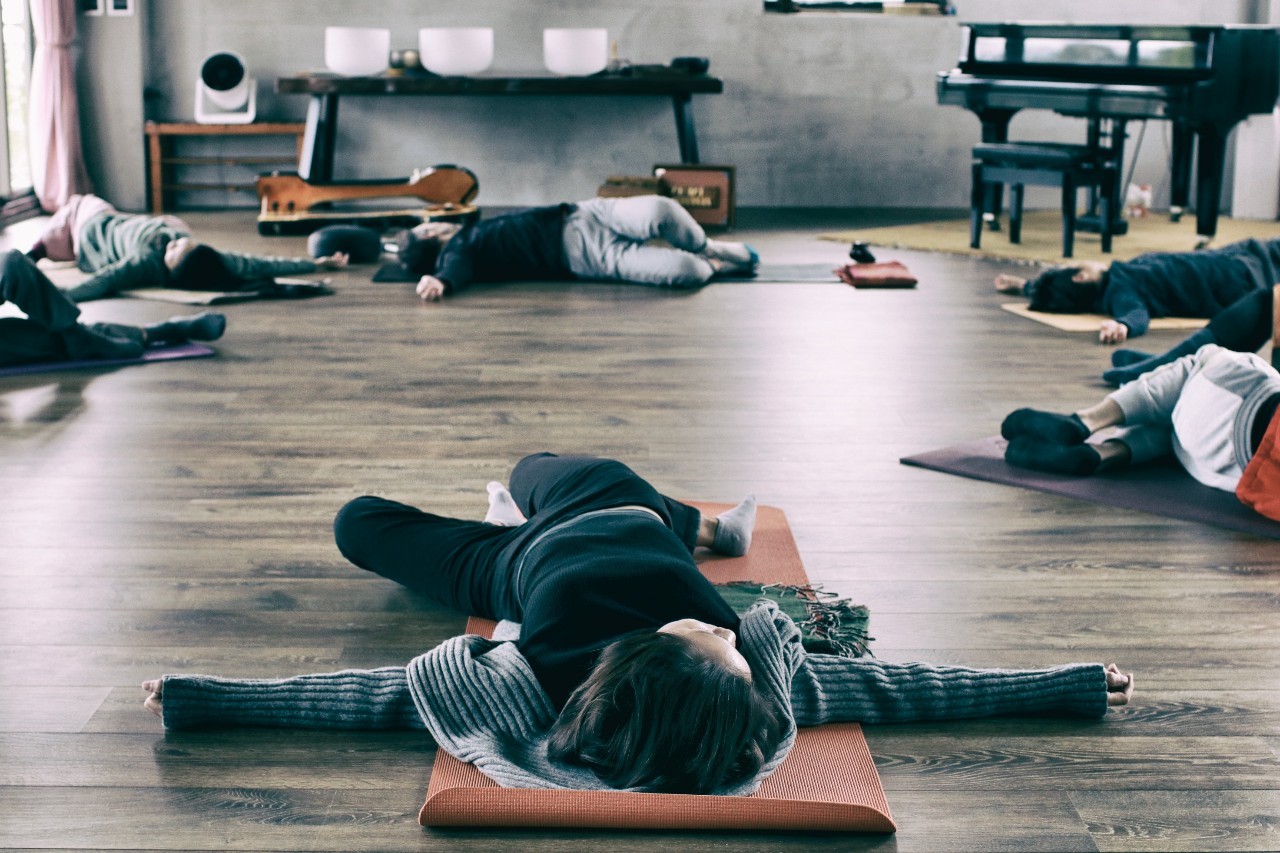
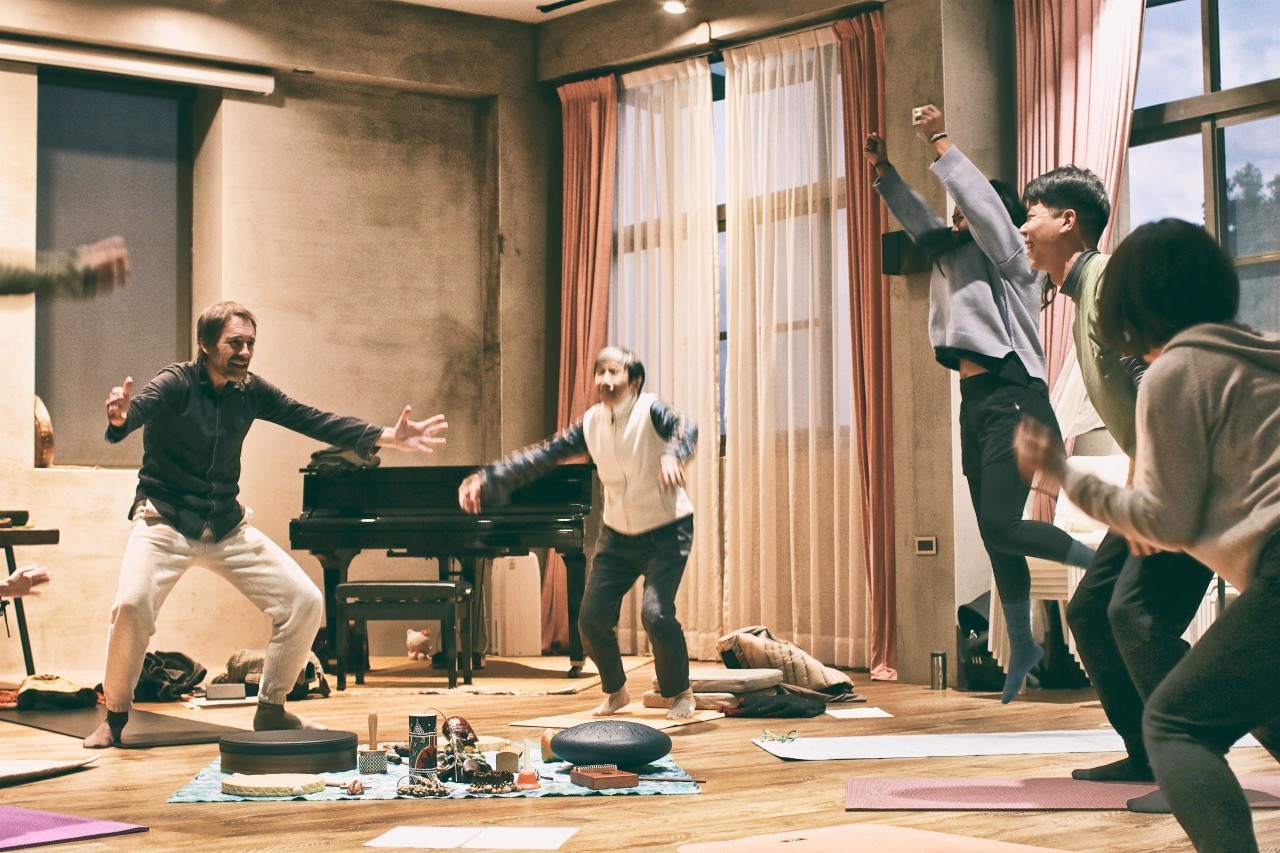
Voice Yoga Winter Solstice Retreat 2022. Photo: Jackal Mei
WHAT IS THIS VOICE YOGA?
WHAT IS THIS RETREAT ABOUT?
In Voice Yoga’s dynamic group process, you go beyond your habits and expectations. Something larger than yourself emerges: a flow of hidden creative potential.
Grounded in physical exercise such as yoga or contact improvisation, we work with all kinds of sounds without meaning and without emphasizing a beautiful singing voice. Pure, direct expressions and sensations of physical resonance and vibration through mouth, limbs, hips, feet, skin and inner organs.
We go beyond common subject-object and mind-body dualities, and bring our unconscious selves and sometimes irrational emotions to the surface. The group process becomes a mirror for the self and allows us to ‘see’ ourselves more clearly, to hear what’s living deep inside. The result is often of a surprising clarity and immediacy.
∂þ
PROGRAM OUTLINE
We start Thursday December 19th at 9 AM and suggest you arrive the evening before.
We finish after lunch on Sunday 22th, around 1:30 PM.
Day 1
9:00-12:30 introduction to the program. Light exercising, breathing exercises, start moving, toning, improvising.
12:30-14:30 lunch & siësta
14:30-16:30 Guided movement and sound practices, walking meditations, improvisations
16:30-17:00 Tea time
17:00-18:00 Guided movement and sound practices, walking meditations, improvisations
12:30-14:30 lunch & siësta
14:30-16:30 Guided movement and sound practices, walking meditations, improvisations
16:30-17:00 Tea time
17:00-18:00 Guided movement and sound practices, walking meditations, improvisations
18:00-19:00 dinner
Day 3
9:00-12:30 Slow meditative warm-up, mild to vigorous exercising, toning, noise making. Once again: restorative (half-)sleep/dream.
12:30-14:30 lunch & siësta
14:30-17:00 Guided movement and sound practices, walking meditations, improvisations
17:00-19:00 Early dinner and preparations for the evening
19:00-21:00/22:00 observe and celebrate today’s Winter Solstice. On our last evening we will jointly celebrate the change from darkness to light. Participants can contribute a memory or reflection, a song, a dance, individually, en groupe, as a duo, whatever comes up. Consider to bring an instrument you play, candles to lighten up the atmosphere, a special garment or hat to wear.
Day 4 (half day)
9:00-12:30 Review, continuation and round-up.
12:30-14:30 lunch and bye bye
∂þ
PLACE
We hold our sessions in Shufang’s Energy Healing, a gorgeous yoga studio with a big garden in Dulan, Taidong. The studio has all utilities we need. We can use the big lawn outside for music and workouts in fresh air, a giant rock to repose, and shady places to rest.
There are several options for your overnight stay nearby, on a walking distance or further away. We are about a 10 minutes walk from downtown Dulan.
Accommodation: We recommend Moonrise Inn as it is the closest to the studio.
The workshop attracts young, curious artists; established musicians and performers facing creative obstacles or blockades; yoga and other body-mind workers not very familiar with sound; people familiar with sound but needing a fuller understanding and experience of it; people youna and old looking for physical and spiritual development; practitioners of Buddhism and other contemplative traditions needing deeper breathing and chanting practice; busy people needing a break from work in a relaxed atmosphere. Despite the name, Voice Yoga is not a harsh or demanding yoga camp, quite the contrary: it lets you grow at your own peace and rest and sleep or observe when you want to.
There are no specific requirements to join. Ages frange from early 20s to late 70s. Yoga, music or other skills are not required. We strive for a group between 8 and 12 people.
∂þ
HOW TO PREPARE?
Bring a yoga mat to exercise and lie down. There are sitting cushions and also chairs if you cannot sit on the floor for long. Bring something to cover yourself when we repose or meditate. Bringing an instrument is a good idea (no need to play it well; a percussive instrument is always good).
∂þ
LANGUAGES
English + Chinese
∂þ
YOUR TEACHER
Mark van Tongeren is a Dutch sound explorer with a deep interest in the synergy of arts, sciences and contemplative traditions. Mark has 30 years of experience in theatre, music and dance productions and holds a PhD from Leiden University’s Academy of Creative of Performing Arts. He practices yoga for some twenty-five years and all kinds of voice/music/performance practices for 35 years. His enterprise Fusica was established in 1998 to explore intersections of sound and the arts (music) on the one hand, and acoustic and other academic research (fusikè, physics) on the other.
∂þ
MEET THE TEAM & CONTACT
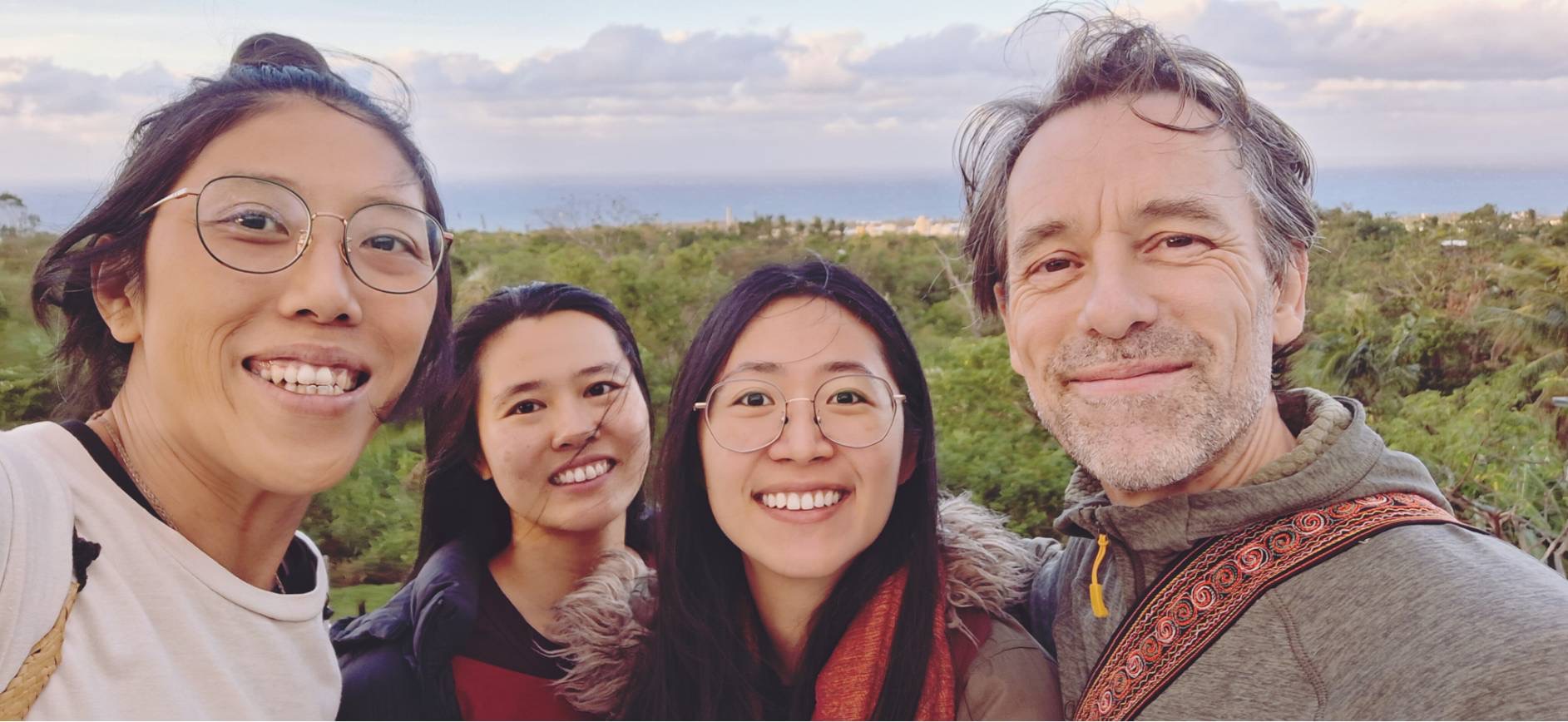
Jackal, Sunny, Hsi-Yin, Mark
This workshop is brought to you by organiser Jackal Mei, translator Sunny Chen and hosted by Shufang Wang.
Administrative assistance by Hsi-Yin Chang.
For any questions about the contents in English, ask Mark.
mark@fusica.nl
FB: https://www.facebook.com/Paraphony
Phone 0910382749
For any questions about the contents, lodging, travel and food details, contact Jackal. For registration and payment issues ask Hsi-Yin.
Hsi Yin: hsiyin724@gmail.com
∂þ
PRICES
29.500 NT$
Up to 9 October 2025
Super Early Bird / 15% off NT$ 22.125
Poor struggling artists (with proof of income) NT$ 22.125
10 October till 23 October 2025:
Early Bird / 15% off NT$ 25.075
Old Students / 30% off NT$ 20.650
After 23 October 2025
Full price NT$ 29.500
TOSA members / 10% off NT$ 26.550
Bring a friend / 5% off : – NT$ 1.000
INCLUDED
– Tuition fee
– All lunches and diners (including Sunday lunch)
– Insurance
NOT INCLUDED
– Transport to Taidong
– Lodging
∂þ
REGISTRATION
– Please complete your online application form , and transfer application fee. IMPORTANT: please add a note ‘VYR’ in your payment.
– online application form: https://forms.gle/L22LxcqNuD2iaCwx9
– After transferring, please email to inform Hsi-Yin (hsiyin724@gmail.com) with your name, and the last 5 numbers of your bank account
– After receiving your fee, we will send a confirmation email in 5 days, and invite you joining our line group for more event detail.
PAYMENT
Bank code: 822.
Name of bank: China Trust
Beneficiary: Mark Christiaan van Tongeren
Account number: 163540306745
Make sure to send an email to Hsi-Yin after your payment. We will confirm reception as soon as possible.
CANCELLATION
We try to keep prices reasonable. If you cannot make it for some reason, we will return 80% of deposit fees up to 2 weeks before the event, 50% in the second week before starting date, and no refund in the last week leading to the event. In case of proven COVID-19-related problems we can give a refund (minus admin charge) or save the registration and fees for a next workshop.
We reserve the right to cancel the retreat in the case we do not reach the minimum number of participants, between 4 and 2 weeks before starting date; in this case all paid workshop fees will be promptly returned. We are not responsible for expenses for the BnB or transport.
DISCLAIMER
By signing up you automatically acknowledge your understanding that this retreat sometimes involves strenuous physical exercise, potentially disrupting body-work and emotionally charged sessions with a deep impact on your well-being. It is understood that you yourself best know of any risks (physical, emotional, psychological) and that there is no pressure or obligation to do each and every exercise. By joining this retreat you accept the consequences and state your intention to complete it till the end. You waive all rights to seek or receive compensation in case of injury, loss or damage.
We reserve the right to cancel the retreat in the case we do not reach the minimum number of participants, between 4 and 2 weeks before starting date; in this case all paid workshop fees will be promptly returned. We are not responsible for expenses for the BnB or transport.
∂þ
KNOW MORE?
Mark’s Voice Yoga runs for over 10 years and brings together decades of creative, vocal expression, yogic discipline and contemplative traditions.
Voice Yoga is neither yoga as you see all around you, or music as you hear it every day. It is a personal, artistic synthesis of a wide range of musical, resonant, theatrical, contemplative and physical arts. What binds them together is Mark’s unique synthesis and his vision to create a strong sense of flow, no matter what the activity is. Serious workouts smoothly blend with unforgettable (and unrepeatable!) musical creations, deep breath work morphs into contact improv and vocal exercises into absurdistic theatre.
This retreat will give you a big boost, whether you are a musician, dancer, yoga teacher, actor, or just interested in working on your personal growth through the connections between sound, body and mind. No problem if you’ve never done yoga before!
∂þ
CURIOUS BUT IN DOUBT?
For a taste of this retreat, come to one of the weekly Voice Yoga classes in Taipei for a 2-hour session.
Mark will be back in Taiwan for Voice Yoga classes in December.
“I felt many sounds inside me first time and I felt there is an inner space inside my body. That was an very powerful experience for me. The body wasn’t what I knew before. I felt peace when you sang… I do have a lot of fun when you want us imitate your voice… Every time when we make sounds together I feel I am decomposing and putting every part of me in one again. “
– Judith
” Your class shows me the magic of breath and voice. This makes my inner child very happy. “
– Nancy
” I enjoyed the class very much today. You had everyone engaged and creatively expressed as well as discharging and recharging well. “
– Tina
” More than ever, it brings back my childhood so I can play again. “
– Kovida
” Your class shows me the magic of breath and voice. This makes my inner child very happy. “
– Nancy
” Voice Yoga helps me feel lighter. “
– Jennifer
” I enjoy a lot and feel relaxed, this is a special course for me. “
About the unknown “parallel-third technique” of overtone singing
For decades I have known a technique of Western overtone singing that I heard perform only one time. Many singers use the technique on which it is based, which I call the L-technique, as their standard for singing overtones. But I suspect that this particular technique is unknown to most overtone singers. Since hearing the shimmering, glistening sound of this unique method, I practise it occasionally. Recently I notice it does not sound as clear as it used to, and so it is high time to share it with others, who then can also use it. I am now getting it back in shape again and will present this technique in a live performance as part of a longer piece, next month in my solo show In|nbalance in Potsdam. In this video I tell a bit more about it and show the technique.
I will give three workshops especially for Designing Voices in Potsdam about overtones and resonance stuffed with information and exercises about many overtone singing techniques, from various forms of Tibetan chant through Western techniques to Tuvan/Mongolian techniques.
So the technique has one clear characteristic that makes it stand out: it highlights two overtones while not sounding the overtone that is between them. This goes against the common wisdom of every practising overtone singer, which holds that you try to concentrate the sound energy in one clear, central overtone. With this little-known technique, it seems you sort of split this energy out again in two directions around one central overtone that you cannot hear. When normally you try to focus all energy on, say, overtone number 9, you now adjust your tongue so that the energy flows out to numbers 8 and 10, making both of them loud enough to be heard. A rather unusual procedure. Very characteristic is the combination of the seventh and the ninth overtones, leaving out number eight; and also nine combined with eleven (with number ten being inaudible). (For the microtonality / Just Intonation freaks and serious singers: more details about the overtone range at the bottom of this post)
For reasons I cannot fully fathom myself, I have never spoken to anybody about this technique: not with Michael Vetter, not with Borg Diem Groeneveld or with other overtone singers. Somehow it remained this special treasure all this time. It is possible others have heard it and know more: please drop me a line if you do. Since I do not know if Michael Vetter ever gave this technique a name, I need to come up with one. I usually think of it as the ‘parallel third technique’ but there can be a fourth in the low range and possibly seconds in the higher range. I find the parallel thirds the most striking element, however, so I prefer that name: the “parallel-third technique.”
Interesting detail: the storm created a special atmosphere in the church in Utrecht: this was also clearly palpable in the live broadcast itself. It was amplified by the storm we, listeners, heard at home, raging outside. This situation and the name Töne im Sturm is also very fitting for the theme of the In|nbalance program I am working on. Is it a coincidence that unusually strong winds are blowing around my place in Amsterdam for several days now, in September 2025, while I am working on this piece and this video? Every now and then the rain flies past my window almost horizontally. The wind produces ominous, low rumbles day and night; rustling sounds produced by thousands of leaves come and go in waves; and then there are the ‘ordinary’ sounds of wind, mid-range, between these high and low frequencies. Three stacked layers of sound. Just as in the parallel-third technique itself.
Michael Vetter with brezel (pretzel). Photo by Mark van Tongeren
The radio programme that featured Michael Vetter’s concert, baptised Töne im Sturm (‘Tones in the Storm’) by the singer, was De Wandelende Tak, which mostly featured traditional music from around the world, often original recordings by musicians, ethnomusicologists and other people with special knowledge of that tradition. I was a frequent guest myself in this program with recordings from Siberia, Mongolia, Kalmykia and other places. The overtone singing concert from Vetter was characteristic of the ambiguous status of overtone singing, because it is not traditional music, like the content of nearly all other episodes of De Wandelende Tak. The concert was organised by Diem Groeneveld, a long-time Dutch student of Michael Vetter and a fine overtone singer himself. Walter Slosse was the host who interviewed Groeneveld about Vetter before and after the concert, and it was broadcast by the VPRO.
This is my recording of the radio programme, made on a cassette and later transfered to the computer. There is a silence towards the end for a short while, of which I am not sure at which stage it happened – probably during the A/D conversion.
After listening again, I conclude that Vetter’s technique was in an absolutely superb state at this point,
as can be heard in all the ‘ordinary styles’of overtone singing.The parallel technique becomes clear particularly at around 12:45, and comes back several times later.
Töne im Sturm.
Live radio broadcast for VPRO radio’s
De Wandelende Tak, mid-1990s.
Details about the range of overtones and their distances
For the overtone cogniscenti: the extremes on the recording of my own version are overtones ten and twelve, but I can go as high as twelve and fourteen, and as low as six and eight. Every time, the overtone in between them is not audible. Nearly all these combinations are variations of the interval of a third. The interesting thing is of course that every third is different, as the distance between the two tones grows smaller with every higher step on the harmonic scale. The H6 + H8 combination, my lowest combination, is a near-perfect fourth apart (497 cents, in case you were wondering), then next is the largest third H7 + H9 (a very large major third of 435 cents). The thirds progressively decrease their distance: the smallest and highest interval I could still sing clearly with this technique is a very small minor third of the overtones H12 + H14 (266 cents).
To hear this technique in its full splendour, come to Potsdam next month! And to learn more, I will give three workshops especially for Designing Voices in Potsdam about overtones and resonance stuffed with information and exercises about many overtone singing techniques, from various forms of Tibetan chant through Western techniques to Tuvan/Mongolian techniques.Check out all the details here.
Since the beginning of this year I am preparing a new solo performance. I haven’t conceived of a big solo work for many years; most of my work in the last two decades was about collaborations. I am delighted to announce that I was invited by Alex Nowitz: friend, composer, performer and mastermind behind the Designing Voices Festival, to present my new work there. I was already planning a longer stay in Europe, from early September to early December, so this festival, running from 9 to 12 October 2025, was a perfect match. In the first half of 2025 I have been making design sketches, collecting all kinds of notes, and created several new pieces for the larger work.
But more about that solo piece later. First, I will give an exciting 3-day workshop Overtone Singing and Resonance at Designing Voices, which can better be booked early. So here is the info, in English and German – we will see which language we will use, both can do. The English pdf is here, and then I let Alex introduce my workshop in German.
Im Rahmen dessen findet ein dreitägiger Workshop von Mark van Tongeren statt:
OBERTONGESANG UND RESONANZ.
Alle weiterführenden Informationen siehe PDF im Anhang!
Mark van Tongeren kenne ich seit Ende der 1990er Jahre. Er lebt derzeit mit seiner Familie in Taipeh und reist wegen der DESIGNING VOICES 2025 nach Potsdam an! Mark ist ein Spezialist auf dem Gebiet des Obertongesangs. Ich kenne niemanden, der die unterschiedlichen Ansätze beim Obertonsingen so exzellent beherrscht wie er und sie darüber hinaus auch vermitteln kann! Mark hat alle fernasiatischen Kulturkreise besucht und die jeweiligen Gesangarten in Tuva, Tibet, Mongolei, Kasachstan, usw. studiert. Er berherrscht die meisteKehlsangtechniken aus dem turko-mongolischen Kulturkreis: Sygyt, Kagyraa, Khöömei, usw. Aber auch, was europäische Traditionen des Obertongesangs angeht, kann er getrost als Experte bezeichnet werden. Er weiss, die Unterschiede zwischen diesen und fernasiatischen Ansätzen hör- und erfahrbar zu machen.
Mark hat einen PhD an der Uni Leiden erworben und ein Buch zum Thema veröffentlicht: “Overtone Singing – Harmonic Dimensions of the Human Voice“ (hrg. Terra Nova ). Zudem ist Mark ein wunderbarer Pädagoge und äusserst liebenswerter Mensch.
Der dreitägige Workshop gelangt zusätzlich zu einer Aschlußpräsentation in der Französischen Kirche Potsdam am 12. Okt. Dies findet ab einer Teilnehmeranzahl von mind. 5 Personen statt.
Natürlich würde es mich sehr freuen, wenn sich viele Begeisterte für den Workshop finden. Ich kann das nur jedem/er empfehlen, der/die Interesse an der Erweiterung der eigenen Stimmmöglichkeiten sowohl alleine als auch im Verbund des chorischen Klangerlebinsses hat. Spread the word!
(End of workshop announcement in German)
About my new work In|nbalance
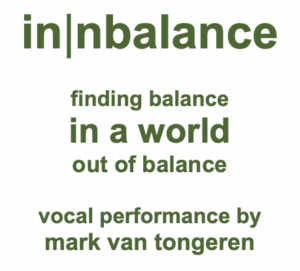
The title of my new work is In|nbalance. It aims to bring together a wide range of vocal and instrumental techniques with questions such as: what can my voice still express when the world seems to be seriously out of balance (hence ‘imbalance‘)? What, if any, are the sounds I can make with my voice and its extensions (instrumental and electronic) that bring balance (hence ‘in balance‘)? How to find my own ‘balance’ as a performer? What new or old sounds do I want to use? And what are their effects, in a time when listening to one another in the world at large reaches a lowpoint I never experienced in my lifetime? How do I give a voice to the news about wars, climate change and other disruptions that we hear about every day? Should I – who never was good at using words in my musical language anyway – look for words to express this struggle, or keep on avoiding verbal, discursive messages altogether?
So far, many tests have been done and they go in either direction: no text <<>> lots of text. It is a new process for me because I never (except a few times, like that TED-x talk) felt an urge to ‘speak’ or to ‘sing about’ something. Now I can no longer pretend I have nothing on my mind or nothing to say: I do. I am experimenting with various methods to incorporate words and meaning – this is my biggest challenge, really. There is also plenty of new-sound-making going on: I look for ways to consolidate overtone singing skills and ideas into more rigorous pieces. Also something I have never really paid enough attention to. So even though I build on skills I posses since a long time, I am pushing myself into new directions.
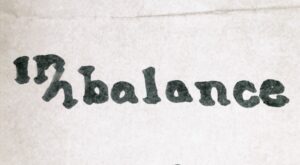
As for the title itself: it must be handwritten to express the ambiguity in/im balance. I made some sketches only, and I am still searching for other ways. I am also not sure yet whether I want to go for an extreme colour scheme
or keep it more subdued.
The Festival Designing Voices
Alex Nowitz’s Designing Voices Festival is running for the fourth time now. It is a unique festival in that it puts the voice centre stage, in confrontation/extension/collaboration with old and new electronic and digital tools and instruments. A fantastic recurring tool is Alex’s Strophonion, which he developed over many years. I remember him spending weeks at the famous Amsterdam institute STEIM, at a time when its downfall began. Just in time to connect with one of the places that has been instrumental in developing and promoting musical sound generated by hand/arm gestures, since the 1970s. There is the first time I heard Alex’ perform with an earlier prototype of the Strophonion.
Designing Voices does what it says: it pushes for the voice to stretch into new directions, and it does so in a wonderful context of instrumental and electronic support, often including video works. I really can’t emphasise how happy I am with Alex’ invitation, just at a point where I had decided to come up with a full, through-developed work. Designing Voices is a fantastic platform with top performers and a critical audience. Watch this trailer of Designing Voices 2021 to see how wide the scope is (and to see the Church where I will also present my piece):
Klangsinn is the theme of this year. There are 6 concerts and 8 performances taking place. This is the full program for this year (2025) with 20 artists from around the world. Or check the link.
DESIGNING VOICES: Klangsinne
Potsdam, 09.-12. Okt. 2025
Die menschliche Stimme als Kunstobjekt, in all ihrer Breite und Vielfältigkeit live dargeboten, steht im Zentrum des Internationalen Festivals für vokale Performancekunst, Klang & Musik DESIGNING VOICES. Die Kunststimmen erweitern sich durch den Einsatz von Live-Elektronik oder sie treten in Dialog mit akustischen und elektronischen Instrumenten sowie mit Objekten. Das Festival findet als Biennale zum dritten Mal in Potsdam statt. Unter dem diesjährigen Motto „Klangsinne“ beleuchtet das Festival die sinnlichen Aspekte von Stimmklängen und erkundet gleichzeitig den Sinn von Klang im Spiel mit und ohne Sprache.
Es stellen sich 20 Performer:innen in 8 Performances (6 Konzerte) aus dem In- und Ausland vor.
• Alex Nowitz (DE, Stimme, Live-Elektronik [Strophonion])
_____
VOM KLANG ZUM SINN
Französische Kirche Potsdam | 12. Okt.
=> Konzert 6, Teil 1 (19:00)
Mark van Tongeren (NL/TW, Stimme, Effektpedal, Kaosspad, Maultrommel, Objekte)
=> Konzert 6, Teil 2 (20:00)
Casey Moir (AU/SE, Stimme, Effektpedal)
==========
Alle Konstellationen von Solo, Duo, Trio, Quartett bis hin zum Quintett werden in 6 Konzerten mit insgesamt 8 Performances präsentiert. Das Festival vergibt zwei Kompositionsaufträge, die mit Meinrad Kneer’s PHOSPHOROS Ensemble (DE) und Casey Moir’s VIVA VOCAL Ensemble (SE) zur Uraufführung gelangen.
An zwei Tagen ist DESIGNING VOICES Gast in der fabrik Potsdam. Die Themen lauten:
• Vom Sinn zum Klang (Fr., 10. Okt., 19:00)
• Die lange Nacht der kuriosen Stimmen (Sa., 11. Okt., 19:00)
Zwei Soloperformances beschließen das Festival in der Französischen Kirche Potsdam und sehen sich folgender Thematik verpflichtet:
• Vom Klang zum Sinn (So., 12. Okt., 19:00)
Die Eröffnungsveranstaltung mit einer Auswahl der am Festival beteiligten Künstler:innen findet im Potsdamer museum FLUXUS+ statt:
• Eröffnung– Infoveranstaltung mit Gesprächen und Videos (Do., 9.Okt., 19:00)
Der Eintritt hierfür ist frei.
Gefördert vom Musikfonds e.V. und Ministerium für Wissenschaft, Forschung und Kultur des Landes Brandenburg
==========
TICKETS (Abendkasse)
1 Einzelkonzert
15.- € (regulär) / 10.- € (ermäßigt)
Tagespass (alle Konzerte pro Tag)
25.- € / 15.- €
Festivalpass (alle Konzerte an den drei Tagen)
60.- € / 40.- €
Freier Eintritt zur Eröffnung (Infoveranstaltung) am 9. Okt. im museum FLUXUS+.
_____
Workshop
60.- € / 40.- €
ANMELDUNG ZUM WORKSHOP
designing-voices@nowitz.de
• Workshopteilnehmende erhalten vergünstigten Zugang zu den Performances für 5.- € pro Konzert.
==========
TEAM
• Künstlerische Leitung: Alex Nowitz
• Produktionsleitung: Frauke Niemann
• Technische Leitung: Tamás Blénessy (museum FLUSXUS+), Ralf Grüneberg (fabrik Potsdam) & Michael Zillmann (Französische Kirche Potsdam)
• Mitarbeit: Brenda Alamilla (Grafik)
• Dokumentation: Sirko Knüpfer (Video), Leon Fiedler (Audio) & Sebastian Rausch (Foto)
==========
[ENGLISH]
The festival DESIGNING VOICES 2025 features 6 concerts and a workshop by Mark Van Tongeren on Overtone Singing and Resonance!
The third edition of the international festival for vocal performance art, sound & music explores the theme of “Klangsinne” [Senses for Sound].
20 artists perform in 6 concerts with 8 performance acts over 4 days, with two newly commissioned works.
• Mark van Tongeren (NL/TW, voice, kaosspad, objects)
==========
Overtone singer and ethnomusicologist Mark Van Tongeren gives a three-day workshop on Overtone Singing and Resonance.
09–11 Oct · Workshop (opt. performance on 12 Oct)
Potsdam (DE), 9–12 Oct. 2025.
Venues: fabrik Potsdam, Französische Kirche Potsdam, museum FLUXUS+ & Treffpunkt Freizeit – Familienzentrum und Mehrgenerationenhaus
Supported by the Musikfonds e.V. funded by the Federal Government Commissioner for Culture and Media and by the Ministry for Science, Research and Culture of the Land Brandenburg [Ministerium für Wissenschaft, Forschung und Kultur].
==========
PHOTO CREDITS
Casey Moir • PHOTO Dawid Laskowski
Mark van Tongeren • PHOTO Yi-Jin Xie
Ensemble KLANGPAKT • PHOTO_COLLAGE
• Matthias Bauer • PHOTO Peter Gannushkin
• Matthias Badczong & Christine Paté • PHOTO T. Tarczynski
Afterthought: this is the third time in a few years that I present new work in Germany: 2 years ago I performed at the Ancient Trance festival in Leipzig, also in a church, and before that the German-Chinese-Mongolian composer Yang Song invited me to contribute pre-recorded throat singing and other Mongolian-related vocal styles for her new multichannel electro-acoustic work In Einem Moment, broadcast live on German radio.
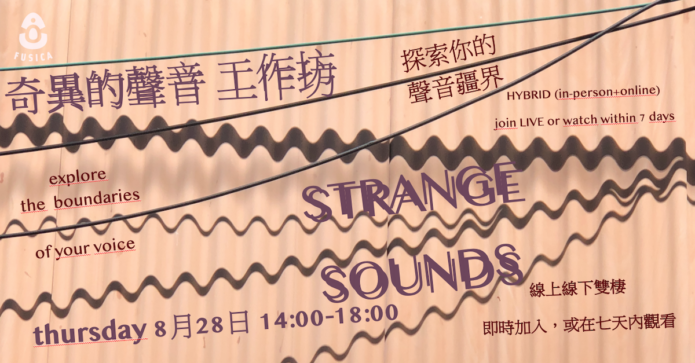
STRANGE SOUNDS Explore the boundaries of your voice
PROGRAM IN SHORT
For decades Mark van Tongeren explored hundreds of vocal techniques, sounds and noises, from which he freely picks during his performances and classes where he improvises. How does he do it? Finally there is an opportunity to broaden your vocal ability in unforeseen directions with a first class voice expert. From lyrical to hysterical. From animal to extra-terrestrial. From neo-classical to ……………………….. ( n e a r l y i n a u d i b l e ! ). From physical to spiritual. Mark does not like to set any limits to what his voice can do. Join him to find out how far you can go. WARNING: some exercices may cause voice damage for some people. Be alert and take responsibility at all times, then you will be fine!
This workshop is hybrid: you can join in person or online. We will announce the online conditions after a week. Signing up is only in-person now. We will use a microphone but no amplification. If you do not want to be visible you can choose a spot outside the video frame.
DATES AND TIMES
August 28 Thursday 1400-1800
1345 doors open 1400 Introduction to strange sounds with demos 1415 How to make a strange sound? Part 1. Easy single sounds. 1445 Playing around. Part 1. Easy. 1500 How to make a strange sound? Part 2. Challenging single sounds. 1530 Playing around. Part 2. Challenging. 1545 – – break – – 1600 How to make a strange sound? Part 3. Combinations. Easy. 1630 Playing around. Part 3. Easy combinations. 1645 How to make a strange sound? Part 4. Juxtapositions. Challenging. 1715 Final play with solos, duos and whatever comes up! 1745 Q&A. 1800 End
Late 2024 TOSA co-founder and interpreter Sunny Chen asked me: how do you make all these strange sounds? Can’t you give a workshop showing us how to do them? I immediately loved the idea and it kept me busy all these months. Now finally we picked an afternoon to tackle this problem. The goal will be to learn how to make a number of unusual, strange sounds. From the relatively easy and harmless down to the dirty and dangerous: the things that most singers shy away from. I pick up this challenge to not only make strange sounds, but also to reflect upon how I make them. And this will lead to questions such as: which sounds are strange? Who can actually make them? Are they transferrable? Explainable? Is this going to be risky? I am aware that it may be, so we start with just a single afternoon. Never enough to cover a substantial of strange sounds, but great as a start to map this fascinating area.
I mention a few inspirations: first of all the vocalists that I met separately, and in quite a few cases performed with: Koichi Makigami, Jaap Blonk, Phil Minton, Paul Dutton and David Moss (who also assemble as a group called Five Men Singing!), and Tran Quang Hai. Of course, Sainkho Namchylak from Tyva is a shining example I have had the pleasure of witnessing many times, and perform with in Taipei recently (Sainkho taking to the drumkit and letting me do the vocals). Last year I thought I would finally have a chance to witness our elusive, Dutch diva extraordinary, Greetje Bijma – but she cancelled the concert. Then there are numerous traditional singers on hundreds of albums: it’s some of the best stuff with endless possibilities.
This afternoon I try to present a sort of orderly way (How to make a Strange Sound? Part 1-4) to approach what is really without system or order. We frequently take stock after going through a set of sounds (Playing Around Part 1-4), allowing some voices to rest and others to go deeper than we can go as a group.
FOR WHOM? Anyone curious to make new sounds with the voice. The maximum is 10 people on-site. More people can join online, we will announce the details within a week.
WHAT YOU NEED Your voice. Stamina. Willingness to explore. Readyness to stop when you go too far. – Please bring a drink or snack for the break-time.
LANGUAGES English + Chinese
YOUR TEACHER In 1992 and throughout the 1990s, Mark van Tongeren began performing as a musical improviser and bricoleur in object-theatre. In the 2000s he switched to all kinds of musical improv, playing with the likes of Fred Frith, Koichi Makigami, Yo-Yo Ma and Oorbeek. The 2010s saw more dance collaborations and also a greater role for the performing body in his own work. In the 2020s, his polystylistic approach transcends musical, cultural and disciplinary borders ever more. In Taiwan, he performs with indigenous, Taiwanese and foreign artists and leads his vocal experimental group IUooUI. His weekly Voice Yoga class in Taipei is a guided, intuitive improv-session of sorts.
SUPPORTING TEAM & CONTACT This workshop is also brought to you by interpreter and co-organiser Sunny Chen, who interprets for sound workshops and is inspired by sound to continue the exploration; by administrative assistant Hsi-Yin Chang, who is a sound healing practitioner and also creates music.
▲ For any questions about the contents, and to register please contact Hsi-Yin (speaks Chinese and English): Email: hsiyin724@gmail.com or call Mark: 0910 382 749
PRICING Full price NT$ 4000
Up to Tuesday August 5 only Early Bird / 10% off NT$ 3600 Resonance / Old students / TOSA members 15% off 3400
After this date: Full price NT$ 4000
REGISTRATION 1.Sign up through this form: https://form.jotform.com/242682423145353 2. Make a transfer within 3 days and contact Hsi-Yin via email (hsiyin724@gmail.com) 3. We will confirm with you within 5 working days that you have completed the registration!
PAYMENT Please check out the form to sign up. Make a transfer within three days to: Bank code: 822 Name of bank: China Trust Beneficiary: Mark Christiaan van Tongeren Account number: 163540306745 Send an email to Hsi Yin (hsiyin724@gmail.com) including your name, the last 5 digits of your account number and the transferred amount after your payment. We will confirm reception within 3 working days.
CANCELLATION POLICY
We try to keep prices reasonable. we will return 90% of the fee if you cancel 31 – 60 days prior to the workshop. We will return 50% of the fee if you cancel 30 – 15 days prior to the workshop. We will return 20% of the fee if you cancel within 14 days prior to the workshop. If you find a substitute for your spot, we will keep 10% of the administration fee.
DISCLAIMER By signing up you automatically acknowledge your understanding that this workshop may involve potentially disrupting body-work and emotionally charged sessions with a deep impact on your well-being. It is understood that you yourself best know of any risks (physical, emotional, psychological) and that there is no pressure or obligation to do each and every exercise.
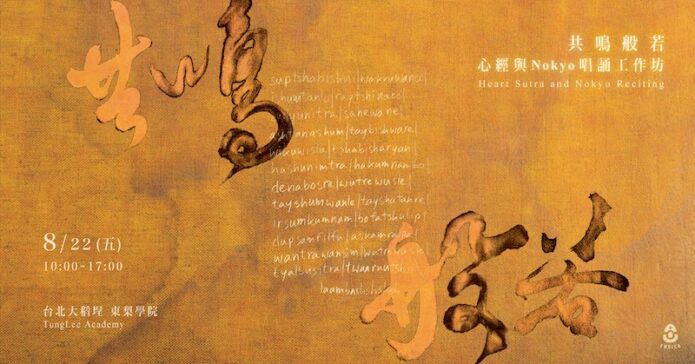
「一年前,Mark van Tongeren 來到我們學校,給我們進行泛音唱法的實踐介紹。一天結束時,他為我們的學校介紹了一個Nokyo,供我們吟誦。在去年秋天的葡萄牙僻靜營,我們探索了這個Nokyo。當大家作為一個團體一起吟誦時,可以聽到層次分明的聲音合而為一,形成一種空間感的體驗。此外,也有許多個體層次的經驗。例如,它會促使身體釋放緊張感,特別是在喉嚨後方沿著脊椎的部位。對於那些不習慣唱歌、平時只是用聲音進行日常溝通和分享訊息的人來說,這是一個非常寶貴的機會,可以遠離常規、發現自己獨特的聲音,並作為一種與手臂和手的動作密切相連的表達方式,因此也與肩頸有關聯。」
Mark van Tongeren 是一位聲音探索者,對藝術、科學和靜修傳統的交互作用有著深厚的興趣。Mark 在戲劇、音樂和舞蹈製作領域擁有超過30年的經驗,並擁有萊頓大學創意與表演藝術學院的博士學位。他練習瑜伽已有約25年,並在大約12年前創立了一種結合藝術表演工具的瑜伽形式。自少年時期以來,他便開始嘗試、研究並參與多種聲音、音樂和表演實踐,並不斷擴展他的「聲音詞彙」。對他音樂和思想影響深遠的是多媒體藝術家 Michael Vetter(1943-2013),Vetter 曾在日本擔任多年禪僧。1990年代初,Mark 開始接觸 Vetter 對日本經文(「okyo」)誦經的激進重新詮釋。
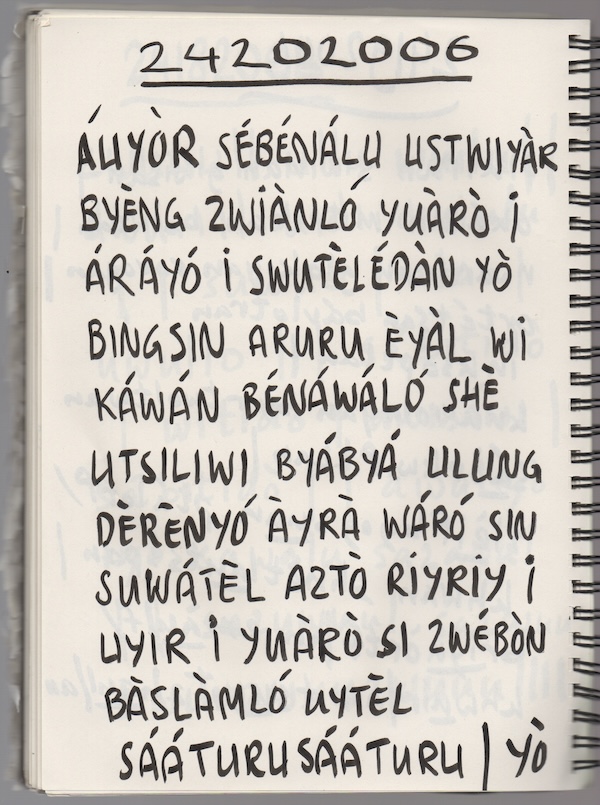
Almost every day since the end of 2022 I write a nokyo, which is derived from Japanese okyo’s, or sutra’s. The Heart Sutra is by far the most famous example of an okyo. These recitations activate body-mind in many ways: they resonate, regulate the breathing following all kinds of rhythmic patterns, and gradually sink down deeper into our being. Some are challenging and fast, others extremely slow: as if you put a prism around your voice to hear, to see and to feel all its colours.
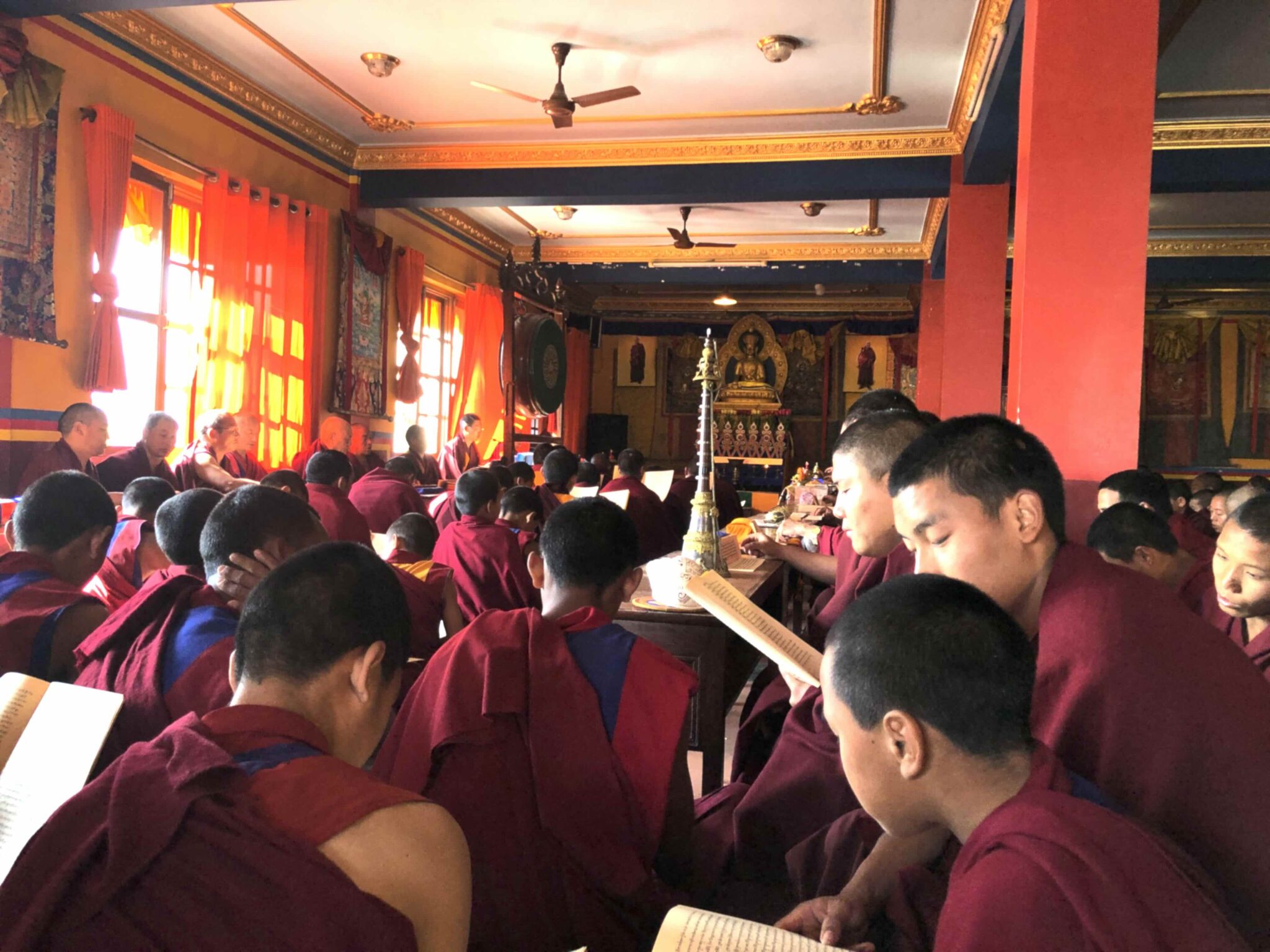
During one day you get to know the wholesome effect of reciting, singing-speaking and chanting, without having to worry if the texts fit into your religious convictions or not. Meanings arise on a non-discursive level or are simply not relevant anymore. There is much space for getting to know embodied knowledge and non-duality.
In the morning we prepare body, mind and voice with gentle exercises. We awaken our senses and soften the channels that are rigid or blocked. Gradually we put the voice and energies of vibration centre stage. From there we start exploring the written nokyo’s: you receive a small workbook with a selection of nokyo’s (included in the workshop). We will start with some very easy nokyo’s and gradually discover more possibilities. By the end of the day you have a good grasp of many of the basic procedures or Mark’s nokyo reciting. We finish by making small groups and chosing nokyo’s that you select yourself.
WHAT OTHERS SAY:
Nokyo chanting has been introduced to several schools of practitioners, who find it a very useful expansion into the sonic realm of their body-mind pratices. One workshop hostess described the experience as follows:
One year ago Mark van Tongeren visited the school to give a practical introduction on overtone singing. At the end of the day he presented our school an Okyo for chanting. This Okyo we explored in chanting during the retreat in Portugal last Autumn. There was the spatial experience in chanting, hearing the layers of sound unified when chanting as a group. And there were many more individual experiences. Like how it provokes in the body a release of tension specially from the back of the throat along the spine. Or for those not used to singing and using the voice other than for daily communication and sharing of information it was very valuable to discover the own unique voice free from conventions and as a means of expression closely connected to the hands and arm movements, and therefor also the neck and shoulders.
DATE & TIME
Friday August 22
10:00 – 17:00
TIME SCHEDULE
10:00 – 10:15 arrival
10:15 – 10:45 warming up, vocal-body resonance
10:45 – 12:15 Heart Sutra & Nokyo Chanting Part I: How to Read or Recite Nokyos?
12.15 – 13.15 lunch break
13:15 – 15:45 Nokyo Chanting Part II: the ‘365 Algorhythms’
15:45 – 16:00 tea time
16:00 – 17:00 Nokyo Chanting Part III. . Q&A
LOCATION
Dongli Academy
https://www.facebook.com/share/p/EQxyJ2N8qFDG4MJa/
大同區迪化街一段256號, Taipei, Taiwan
02 2768 8777
Dong-li Academy is a gallery run by artist Jimi Wen in the Dadaocheng area. The place used to be a musuem about comfort women. Jimi hosted many music events over the past few years.
FOR WHOM
No restrictions
LANGUAGES
English + Chinese
YOUR TEACHER
Mark van Tongeren is a sound explorer with a deep interest in the synergy of arts, sciences and contemplative traditions. Mark has over 30 years of experience in theatre, music and dance productions and holds a PhD from Leiden University’s Academy of Creative and Performing Arts. He practices yoga for some 25 years, created a form of yoga that integrates artistic-performative tools about 12 years ago. He has played and experimented with and studied numerous kinds of voice / music & performance practices since he was a teenager and continues to expand his ‘voca-bulary’. A great influence on his music and thinking was multi-medial artist Michael Vetter (1943-2013), who spend many years as a Zen monk in Japan. In the early 1990s Mark became acquainted with Vetter’s radical reinterprations of Japanese sutra (‘okyo’) recitations.
SUPPORTING TEAM & CONTACT
This workshop is also brought to you by interpreter and co-organiser Chi Chen Lee, who interprets for sound workshops and is inspired by sound to continue the exploration; by administrative assistant Hsi-Yin Chang, who is also a sound and wellness practitioner, with an interest in singing and creating music.
▲ For any questions about the contents and registration, please contact Hsi Yin (speaks Chinese and English):
Email: hsiyin724@gmail.com
PRICING
Full price 6250
Up to Tuesday August 5 only:
Early Bird / 10% off 5600
Resonance / Old students / TOSA members / poor struggling artist: 15% off 5300
After this date:
Full price 6250
Included:
Workbook with about 20 nokyo’s that you can take home to practise
This workbook will contain new nokyo’s so students who followed last year’s workshop can learn new nokyos if they would like to join again.
We’ll provide some basic tea, coffee and snacks. Feel free to bring your own.
Not included:
Lunch. There are several options nearby.
Make a transfer within 3 days and contact Hsi-Yin via email (hsiyin724@gmail.com)
We will confirm with you within 5 working days that you have completed the registration!
Please make the transfer to:
Bank code: 822.
Name of bank: China Trust
Beneficiary: Mark Christiaan van Tongeren
Account number: 163540306745
CANCELLATION POLICY
We try to keep prices reasonable. We will return 90% of the fee if you cancel 31 – 60 days prior to the workshop. We will return 50% of the fee if you cancel 30 – 15 days prior to the workshop. We will return 20% of the fee if you cancel within 14 days prior to the workshop. If you find a substitute for your place, we will only keep 10% of the administration fee.


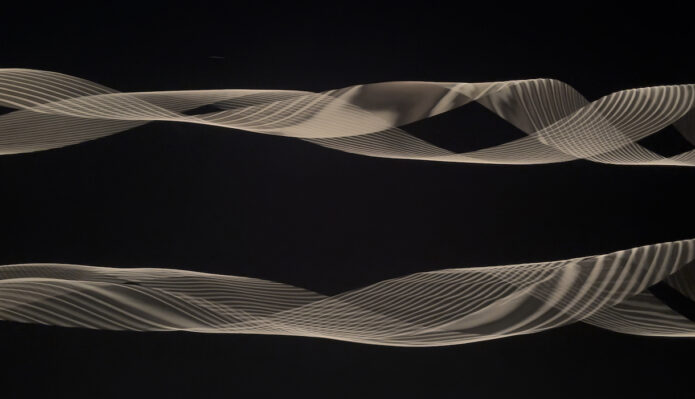
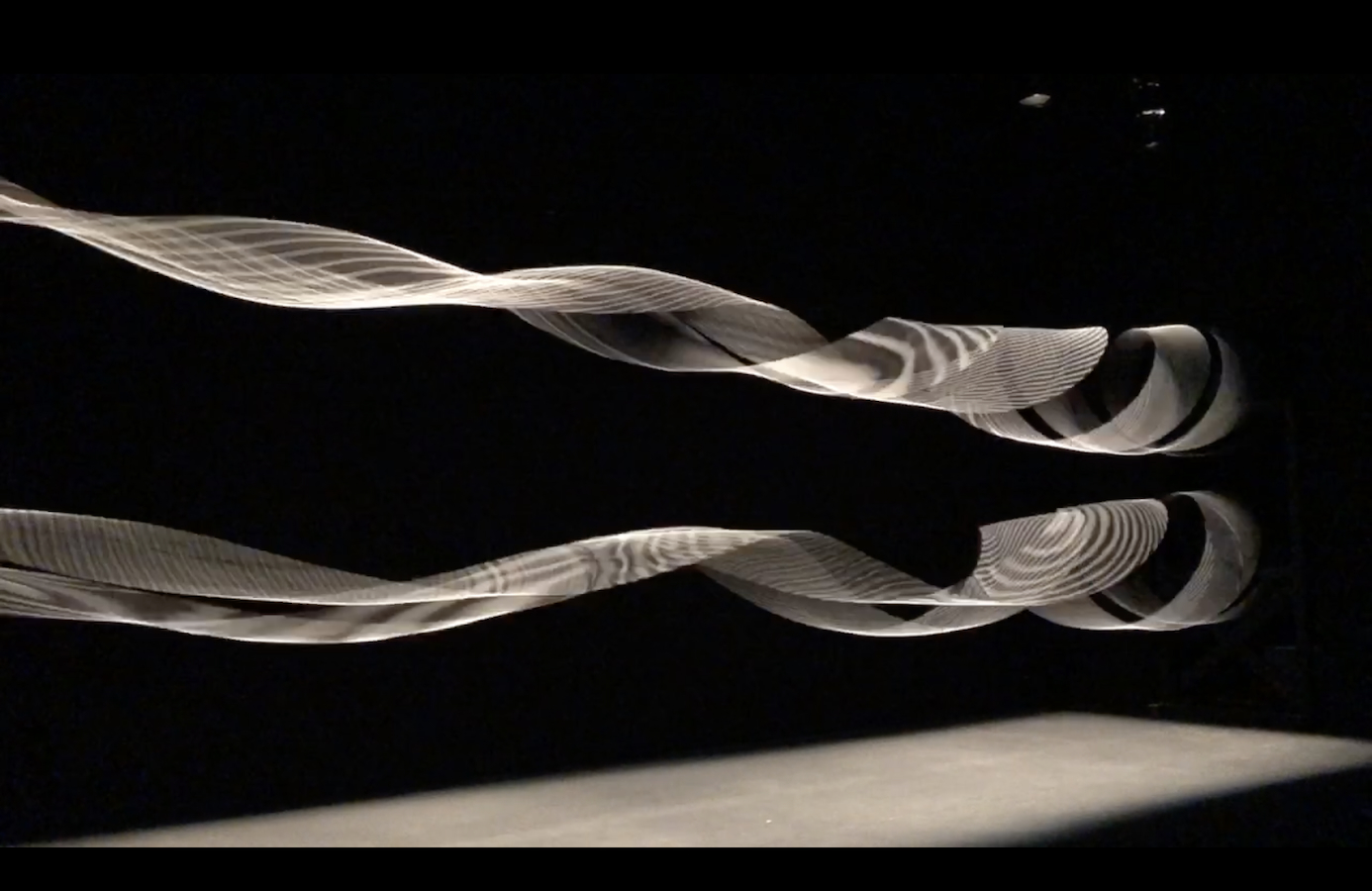
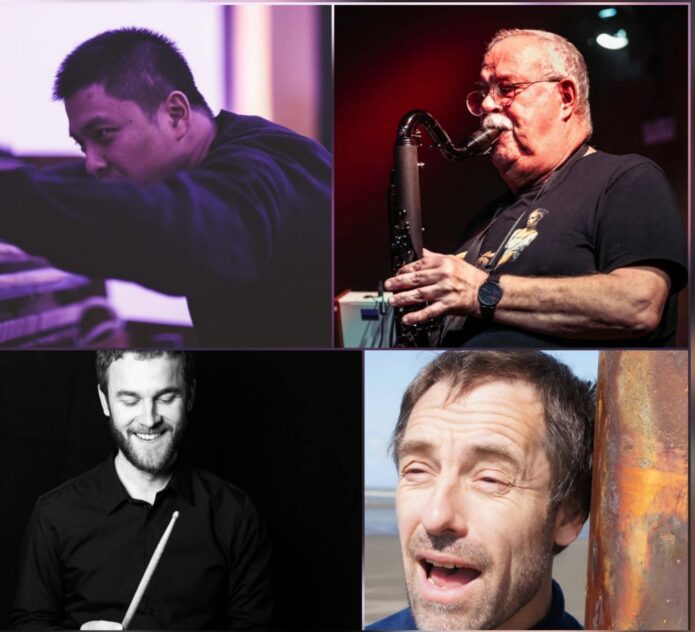
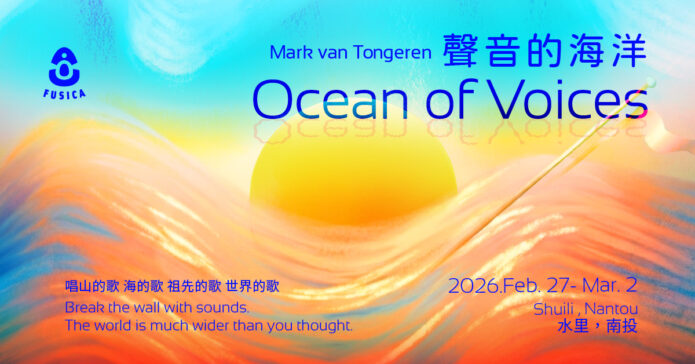
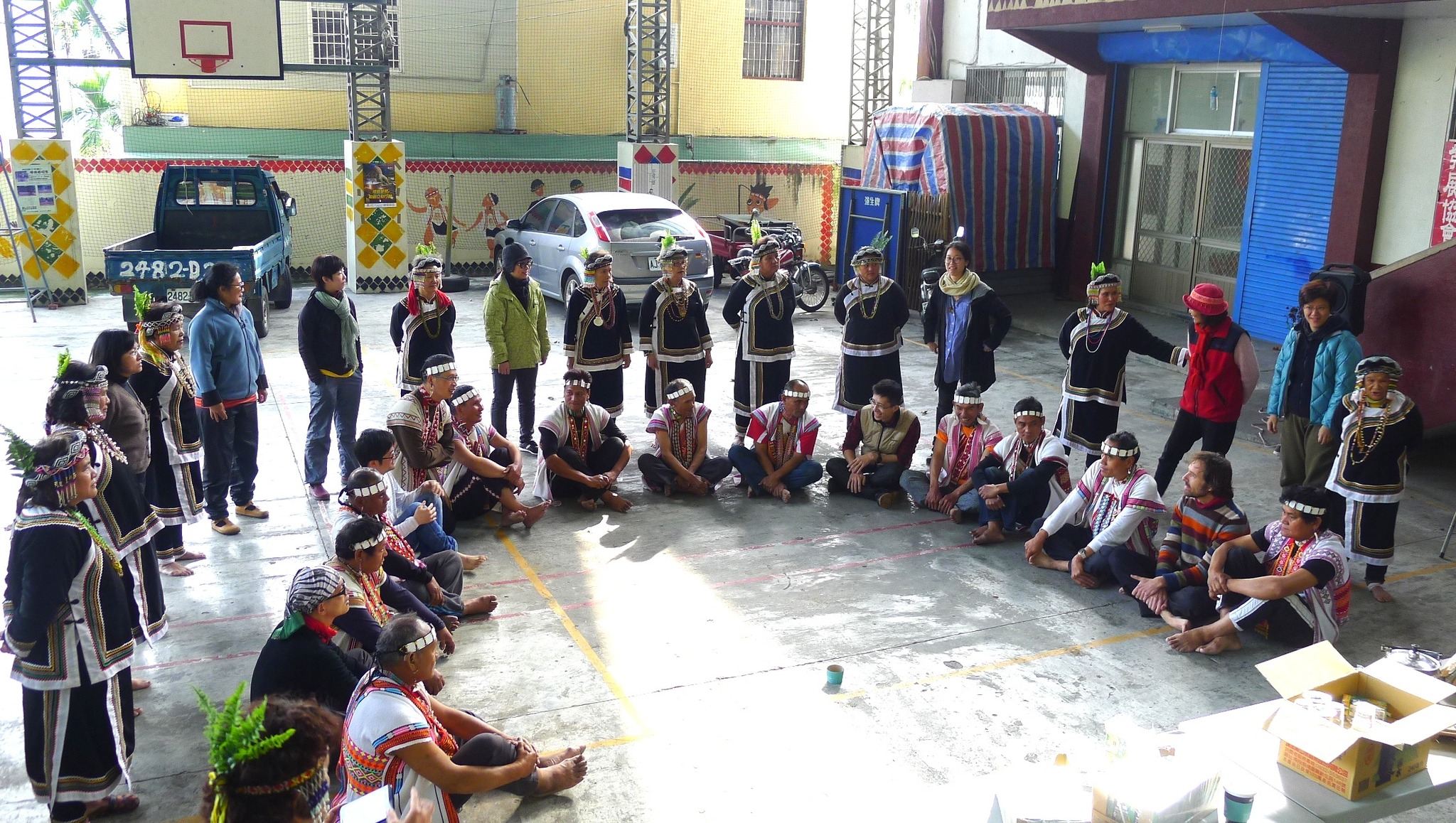


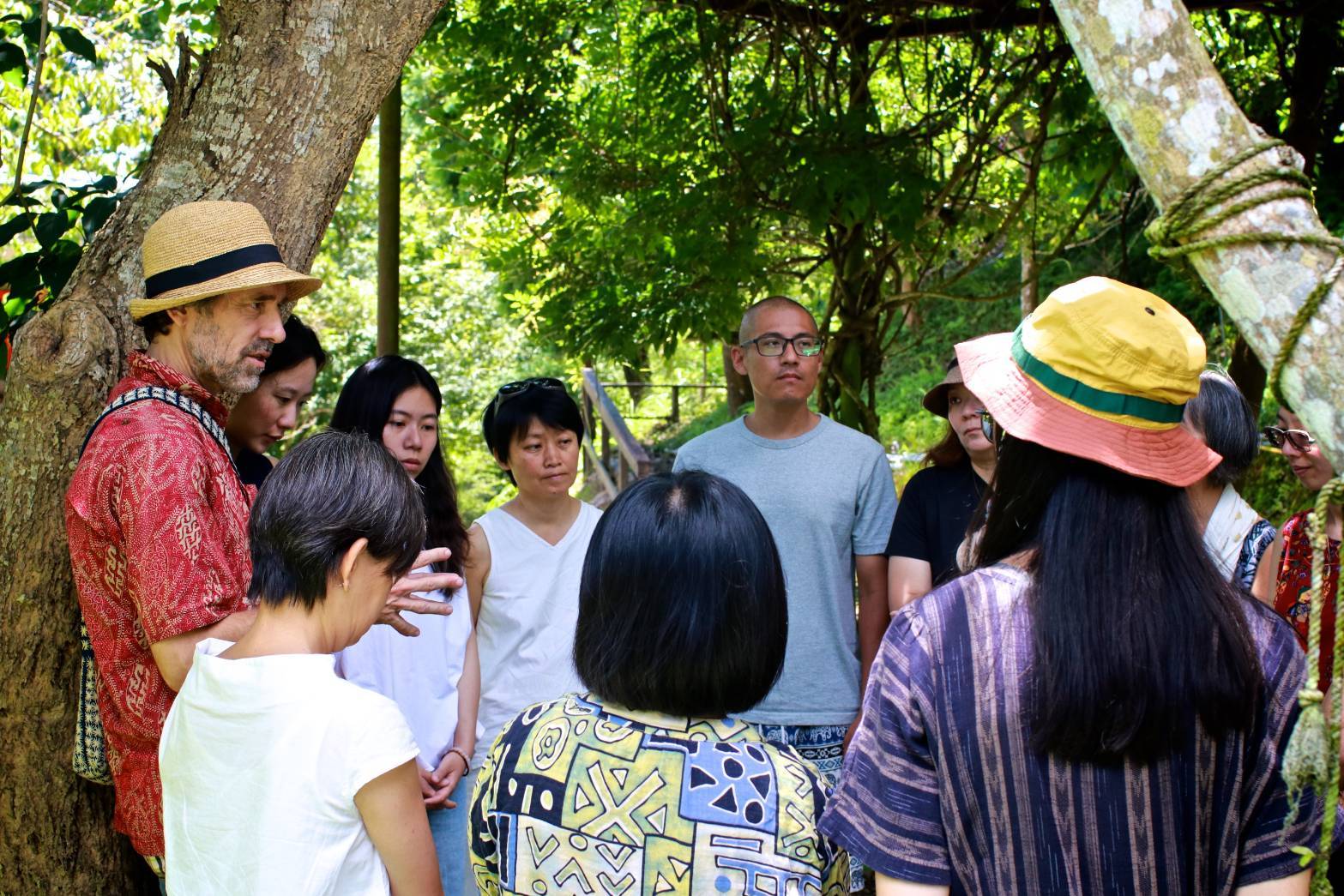
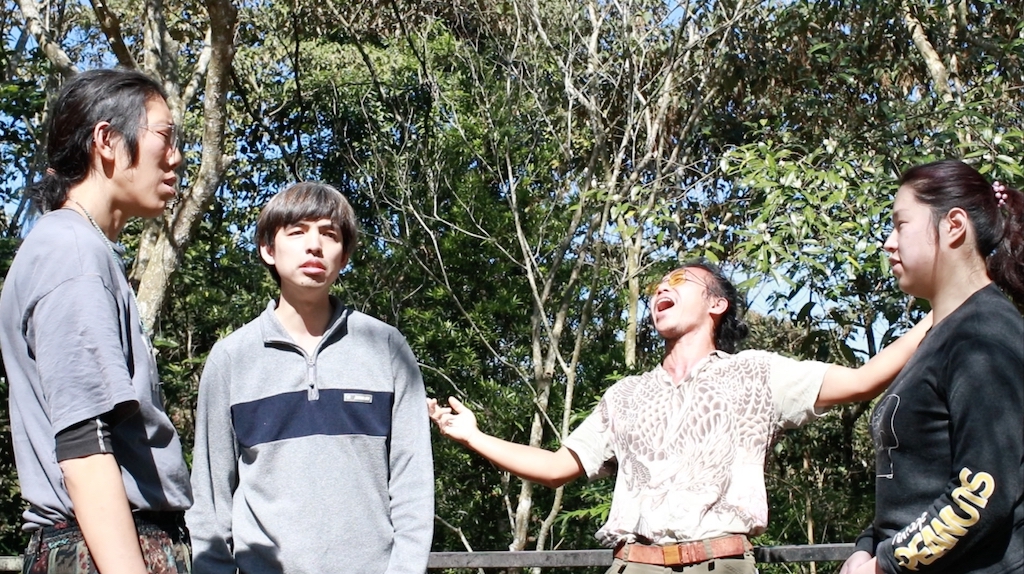

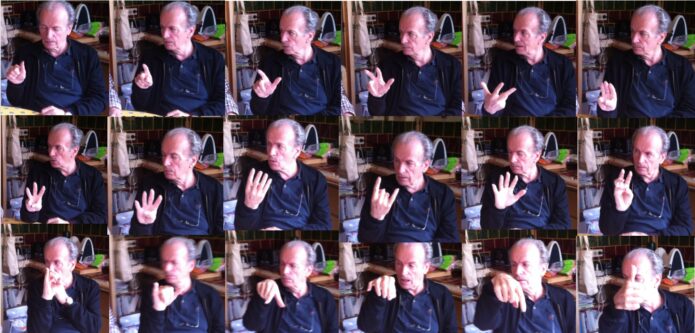
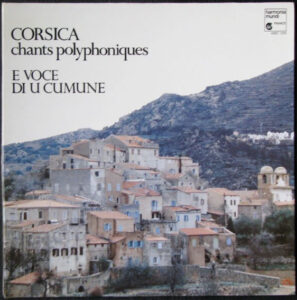
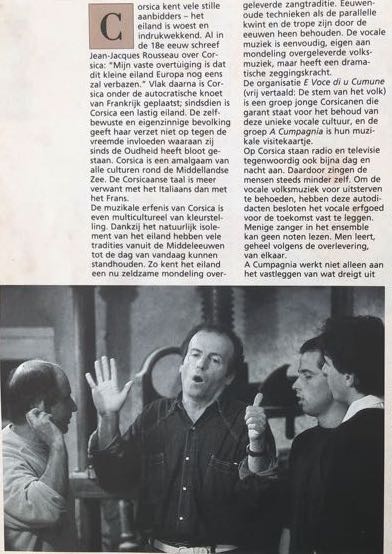
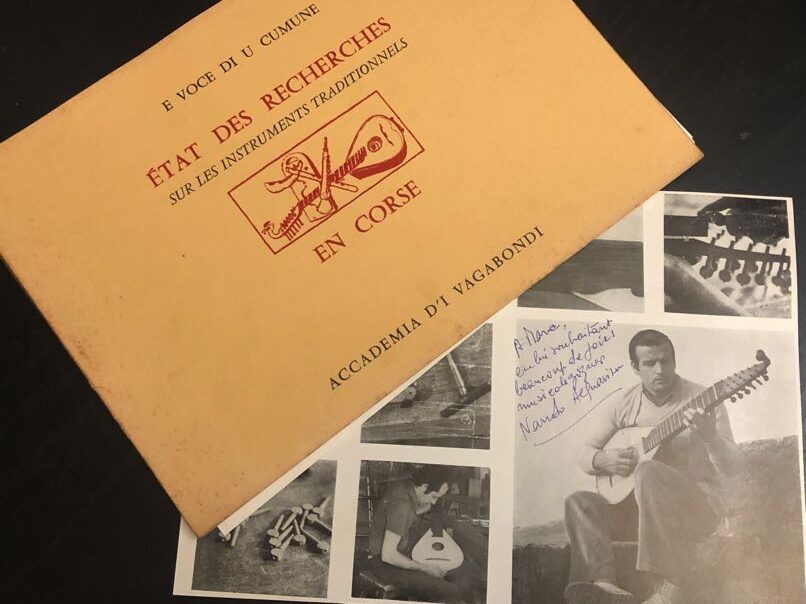

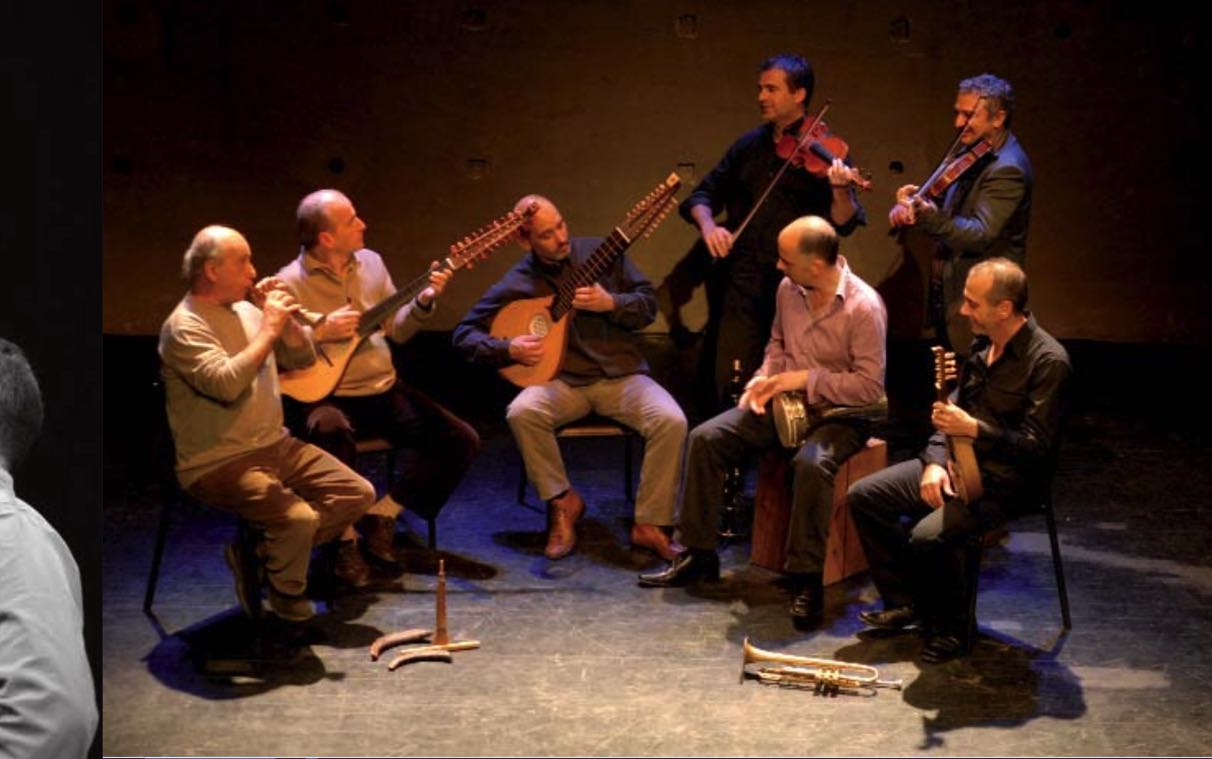
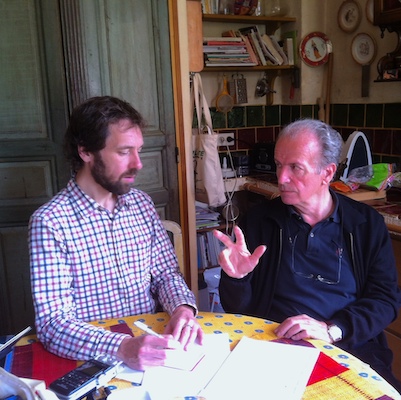


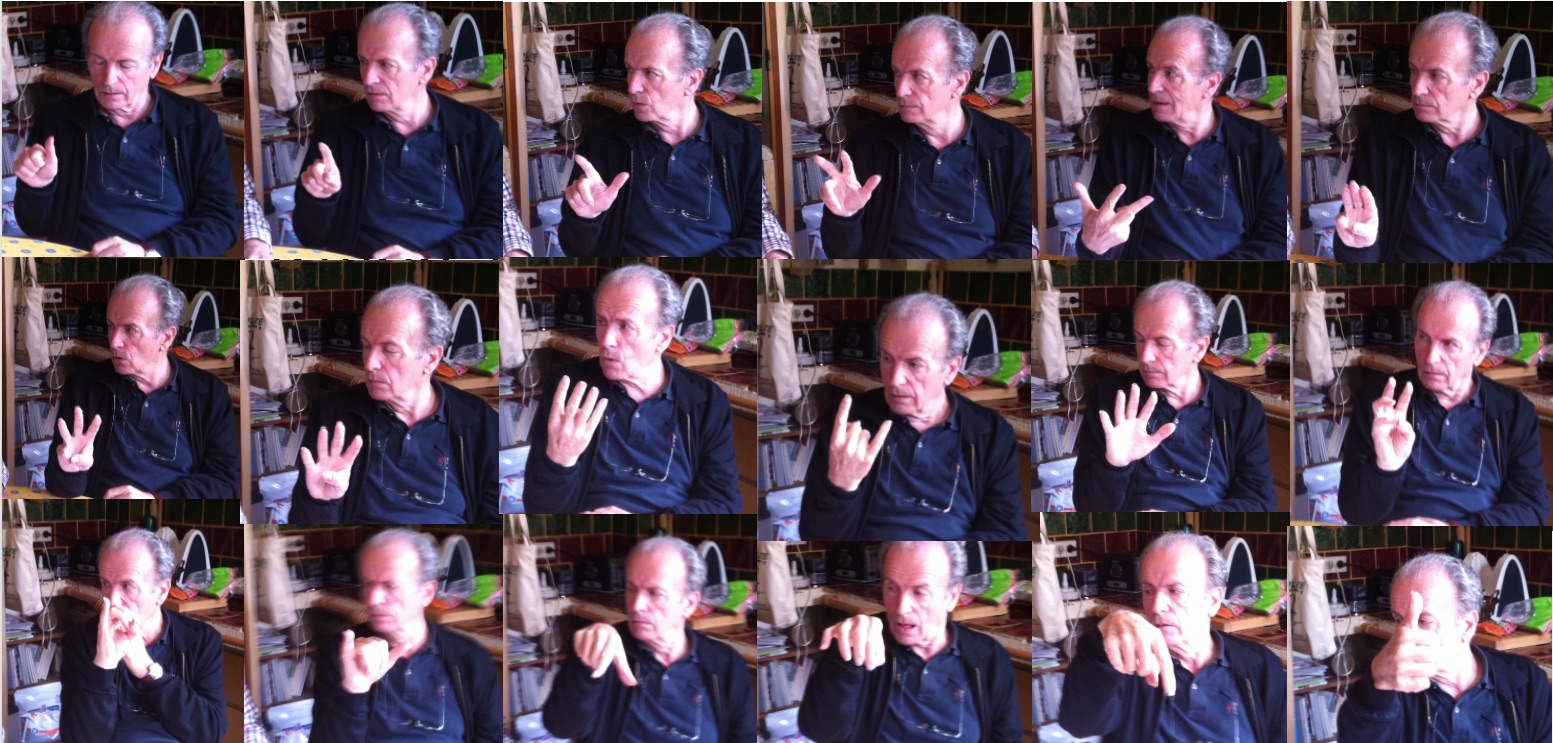
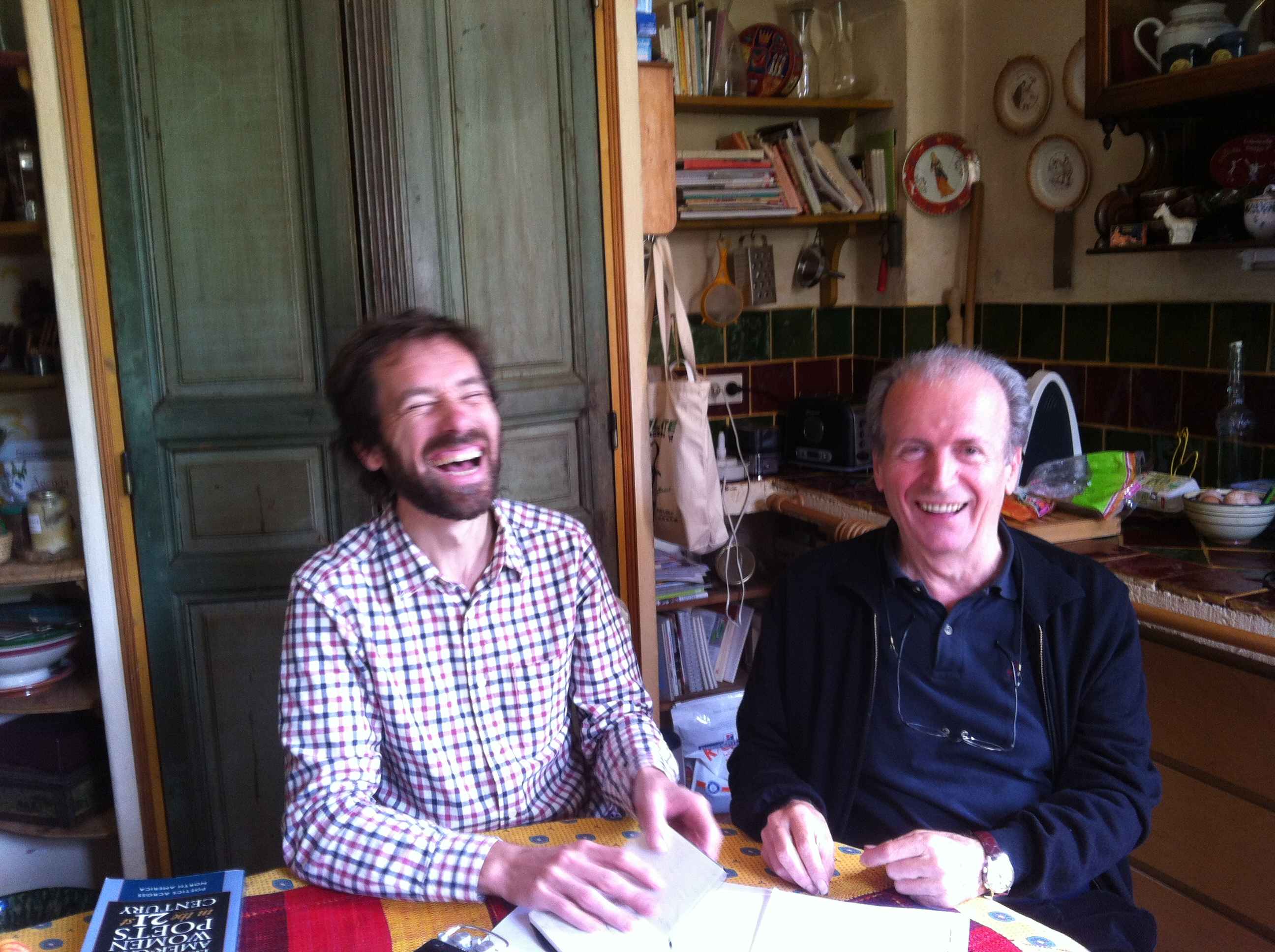
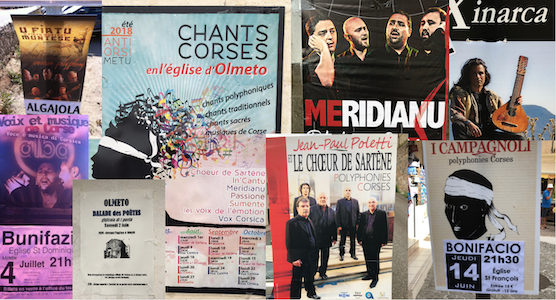
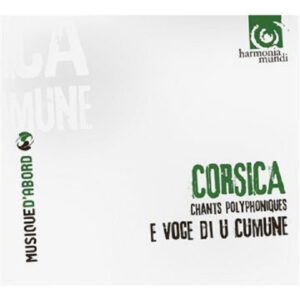
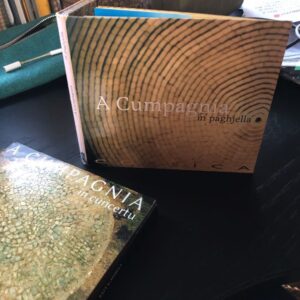
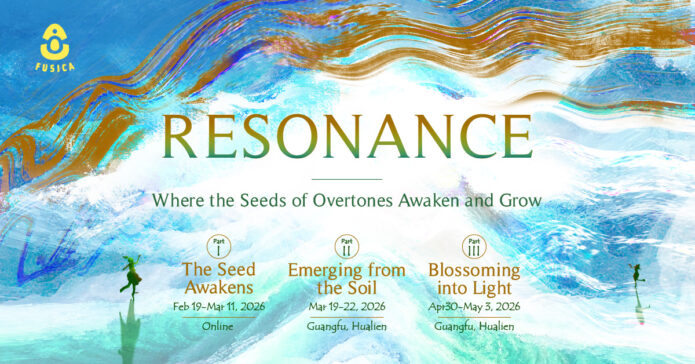


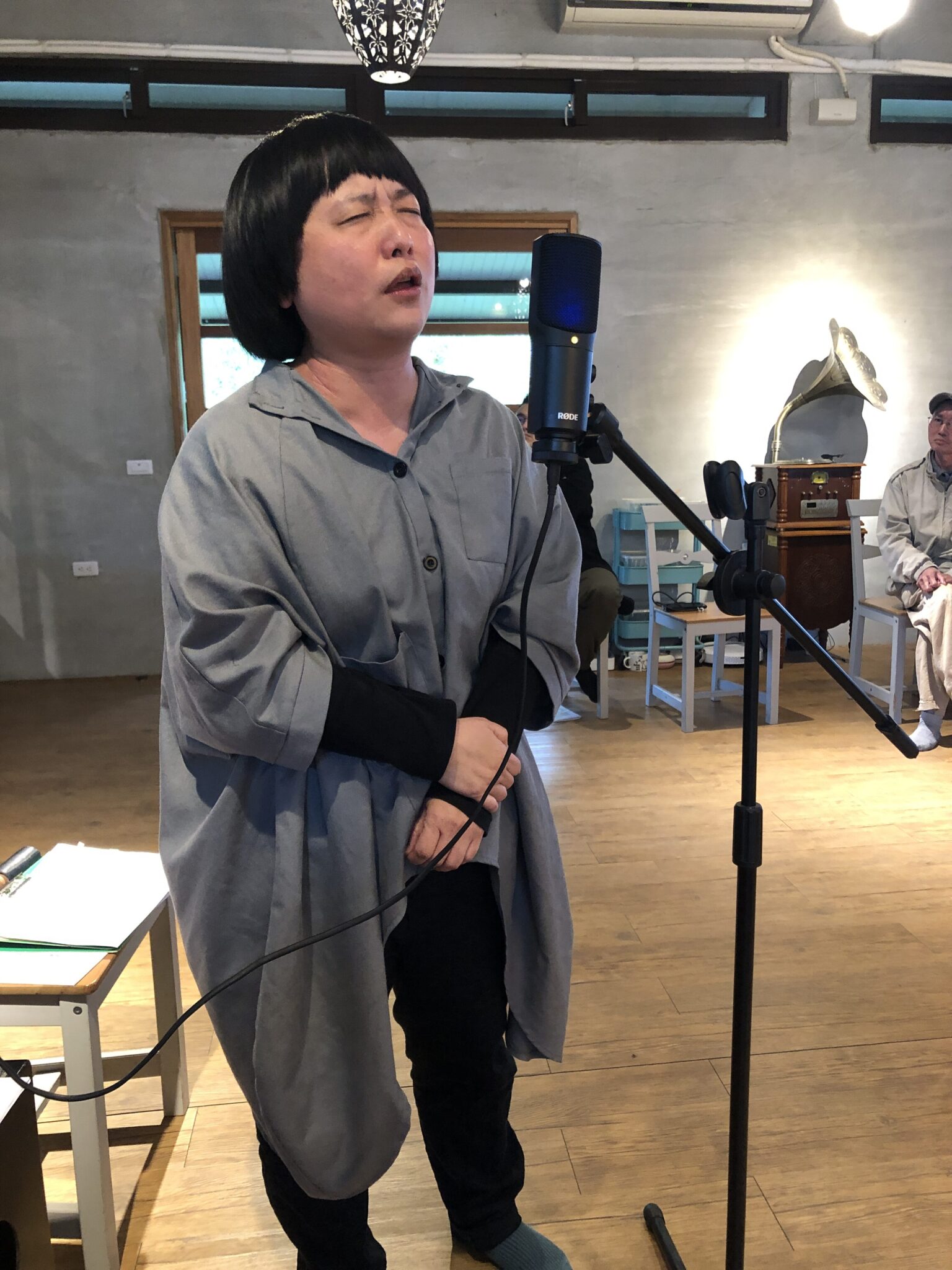
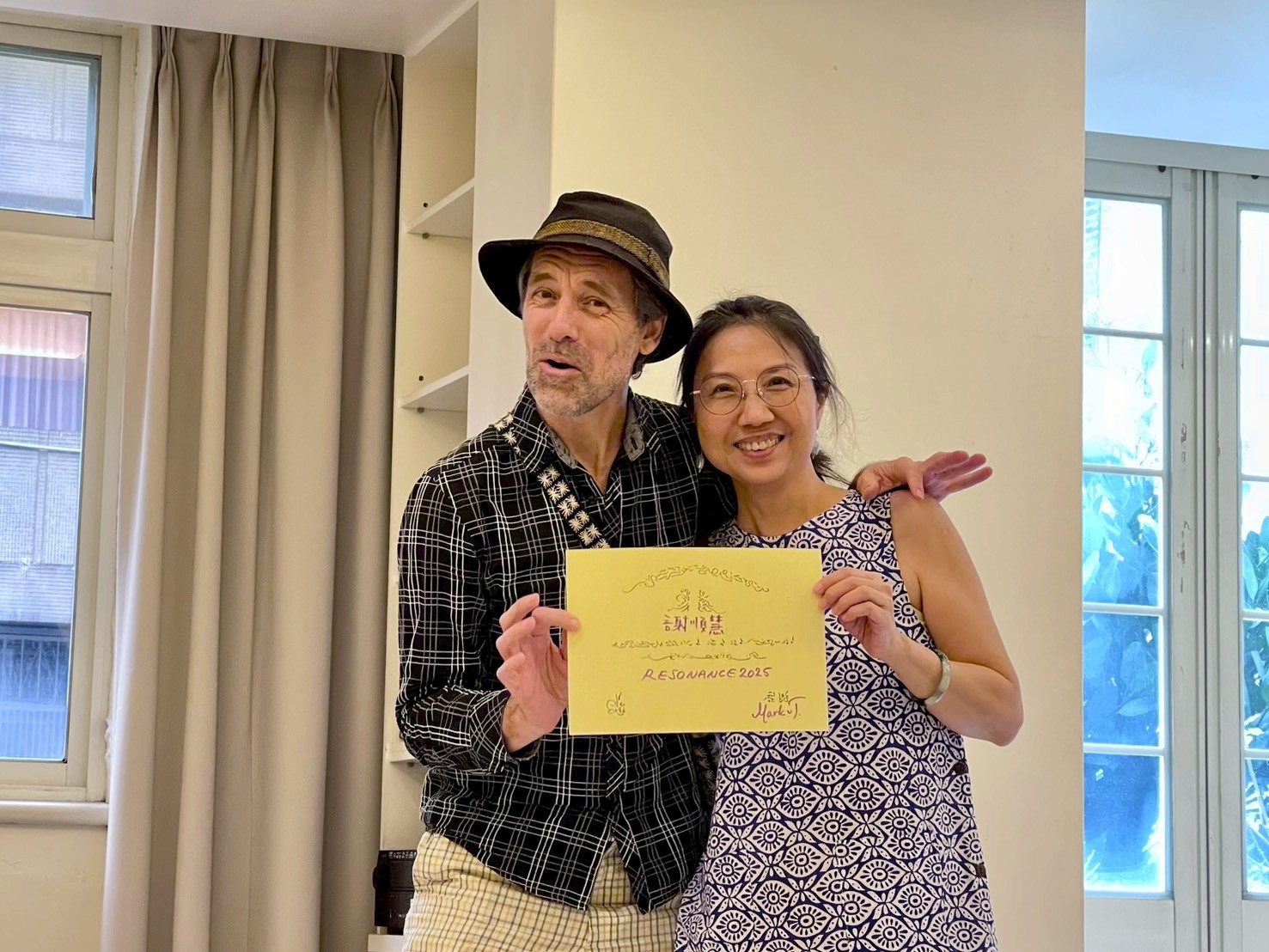

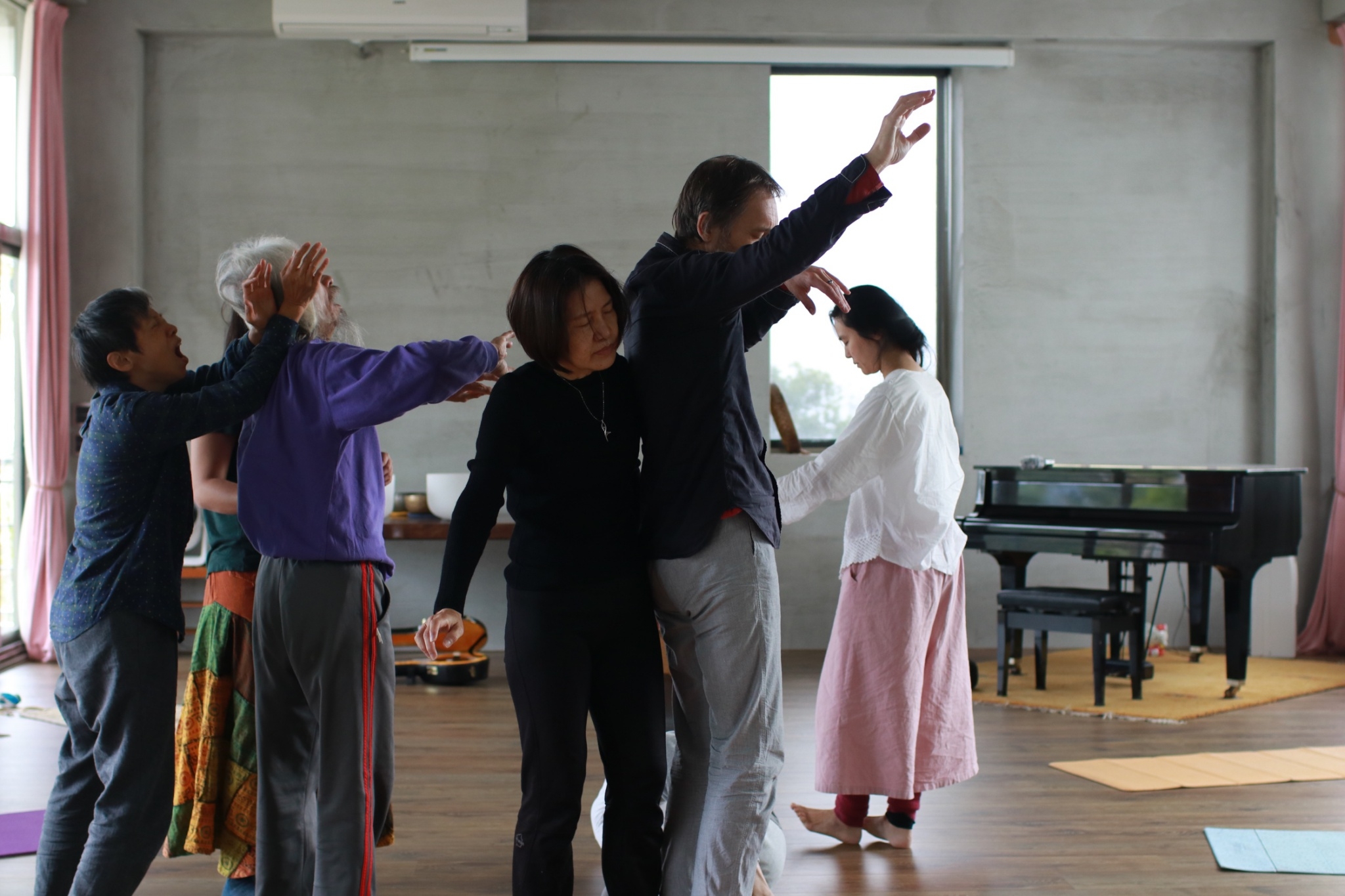
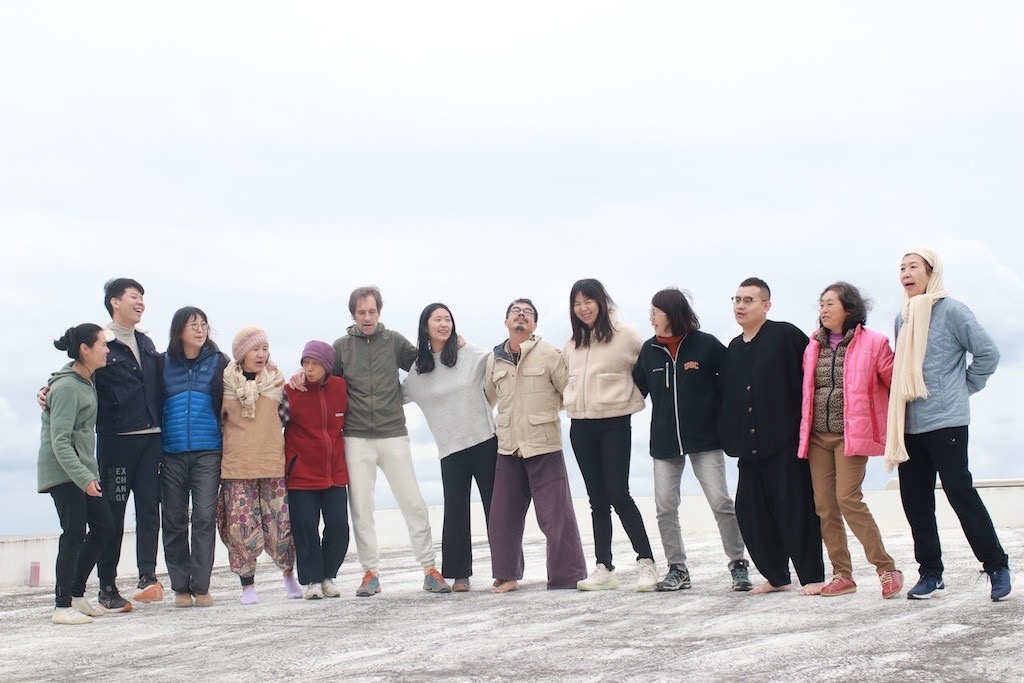 ∂þ
∂þ